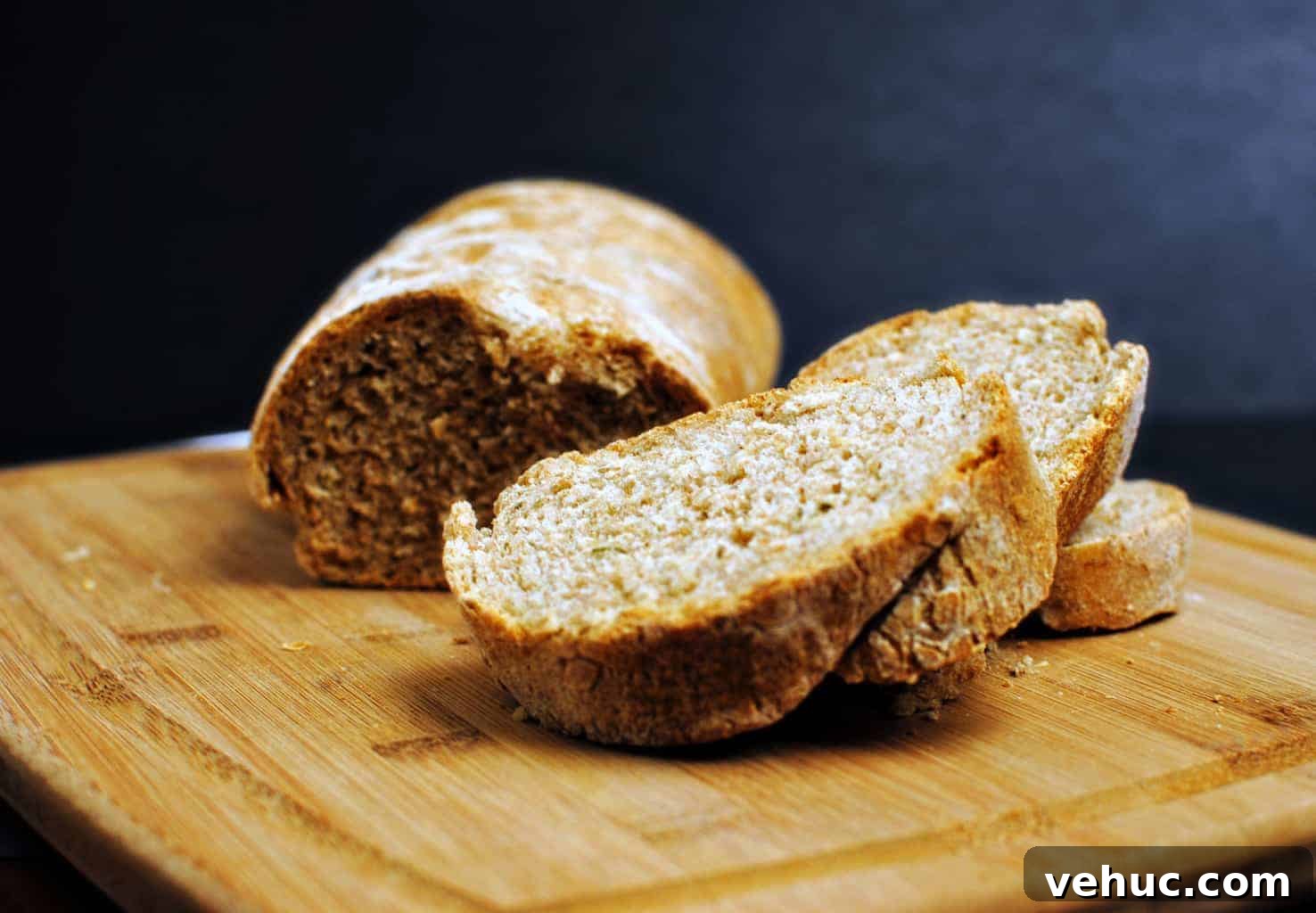
Rosemary garlic bread is a rustic, fragrant, and satisfying yeast bread that pairs beautifully with soups, stews, and sandwiches.
I’ve been a bit under the weather this week and slow to update the blog, but I managed to bake this loaf as part of my mission to get comfortable with yeast baking. It made a perfect companion to yesterday’s soup and is sturdy enough for sandwiches or simply toasted with butter.
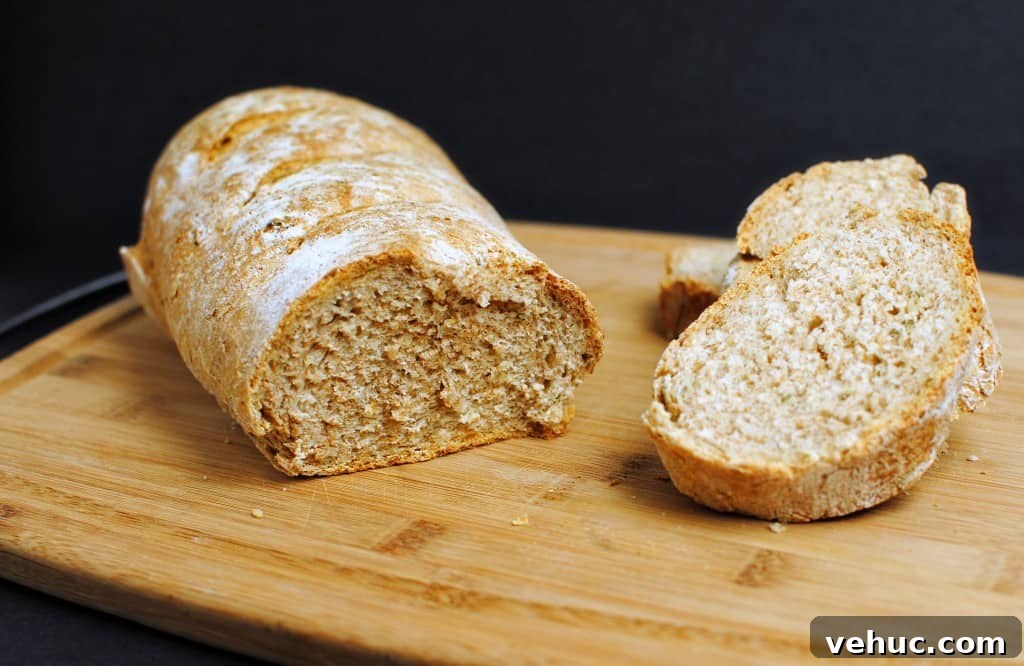
Rustic Rosemary Garlic Bread
Adapted from Rustic White Bread.
Ingredients:
- 2 cups warm water (about 110°F)
- 1/4 cup olive oil
- 2 1/2 teaspoons (one envelope) active dry yeast
- 2 3/4 – 3 cups all-purpose flour
- 2 1/2 cups whole wheat flour
- 6 cloves garlic, minced
- 1/3 cup fresh rosemary, chopped
- 4 teaspoons salt
- 1/4 cup extra flour for dusting
- Cornmeal for the pans
- Two small cookie sheets or one large (at least 11×17-inch) jelly roll pan
Directions:
In a small bowl or a 2-cup measuring cup, combine the warm water and yeast; let sit for three minutes, then whisk until the yeast dissolves. Stir in the olive oil. In the bowl of a stand mixer or a food processor fitted with a dough blade, combine 2 3/4 cups all-purpose flour, the whole wheat flour, minced garlic, chopped rosemary, and salt.
Add the water, oil, and yeast mixture and mix until a smooth, elastic, slightly sticky dough forms, about 45 seconds in a food processor or a few minutes with a mixer and dough hook. If the dough is too soft, add the remaining 1/4 cup all-purpose flour a tablespoon at a time until it reaches the right consistency.
Transfer the dough to an oiled bowl, turn it so the top is oiled, and cover with plastic wrap. Let the dough rise at room temperature until doubled in size.
When the dough has risen, scrape it onto a lightly floured surface and press it down to deflate. Divide the dough in half and shape one piece at a time: press each piece into a square, roll it up tightly, rotate the roll 90 degrees, and roll again from the short end. Place each roll seam-side down, cover, and rest for five minutes before repeating with the second piece.
Dust the baking sheet or pans with cornmeal. Gently roll each loaf under the palms of your hands to elongate it, working from the center toward the ends and slightly tapering the tips. Place the loaves seam-side down on the prepared pans and dust them heavily with the reserved 1/4 cup flour. Cover and let rise until doubled.
About 30 minutes before baking, preheat the oven to 500°F and position racks on the middle and lowest levels. Place an empty pan on the lowest rack to moderate the direct bottom heat and prevent burning.
Just before baking, score each loaf with 3 to 4 diagonal slashes, holding a razor blade or very sharp knife at about a 30-degree angle. Put the loaves in the oven, reduce the temperature to 450°F, and bake for 20 minutes. After the loaves have fully risen and developed color, lower the oven to 350°F and continue baking another 20–30 minutes, until the internal temperature reaches about 210–220°F.
Remove the loaves from the oven and cool on a rack before slicing.
Notes on my method
- I made the dough in a stand mixer rather than a food processor; both methods work well.
- I used a baking stone instead of a jelly roll pan for a crisper crust, but the recipe adapts to either approach.
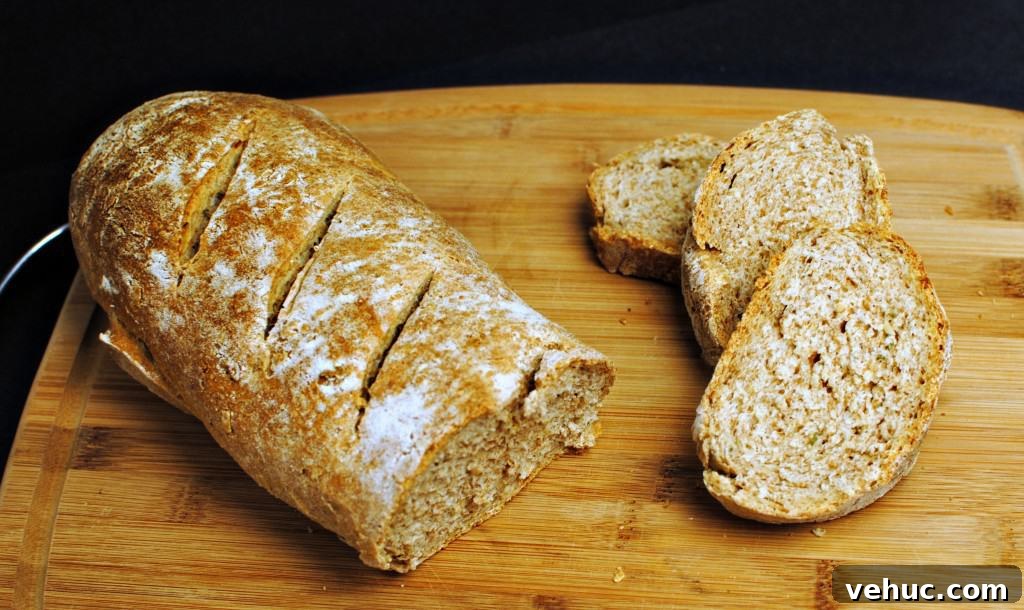
I hope you enjoy this rosemary garlic bread as much as I do—it’s fragrant, rustic, and versatile for many meals.