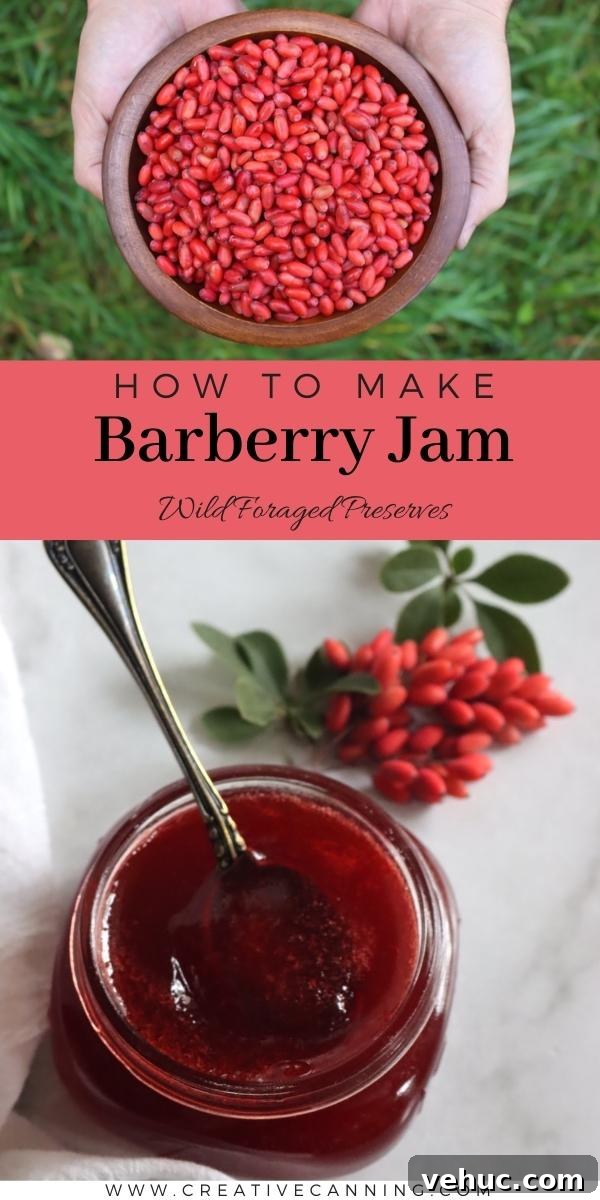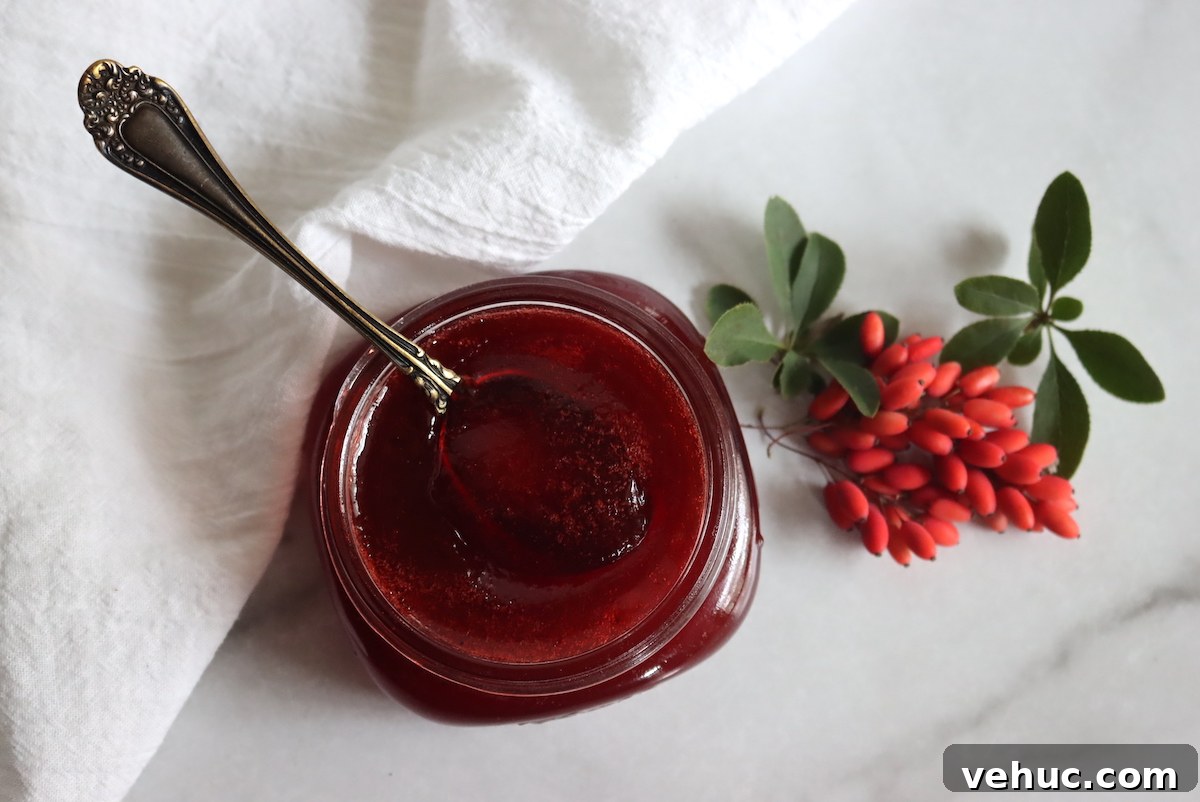
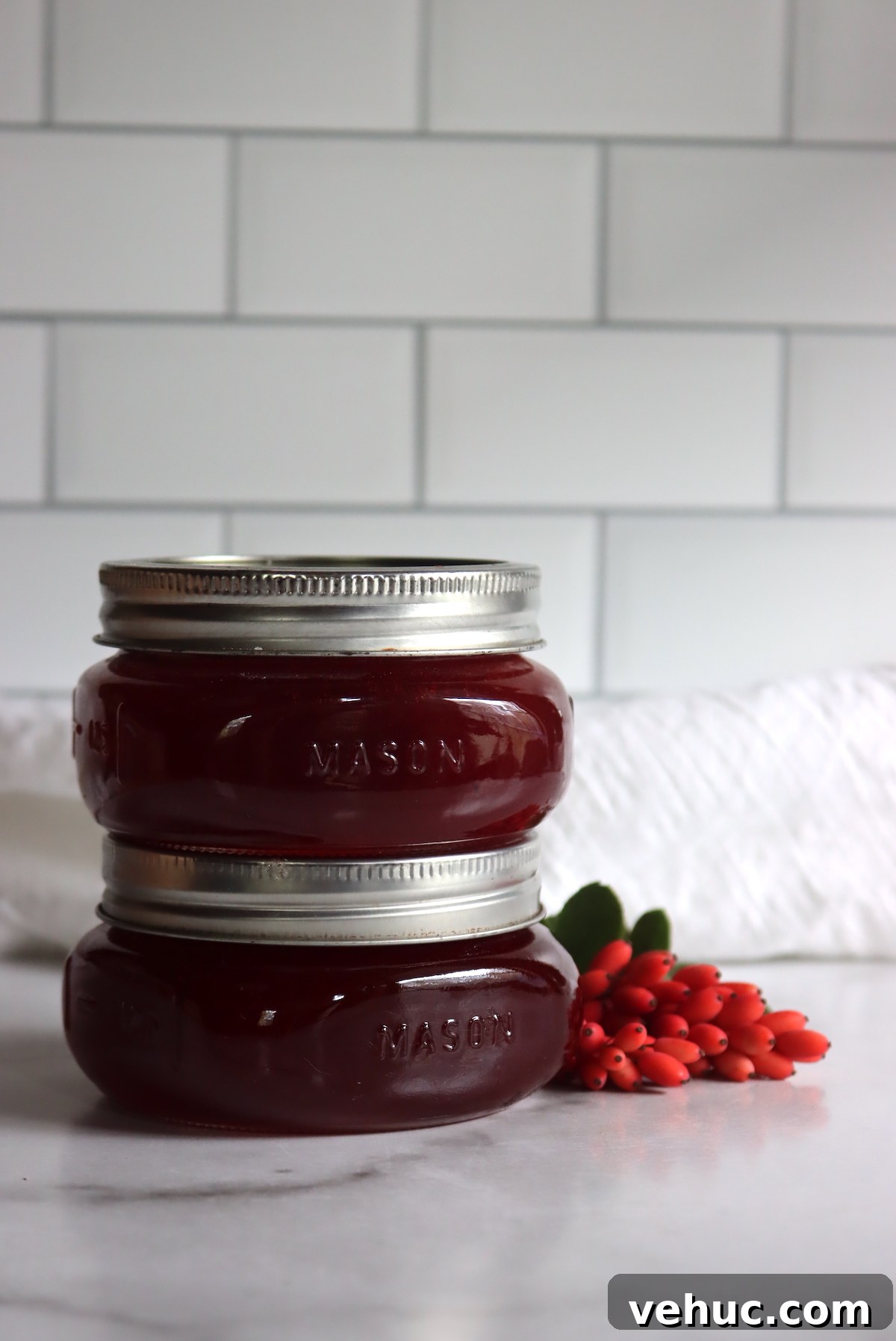
Barberry jam is a bright, tangy preserve made from cultivated or wild barberry fruits — small, tart red berries with a flavor that sits between cranberry and citrus. Their naturally high pectin and acidity make them ideal for small-batch jam without adding commercial pectin or extra acid.
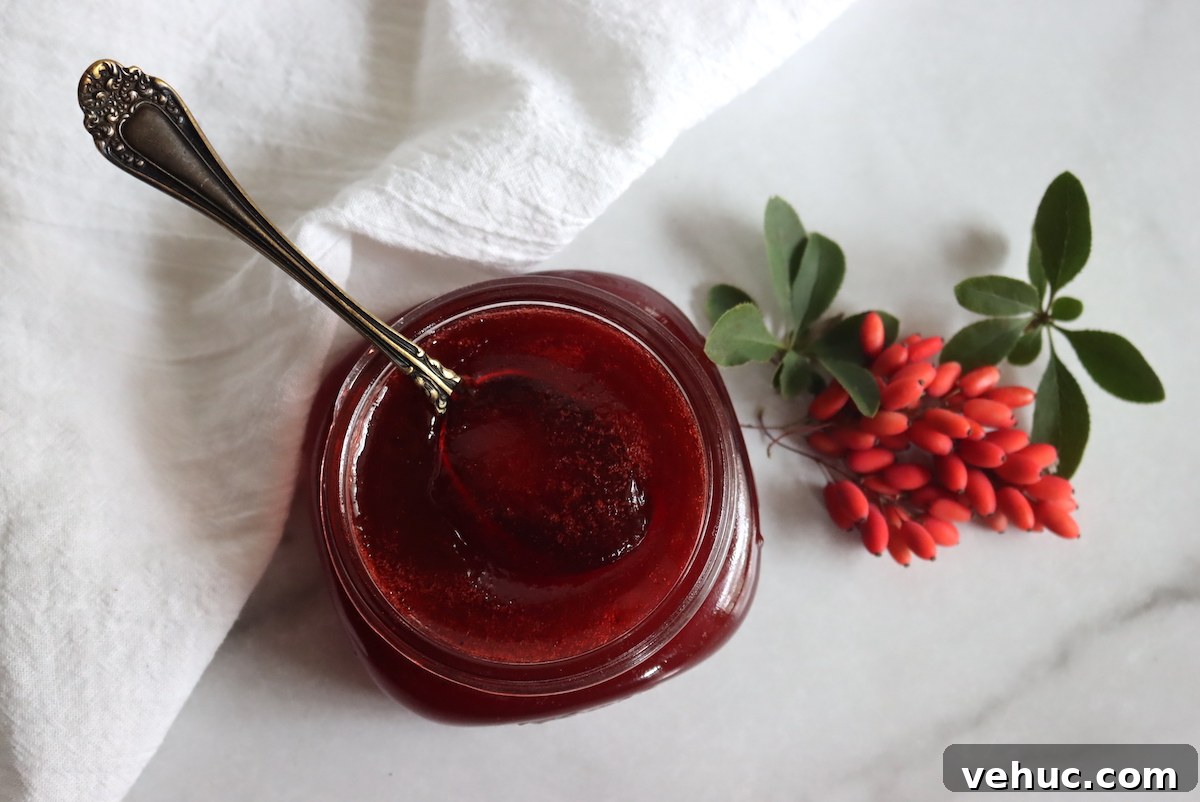
Made from the fruit of Berberis vulgaris (European barberry), this jam is intensely flavored and versatile. Though the berries are tiny, they deliver a concentrated tartness and color. Because they are high in natural pectin, barberries cook to set quickly, making them well suited for quick cook preserves.
We forage wild barberries each fall from hedgerows around our property. Removing stems and blossom remnants takes a bit of time, but the reward is an exceptionally bright jam. This small-batch recipe yields two half‑pint jars — perfect for gifting or sampling — and works well spread on toast, paired with sharp cheeses, or as a glaze for roasted meats.
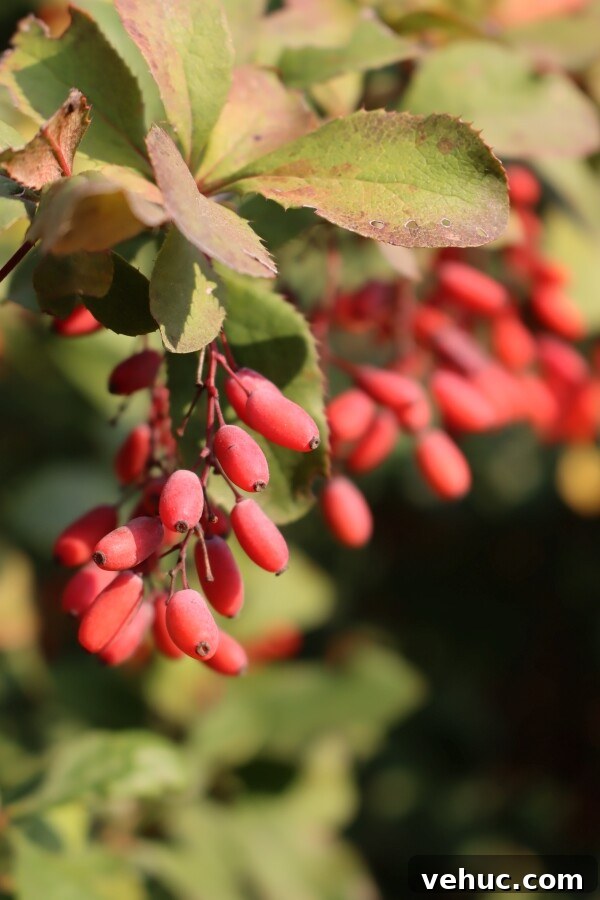
What are Barberries?
European barberry (Berberis vulgaris) is a deciduous shrub that produces hanging clusters of elongated red berries in the fall. The fruits are small — roughly the size of a grain of rice — and grow along thorny branches.
If you forage barberries, be certain of your identification. While few wild berries closely resemble barberries aside from other Berberis species, care is important. Japanese barberry is also edible but less flavorful than Berberis vulgaris.
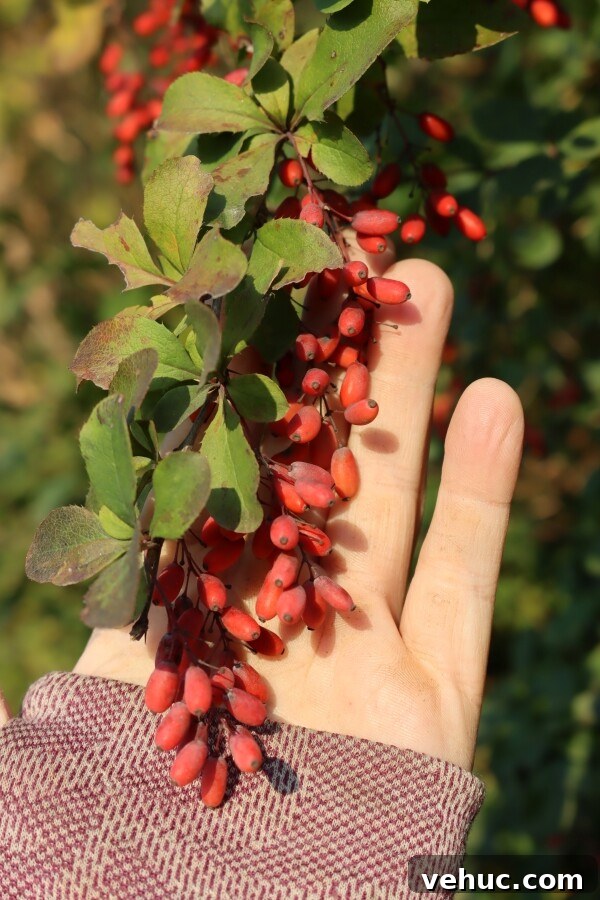
Berberis vulgaris is the variety most commonly used in cooking, especially in Middle Eastern cuisine. Wear gloves when harvesting because the shrubs are thorny. For this recipe you’ll need about 3 cups of stemmed barberries (1 pound) to make two half‑pint jars.
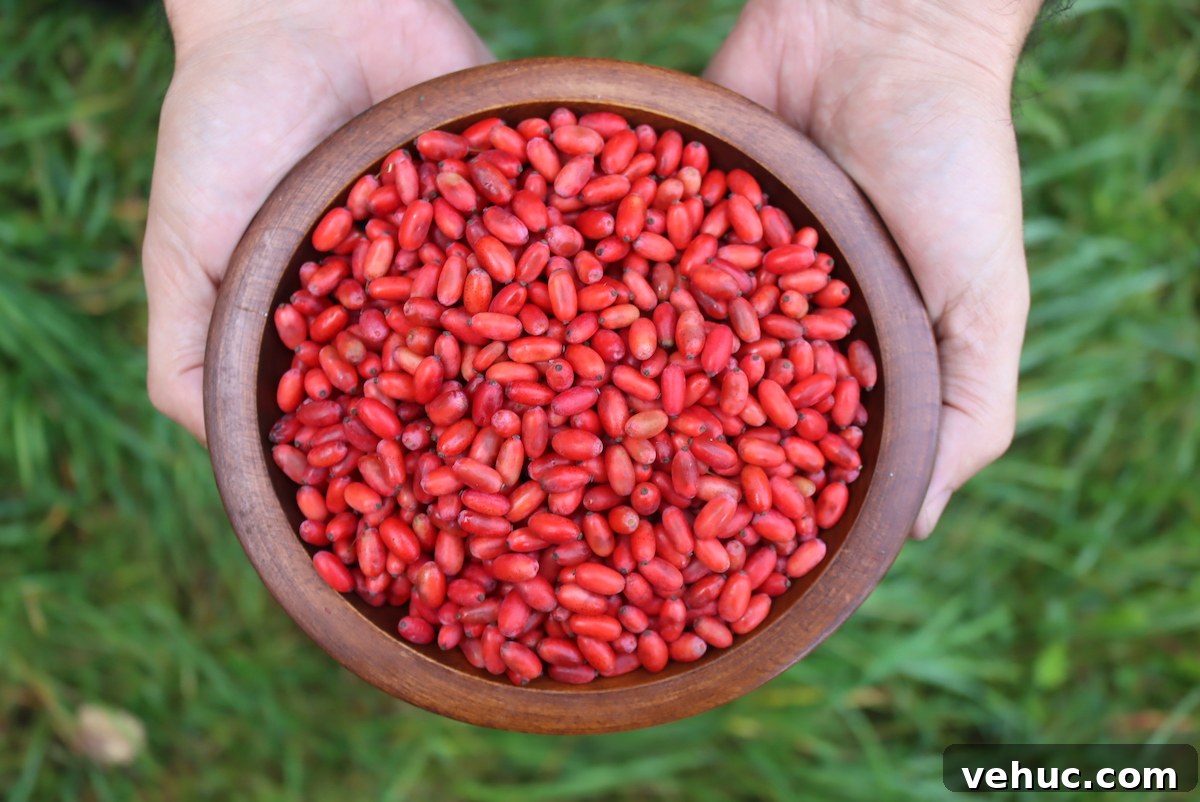
Preparing Barberries for Jam
Place the stemmed barberries in a saucepan with 1 cup of water. Bring to a gentle simmer and cook about 5 minutes, until the fruit breaks down and releases deep ruby juice. The berries should be soft enough to mash.
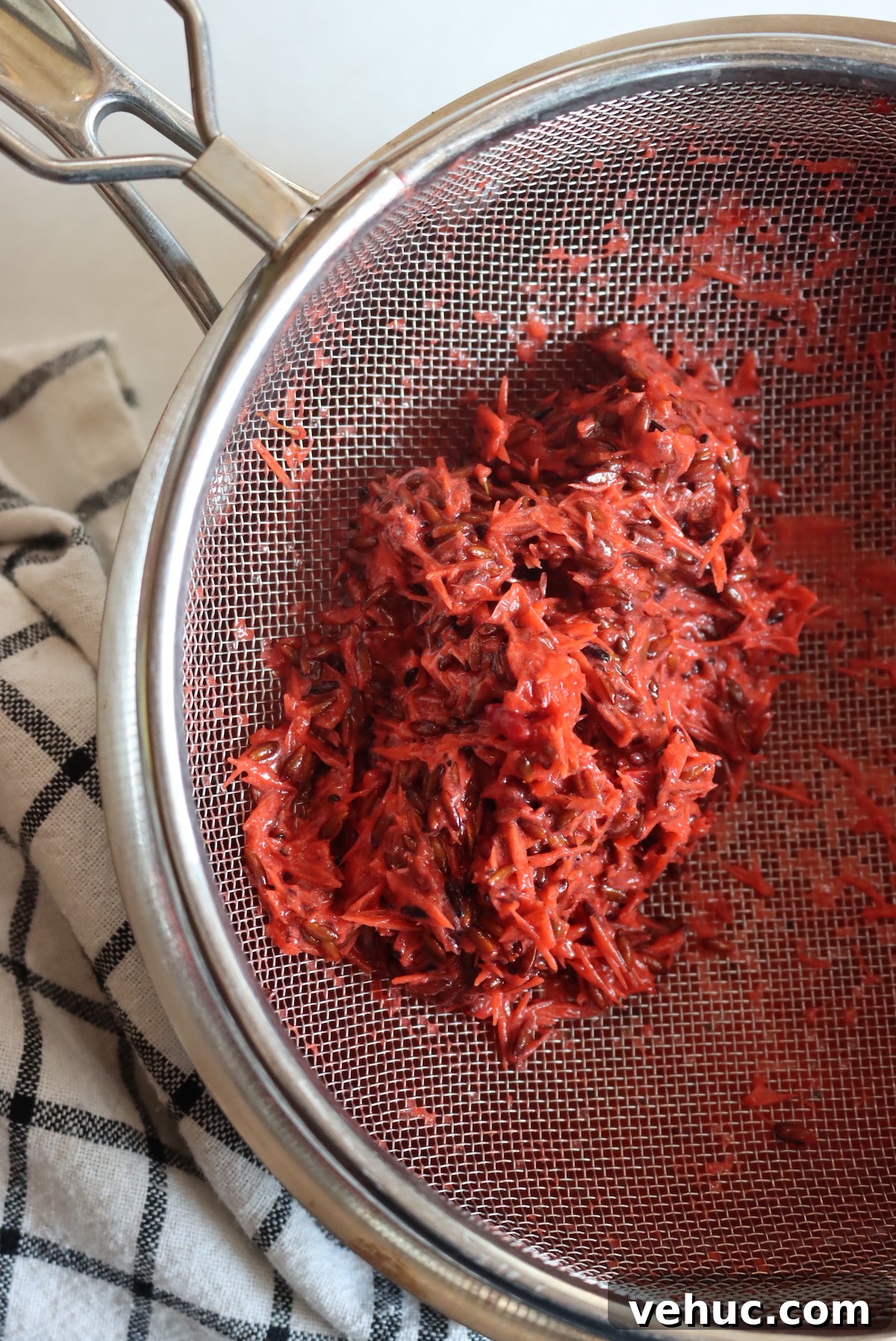
Remove seeds and any small stem pieces by pressing the cooked fruit through a fine mesh strainer with a spoon or silicone spatula. For an even smoother texture, strain again through an extra-fine sieve or several layers of cheesecloth. If you prefer a clear jelly, use a jelly bag and discard solids; for a pulpy jam, retain some pulp. From a 1-pound batch you should end up with roughly 1½ cups of seedless pulp.
Making Barberry Jam
Return the strained pulp to the pot and stir in 1½ cups granulated sugar (a 1:1 ratio by volume of pulp to sugar). Bring the mixture to a vigorous boil and cook, stirring constantly, until it reaches gel stage — this usually takes just 2–3 minutes because of the fruit’s natural pectin. Watch carefully and stir to prevent scorching.
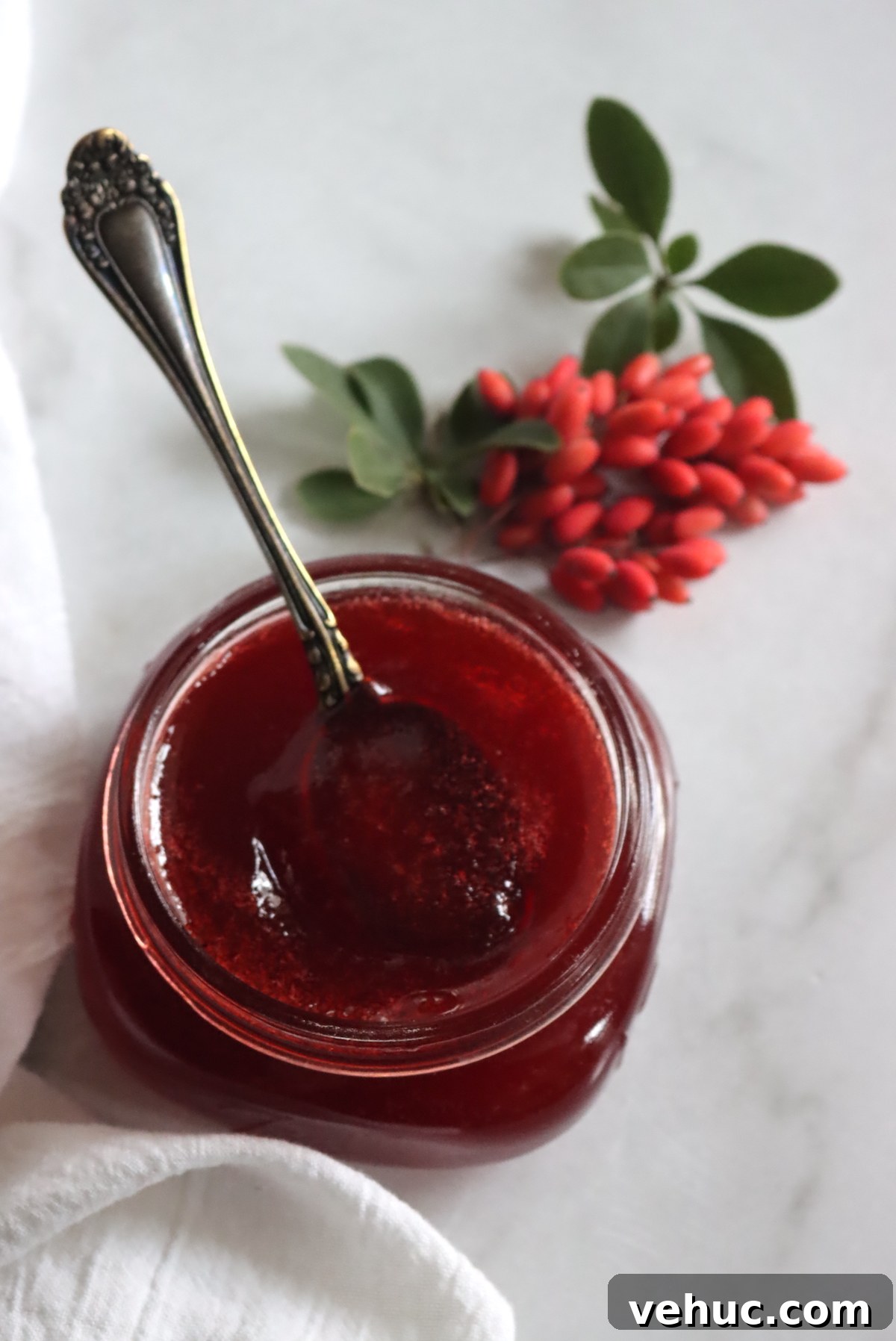
Test the set by spooning a small amount onto a chilled plate or using an instant-read thermometer. Barberry jam typically has a spoonable, spreadable consistency rather than a very stiff commercial set, with a glossy finish and pronounced tart flavor.
Canning Instructions
This recipe yields two 8-ounce jars and can be refrigerated or frozen if you prefer. To preserve shelf-stable jars, follow these water-bath canning steps:
Ladle hot jam into sterilized half‑pint jars, leaving 1/4 inch headspace. Wipe rims clean, apply two-piece lids, and tighten to fingertip tight.
Process jars in a boiling water bath canner for 10 minutes (use 15 minutes if above 6,000 feet elevation). Let jars cool undisturbed 12–24 hours, then check seals before storing. Properly sealed jars keep in the pantry for 12–18 months. After opening, refrigerate and use within 2–3 weeks.
FAQ
Yes. Barberries are naturally acidic and well suited to water-bath canning. Their typical pH and acidity allow safe processing without added lemon juice. Always properly identify foraged fruit and avoid ornamental varieties not intended for eating.
No. This recipe is intended for fresh barberries. Dried barberries are often sold salted or oiled for culinary use and won’t perform the same way in jam making.
No. Barberries are naturally high in acid and pectin, so additional acidifiers are unnecessary for safety or gelling in most cases.
Tart like cranberry jam but brighter and slightly citrusy. Many describe it as cranberry meets citrus or a sour cherry with a lemony edge.
Other Ways to Use Barberries
Barberries are versatile in both sweet and savory cooking. In Persian cuisine, dried barberries (zereshk) are sautéed in butter and used in rice dishes like zereshk polo. They also add bright acidity to pilafs, couscous, and grain salads.
Fresh or rehydrated dried barberries work well in baked goods such as scones, muffins, or quick breads where you might otherwise use dried cranberries or currants. They pair beautifully with poultry, lamb, or duck — try them in marinades, stuffings, pan sauces, or a simple chutney simmered with shallots and vinegar.
Unique Canning Recipes
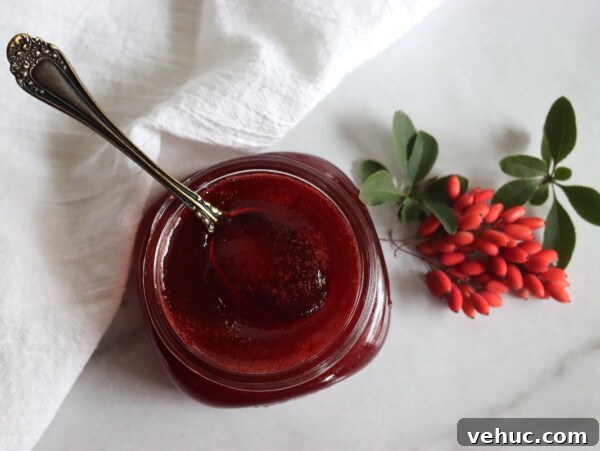
Barberry Jam
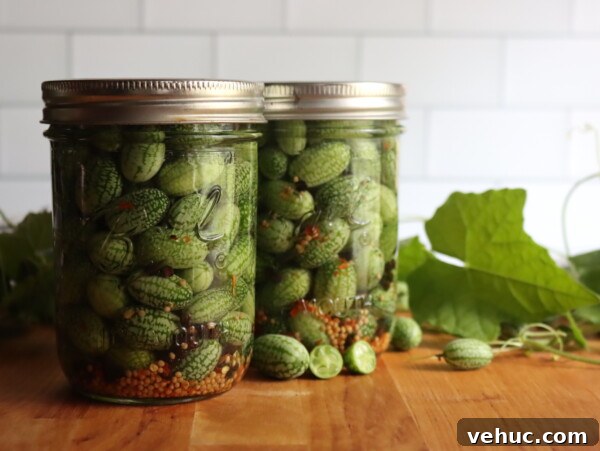
Cucamelon Pickles
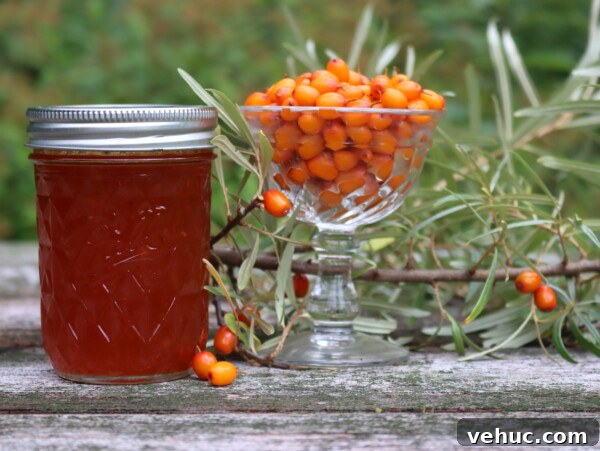
Sea Buckthorn Jam (& Jelly)
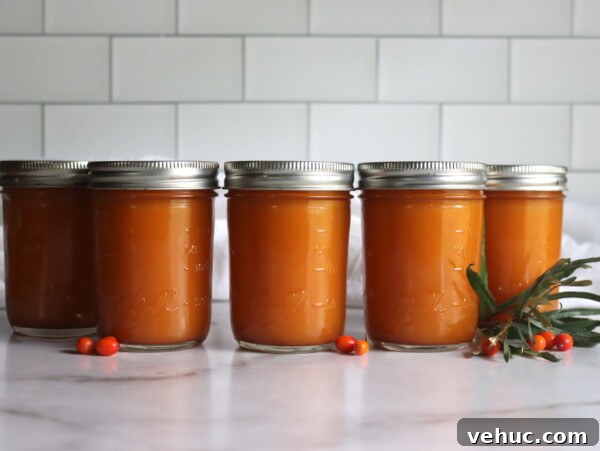
Sea Buckthorn Juice
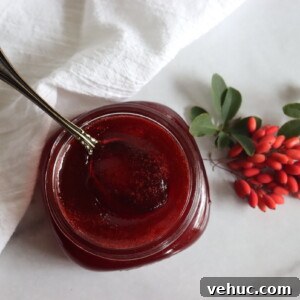
Barberry Jam
Equipment
- Fine mesh strainer
- Water bath canner (optional)
Ingredients
- 3 cups barberries, stemmed (about 1 lb)
- 1 cup water
- 1½ cups granulated sugar (adjust to match pulp volume)
Instructions
- Simmer the fruit: Add stemmed barberries and water to a saucepan. Simmer gently about 5 minutes, mashing until the berries break down.
- Strain the pulp: Press through a fine mesh strainer to remove seeds and stem fragments. For a smoother texture, strain again through cheesecloth or an extra-fine sieve.
- Measure the pulp: You should have roughly 1½ cups of seedless pulp per pound of berries. Adjust sugar as needed to maintain a 1:1 volume ratio of pulp to sugar.
- Add sugar: Stir in the sugar and bring to a rolling boil over high heat.
- Cook to gel stage: Boil, stirring constantly, for 2–3 minutes until the mixture thickens and begins to gel.
- Jar the jam: Ladle into hot sterilized half-pint jars, leaving 1/4 inch headspace.
- Water bath canning (optional): Process jars 10 minutes in a boiling water bath (15 minutes above 6,000 ft).
- Cool and store: Let jars cool undisturbed 12–24 hours, check seals, and store. Refrigerate after opening.
Notes
Barberry measurements: Start with 1 lb fresh barberries (about 3 cups stemmed). After cooking and straining you’ll have about 1½ cups pulp — enough for two half‑pint jars.
Sugar amounts: Use a 1:1 ratio by volume of pulp to sugar. If your pulp volume differs, adjust sugar accordingly.
Straining tips: Barberries contain small seeds and blossom remnants. Strain thoroughly for a smooth texture or use a jelly bag for a clear jelly.
Pectin & set: Barberries are naturally high in pectin and acid, so no added pectin is required and the jam sets quickly. Watch the pot closely to avoid overcooking.
Flavor notes: Tart and complex — think cranberries with a brighter, citrus-like edge. It pairs well with both sweet and savory dishes.
Yield: Expect about two half‑pint (8 oz) jars from a 1 lb batch; yield varies with straining.
Nutrition
Carbohydrates: 28 g,
Protein: 1 g,
Fat: 1 g,
Sugar: 19 g
Nutrition information is an approximation.