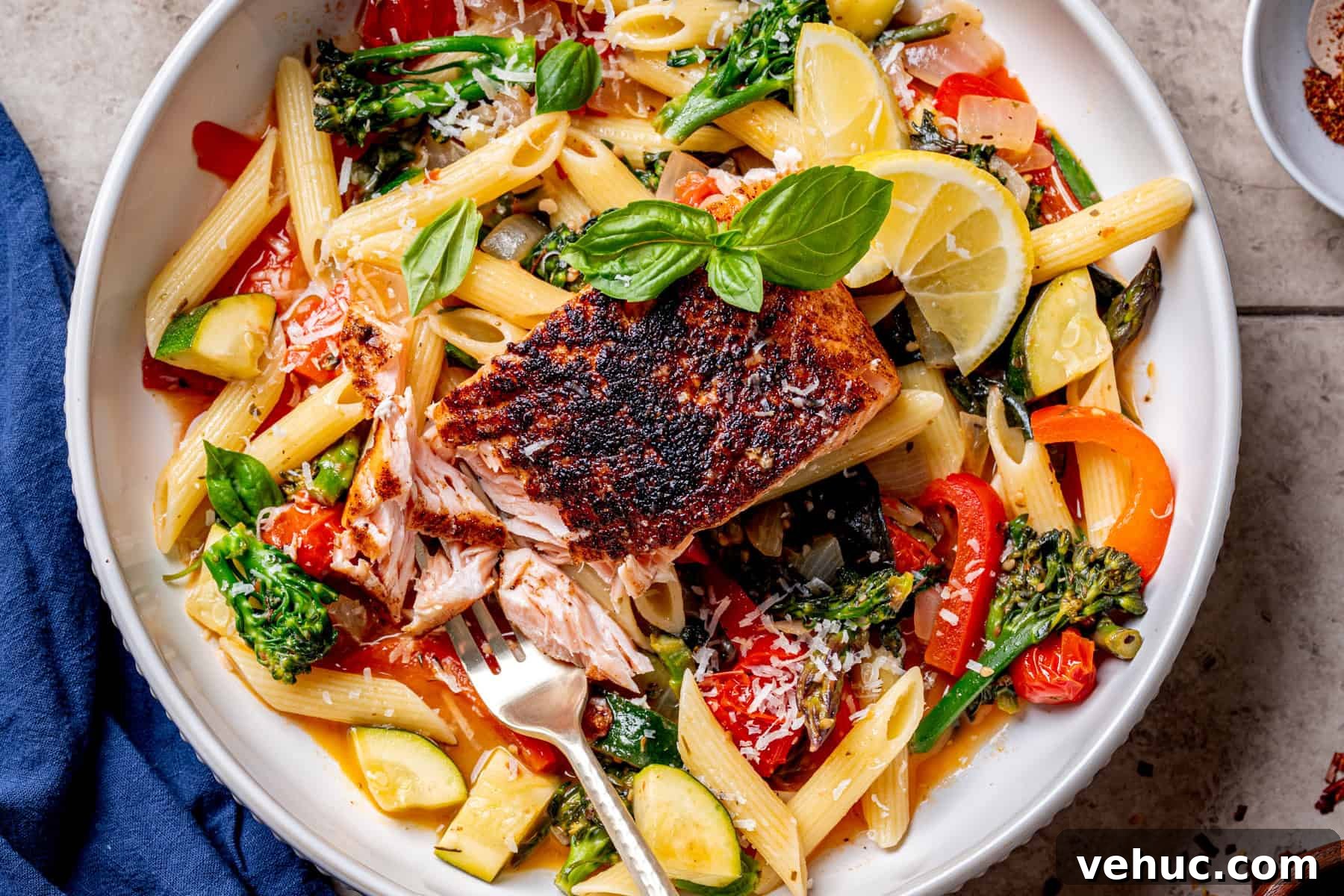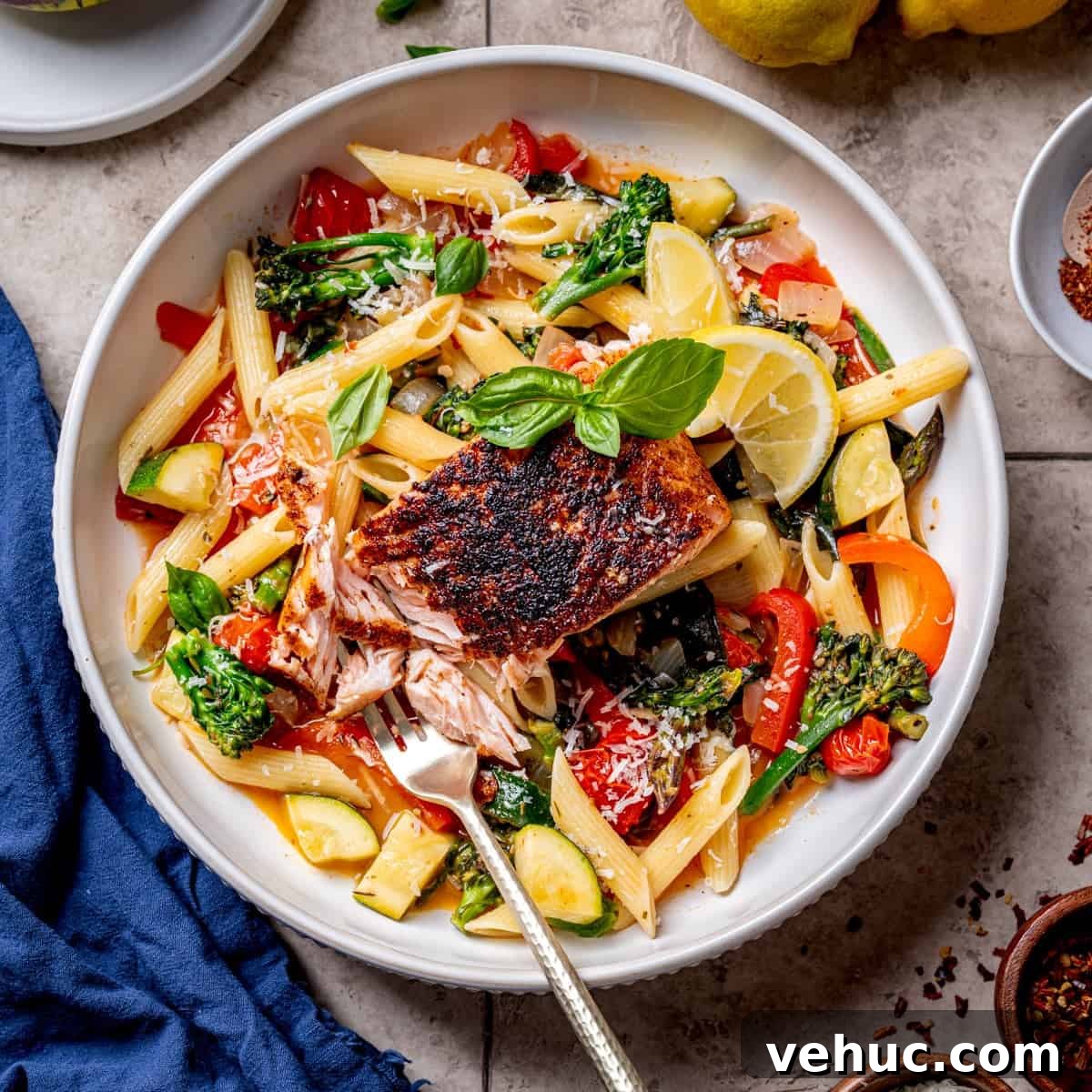
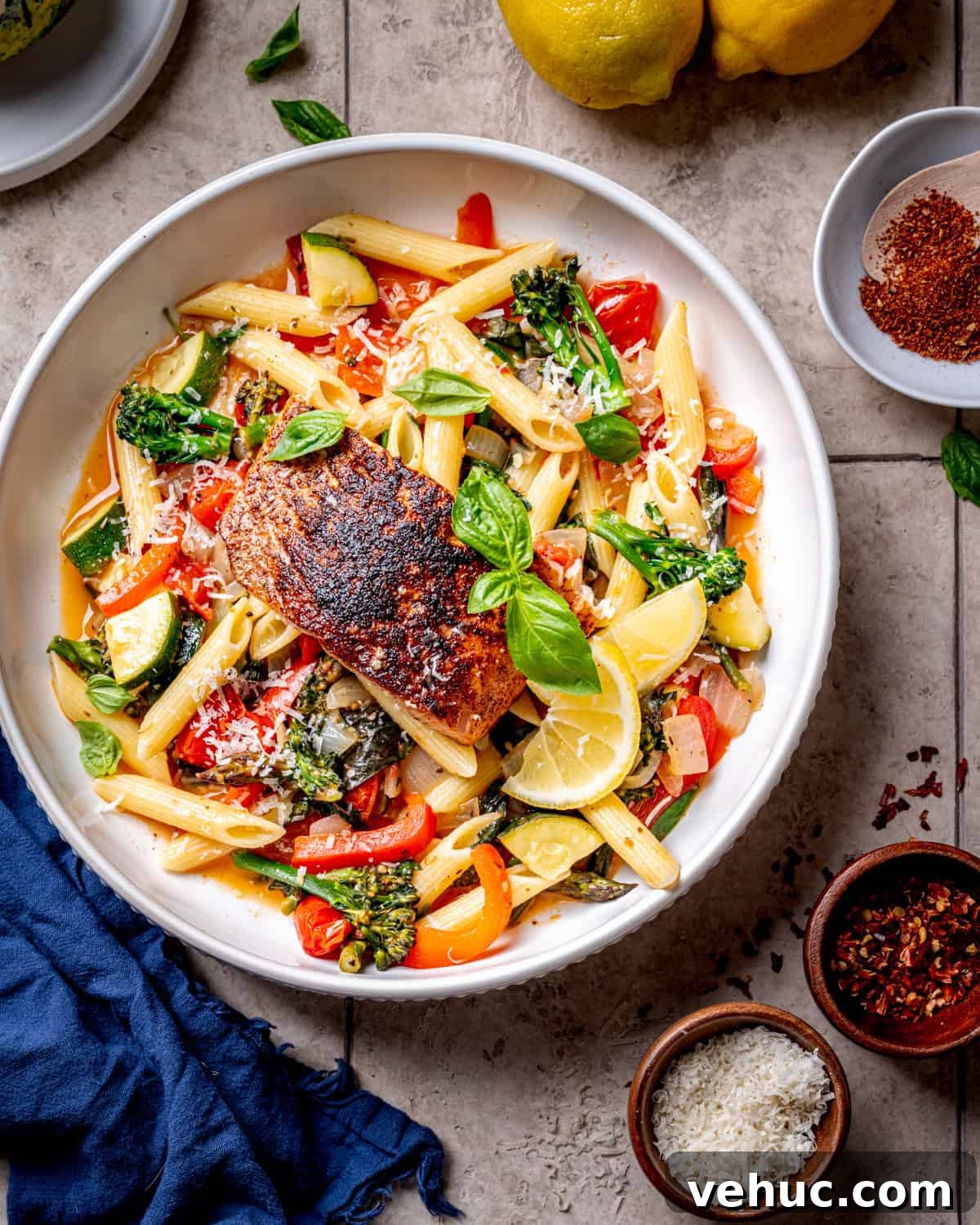
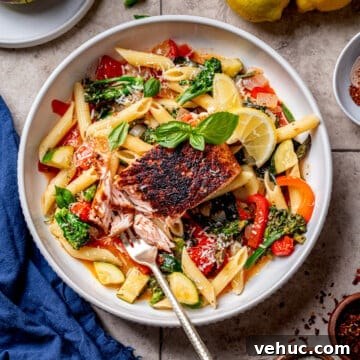
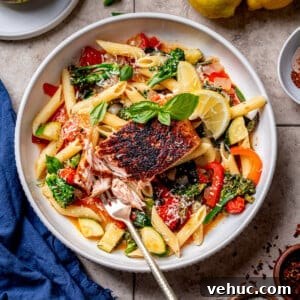
This simple, flavorful weeknight dinner brings together spice-crusted salmon, a silky butter-and-wine sauce, crisp-tender spring vegetables, and penne that holds it all together. The blackening seasoning provides bold flavor, a quick blanch keeps asparagus and broccoli bright and snappy, and the sauce—made from white wine, butter, parmesan, and a bit of starchy pasta water—coats every piece of pasta without feeling heavy. The salmon cooks quickly and finishes with a smoky, peppery crust and a bright squeeze of lemon.
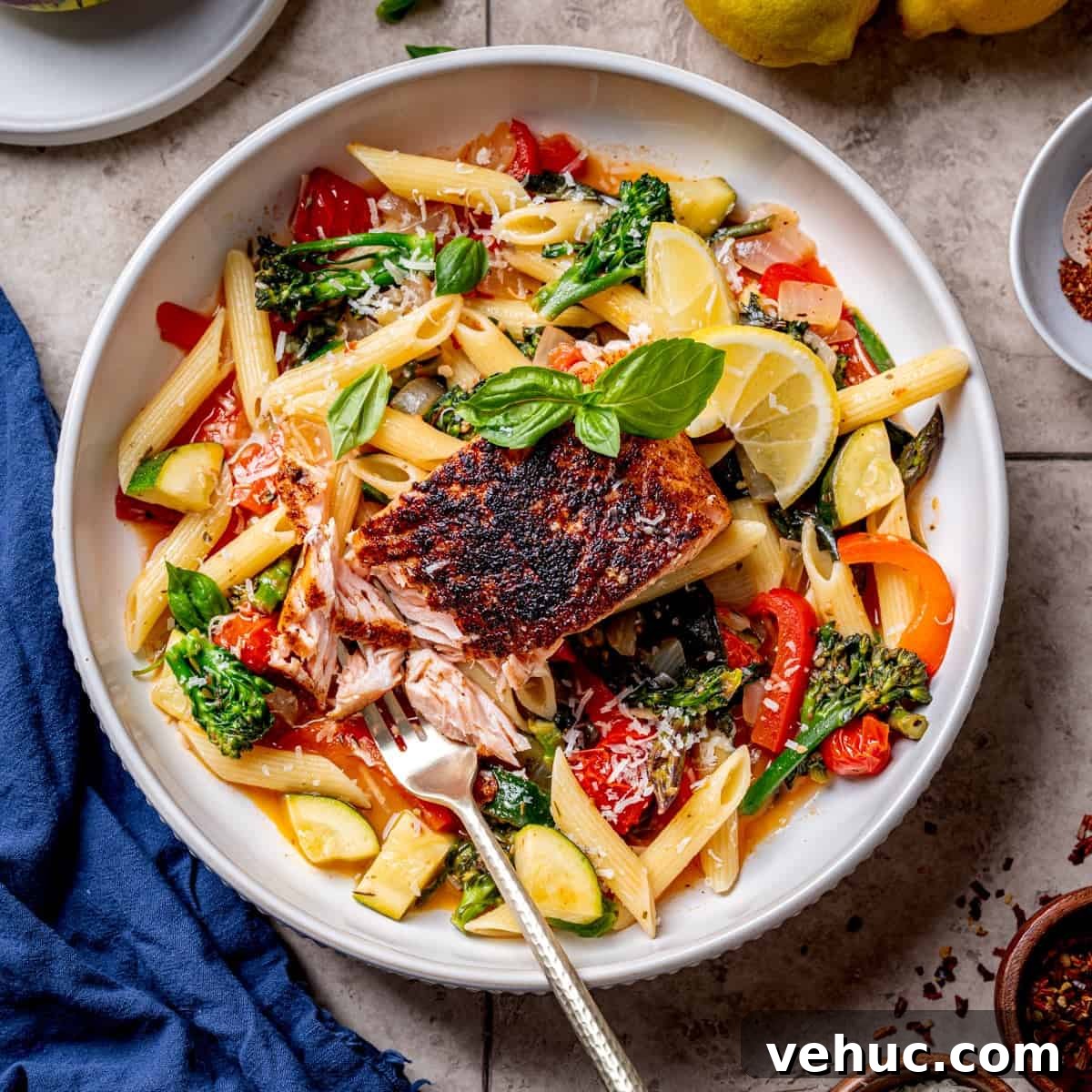
Nothing about this recipe is fussy: thoughtful timing and a few techniques—blanching, reducing wine, emulsifying with pasta water, and searing the salmon in its own pan—deliver a balanced, restaurant-quality plate at home. Vegetables retain texture and color, the sauce stays light, and the salmon’s blackened crust adds a satisfying contrast.
Why You’ll Love this Recipe
- Easily customizable to whatever fresh vegetables or fish you have on hand.
- Straightforward preparation—no complicated techniques.
- A great method for cooking salmon with a crisp, smoky crust.
- Light but flavorful pasta sauce that clings to each piece of penne.
- An excellent way to showcase a variety of spring vegetables.
Origins of This Dish
Penne primavera is an Italian‑American classic that emerged in the late 1970s, originally intended to be a light, olive oil–based dish celebrating market-fresh vegetables. Pairing blackened salmon with a butter-forward primavera creates a pleasing contrast: the spice and char of the fish meet bright vegetables and a wine-kissed sauce, all rounded out by pasta.
This version keeps things light—no cream or flour-thickened sauce, and vegetables cooked to retain texture. It’s Italian‑American comfort food with a touch of Cajun spice that works beautifully together.
Why This Version Actually Works
Many primavera recipes overcook vegetables or bury them in heavy cream. Here, asparagus and broccoli are blanched briefly and shocked in ice water, preserving color and bite. The sauce develops in stages: onions and peppers soften to release sweetness, then tomatoes and white wine add acidity and depth. Parmesan and reserved pasta water emulsify with butter to create a glossy, clingy sauce. Cooking the salmon in a separate pan lets you control the heat so you get a dark, smoky crust without interfering with the sauce or vegetables.
How to Make Blackened Salmon Penne Primavera
The sequence is important: blanch the green vegetables, build the sauce with onions, peppers, wine and tomatoes, add zucchini and simmer while you cook pasta and sear the salmon. Finish by tossing pasta with the sauce, stirring in butter and basil, and plating with the salmon on top and a squeeze of lemon.
Ingredients
What you need for this recipe:
For the Pasta and Sauce:
- Asparagus and broccoli: Bright, slightly bitter greens to balance butter and salmon.
- Olive oil: A basic cooking olive oil is fine—high heat will mask delicate flavor.
- Onion and bell pepper: Large dice keeps the vegetables chunky and present in the sauce; red or orange peppers add sweetness.
- Garlic: Leave a clove whole to perfume the sauce gently; mince more if you want a stronger garlic note.
- White wine: Dry white (Sauvignon Blanc, Pinot Grigio, or unoaked Chardonnay) adds acidity.
- Cherry or grape tomatoes: Halved so they release juices and blend with the wine.
- Italian seasoning, black pepper, red pepper flakes: Provide aromatics, warmth, and a little heat that complements the salmon.
- Zucchini: Added late so it remains firm and sweet—choose smaller zucchini if possible.
- Parmesan: Fresh Parmigiano-Reggiano adds saltiness and umami and helps emulsify the sauce.
- Unsalted butter: Finishes the sauce; total used is split between the salmon pan and the pasta.
- Fresh basil: Added at the end to preserve its fresh, peppery flavor.
- Penne: Ridged, tubular pasta holds the sauce well; cook to al dente and reserve pasta water.
For the Salmon:
- Salmon fillets: About 4 oz each; skinless or remove skin before cooking.
- Blackening seasoning: A blend typically including smoked paprika, cayenne, garlic and onion powder, thyme and oregano. Use about 1 tablespoon for a bold crust; check salt content in store blends.
- Lemon juice: A squeeze brightens the dish at the end—half a lemon per serving is fine.
See the recipe card below for exact quantities.
Equipment
Useful tools for this spring pasta:
- Two pots and two pans: One pot to blanch vegetables, one large pot for pasta, a large sauté pan to build the sauce and toss pasta, and a heavy skillet or cast iron pan for searing salmon.
- Spider spatula or slotted spoon: To remove blanched vegetables quickly from boiling water.
- Fish spatula: Helpful for flipping the salmon.
- Microplane or fine grater: For freshly grating parmesan.
Step-by-Step Instructions
Blanch the Vegetables
- Bring a medium pot of well-salted water to a boil. Prepare a bowl of ice water to shock the vegetables.
- Add asparagus and broccoli to boiling water and blanch for 1 minute. Remove with a slotted spoon and plunge into ice water to stop cooking. Drain and pat dry.
Prep the Pasta Pot and Start the Sauce
- Bring a large pot of salted water to a boil for the pasta.
- In a large pan, heat 2 tablespoons olive oil. Add diced onion, bell pepper, whole garlic clove, and ½ teaspoon salt; cook until softened (about 2 minutes). Add white wine and reduce briefly, then stir in halved tomatoes, Italian seasoning, black pepper, an additional ½ teaspoon salt, and red pepper flakes. Lower to medium-low and cook gently for 5 minutes.
- Turn heat to low and add zucchini plus the blanched asparagus and broccoli. Let the sauce simmer while you cook the pasta to al dente.
- Add grated parmesan to the sauce, then transfer the drained pasta into the pan (reserve some pasta water). Add reserved pasta water a few tablespoons at a time (about 1/4–1/2 cup total) while stirring to create a glossy sauce. Remove from heat and stir in 3 tablespoons butter and torn basil leaves.
Cook the Salmon and Finish the Dish
- While the pasta cooks, season salmon fillets with 2 teaspoons olive oil, a pinch of salt per fillet, and blackening seasoning.
- Heat a cast iron or heavy skillet over medium-high. Add remaining 2 teaspoons olive oil and sear the salmon for about 4 minutes. Add 2 tablespoons butter, flip, and cook another 3–4 minutes depending on thickness and desired doneness. Remove and keep warm or plate immediately on the pasta.
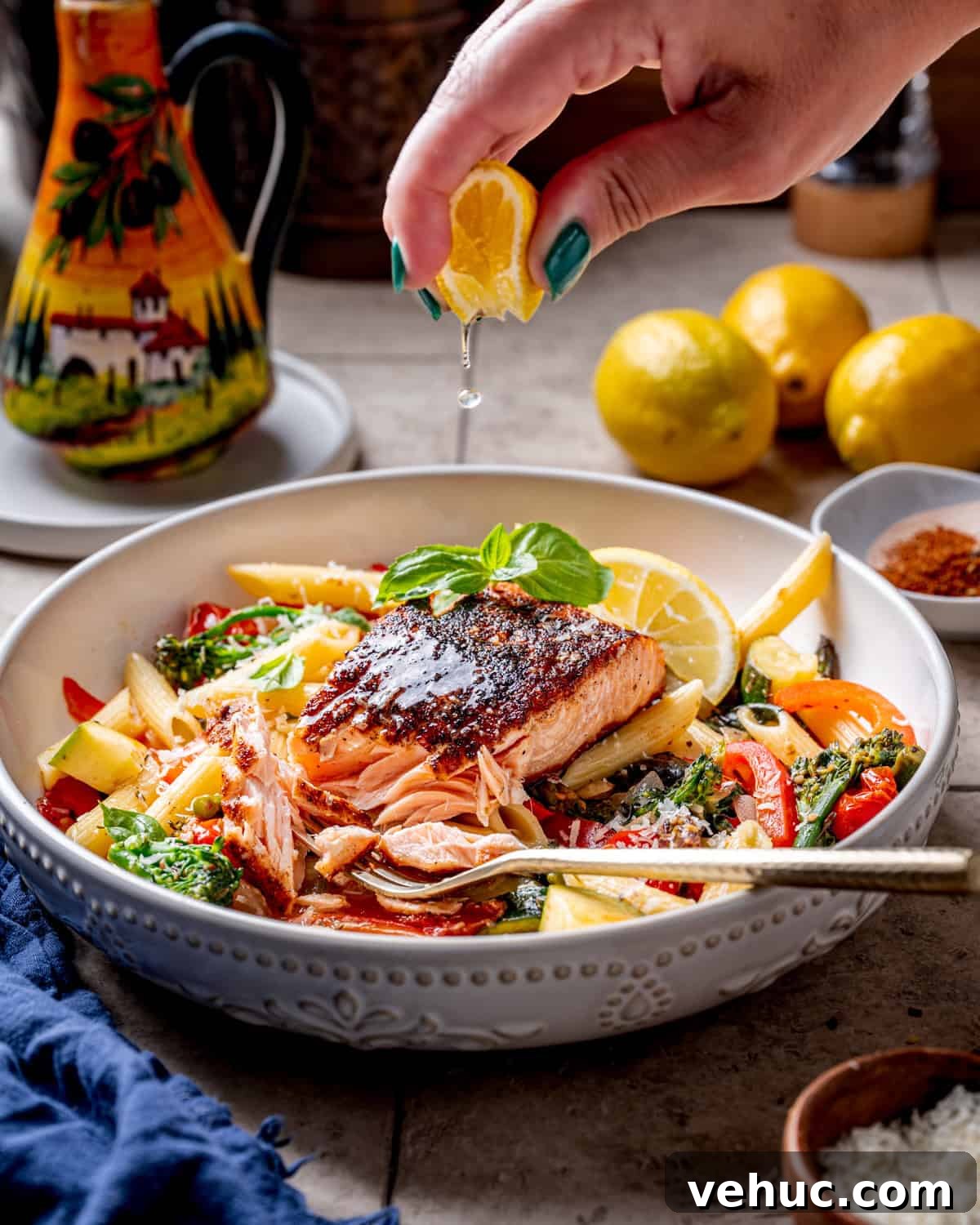
- Finish with a squeeze of lemon over each plate and offer extra parmesan and basil if desired.
How to Tell It’s Done Right
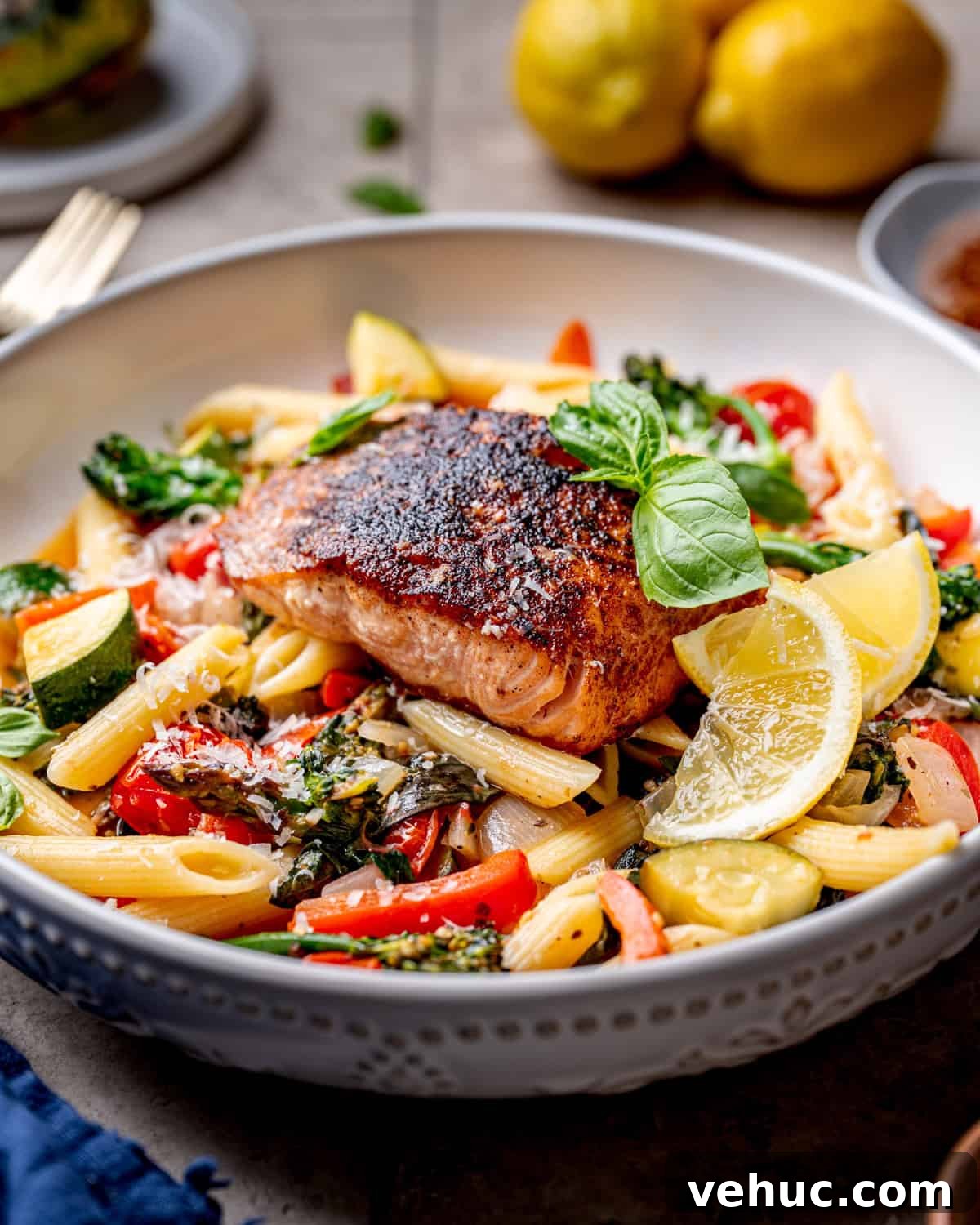
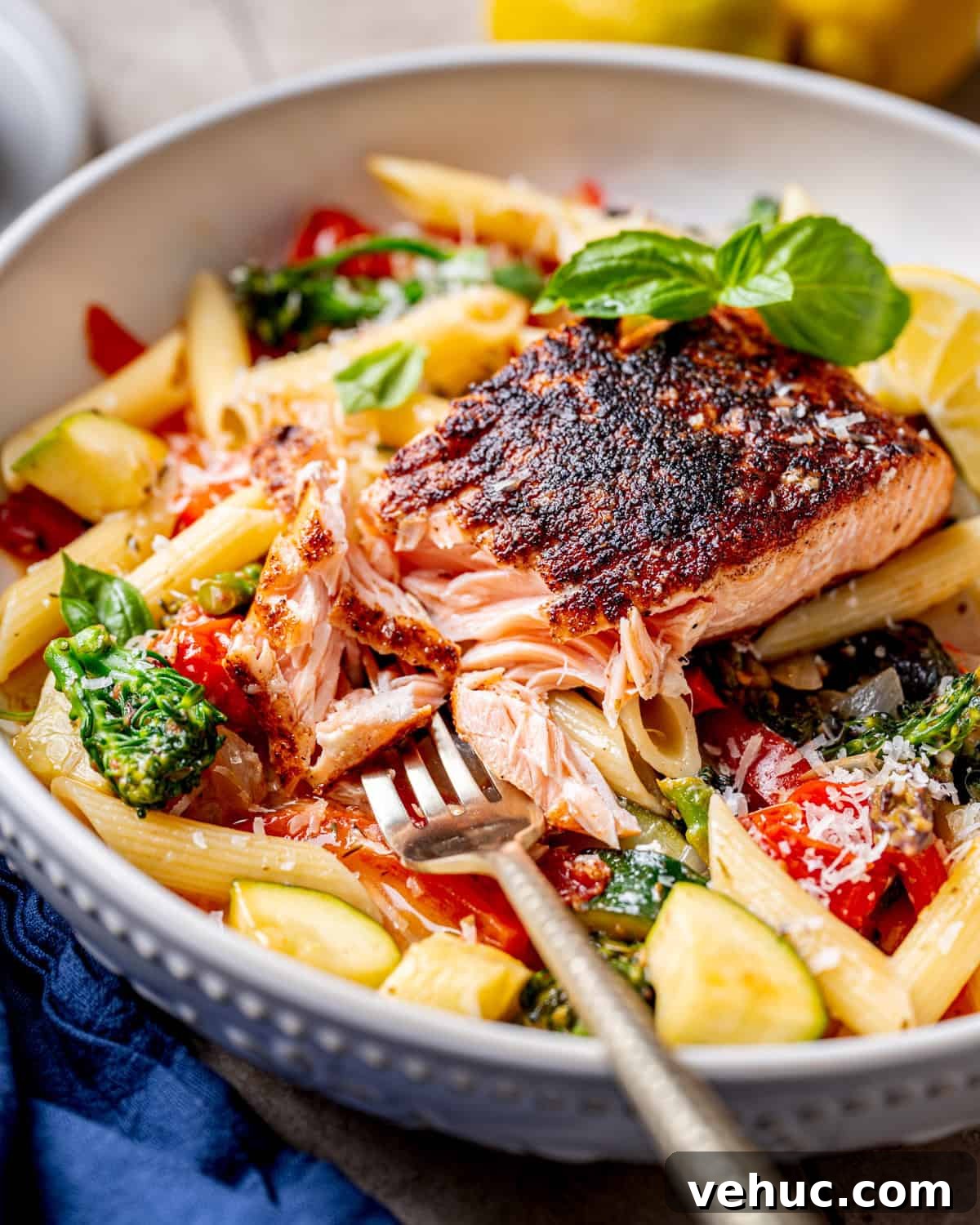
Vegetables should remain bright and have some bite—not soft or mushy—thanks to the short blanch and brief simmer. The salmon should have a dark, smoky crust and be springy to the touch; the interior should be opaque with a hint of translucence in the center unless you prefer it fully cooked. Pasta should be al dente with zucchini tender but still slightly firm.
Variations and Substitutions
- Vegetables: Swap in spinach, peas, or sugar snap peas.
- White wine: Replace with chicken or vegetable stock plus a squeeze of lemon if you prefer no alcohol.
- Cheese: Grana Padano or pecorino can substitute for parmesan.
- Pasta: Use rigatoni, ziti, farfalle, or cavatappi if you don’t have penne.
- Herbs: Parsley or dill work well—dill pairs especially nicely with salmon.
- Protein: Cod, halibut, or shrimp can be used in place of salmon and take well to blackening seasoning.
Other tweaks: swap salmon for chicken (cook a bit longer), add a splash of cream or mascarpone for a richer sauce, or toss in sun-dried tomatoes, capers, or toasted pine nuts for different flavor and texture profiles.
Storage
How to store leftovers: Keep pasta and vegetables separate from the salmon if possible. Store in airtight containers in the refrigerator for up to three days.
How to reheat: Gently warm the pasta in a skillet over low heat with a splash of water or stock to loosen the sauce. Reheat salmon in a 300°F oven for about five minutes until warmed through.
Freezing: Not recommended—vegetables will become mushy, the sauce can separate, and salmon texture will degrade.
Top Tips from the Pros
- Blanch the veggies ahead: Blanch and chill asparagus and broccoli hours before service, dry and refrigerate so they reheat quickly in the sauce.
- Add butter at the end: Stir cold butter in off the heat so the emulsion holds and the sauce doesn’t break.
- Add pasta water in stages to control sauce consistency and taste as you go.
- Do not rinse pasta: Leave the starchy coating so the sauce adheres to the noodles.
What to Serve With Blackened Salmon Penne Primavera
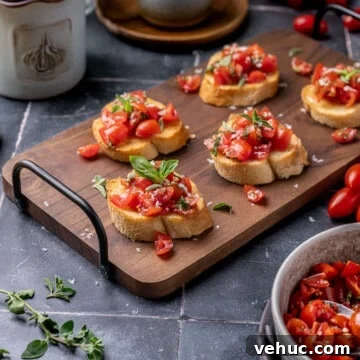
A side of crusty bread is perfect for soaking up extra sauce. Keep starters light—simple tomato bruschetta or a crisp salad pairs nicely without overwhelming the plate.
Drink Pairings for Penne Pasta Primavera
White wines: Serve the same wine you used in the sauce—Sauvignon Blanc or Pinot Grigio are great choices for their acidity and citrus notes. They cut through butter and complement lemon and basil.
Red wines: If you prefer red, choose something light and fruity like a Pinot Noir or Beaujolais so it won’t overpower the fish. For non-alcoholic options, sparkling water with lemon is refreshing.
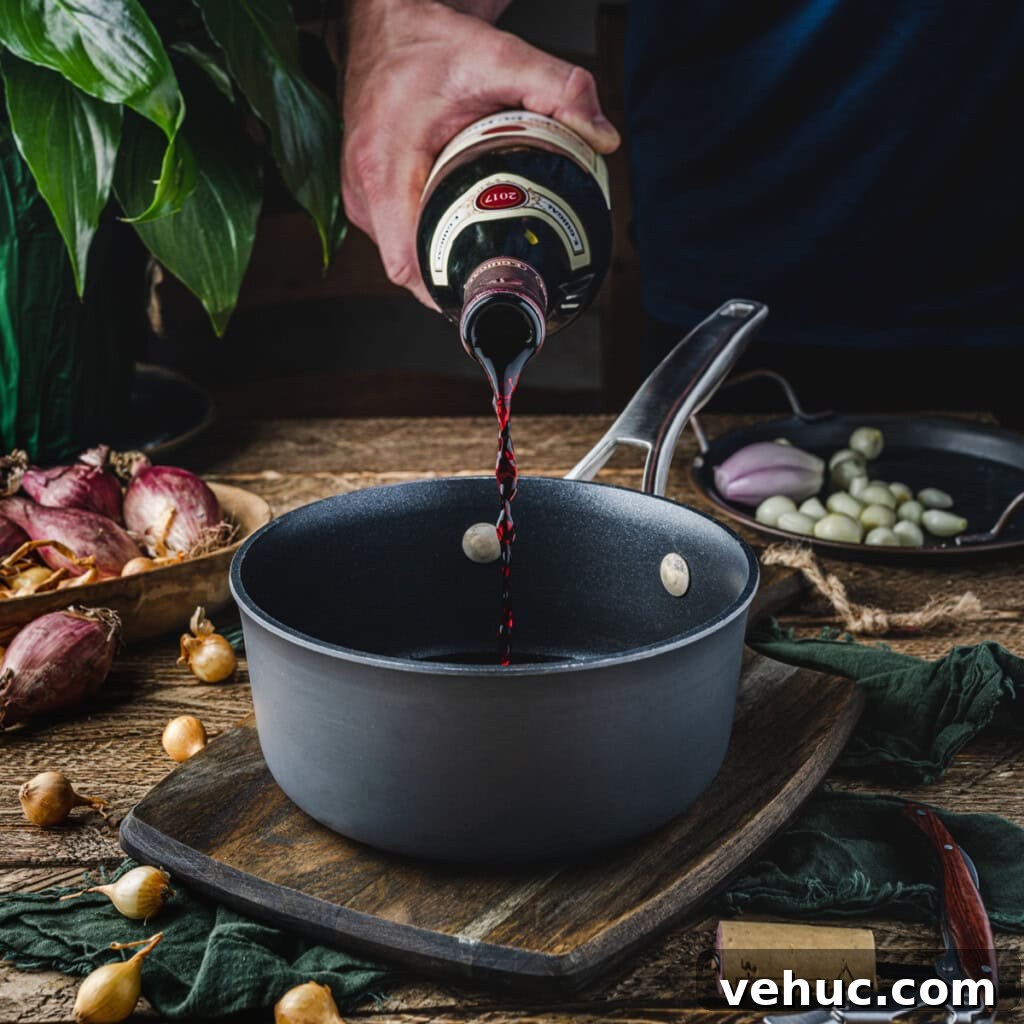
Read our Cooking with Wine Guide:
Best Wines For Cooking (And When to Use Them)
Simple rules to match bottles to dishes so you get the best flavor without wasting wine.
FAQ
Blackening seasoning is typically spicy and smoky, often featuring cayenne and smoked paprika with garlic, onion, and other herbs. It delivers heat and a charred flavor when seared.
This version uses a light semi‑emulsion of butter, grated cheese, and starchy pasta water, lifted by wine and tomato juices.
Primavera means “spring,” and in culinary terms it refers to a dish that highlights spring vegetables.
Related
Looking for other seafood dishes? Try the recipes shown below.
-
Mini New England Lobster Rolls with Jalapeño Dressing
-
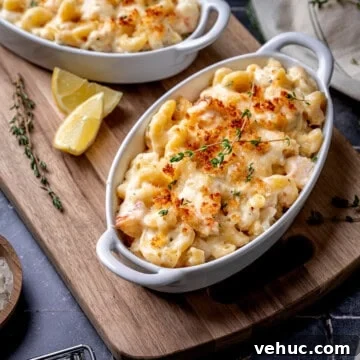
Lobster and Shrimp Mac and Cheese (Restaurant Quality)
-
Blackened Salmon Penne Primavera
-
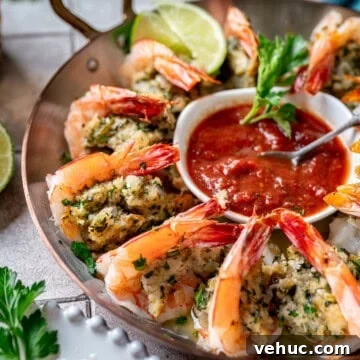
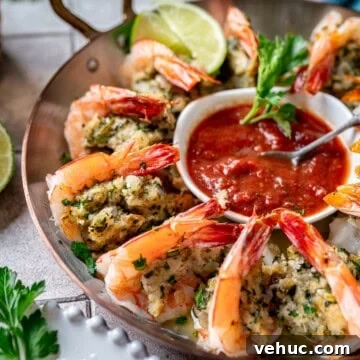
Baked Italian Herb Stuffed Shrimp with Lime Butter

Pairing
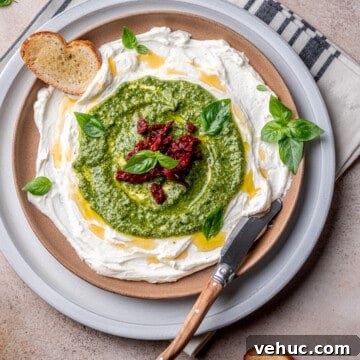
Favorite appetizers to serve with this dish include whipped ricotta with pesto and sun‑dried tomatoes, marinated artichoke crostini, or a simple bruschetta. These lighter starters complement the pasta and salmon without competing.
-
Whipped Ricotta with Pesto and Sun Dried Tomatoes
-
Marinated Artichoke Hearts Crostini
-
Baked Italian Herb Stuffed Shrimp with Lime Butter
-
Easy Bruschetta with Marinated Tomatoes and Balsamic Vinegar

📖 Recipe
Blackened Salmon Penne Primavera Worth Making Tonight