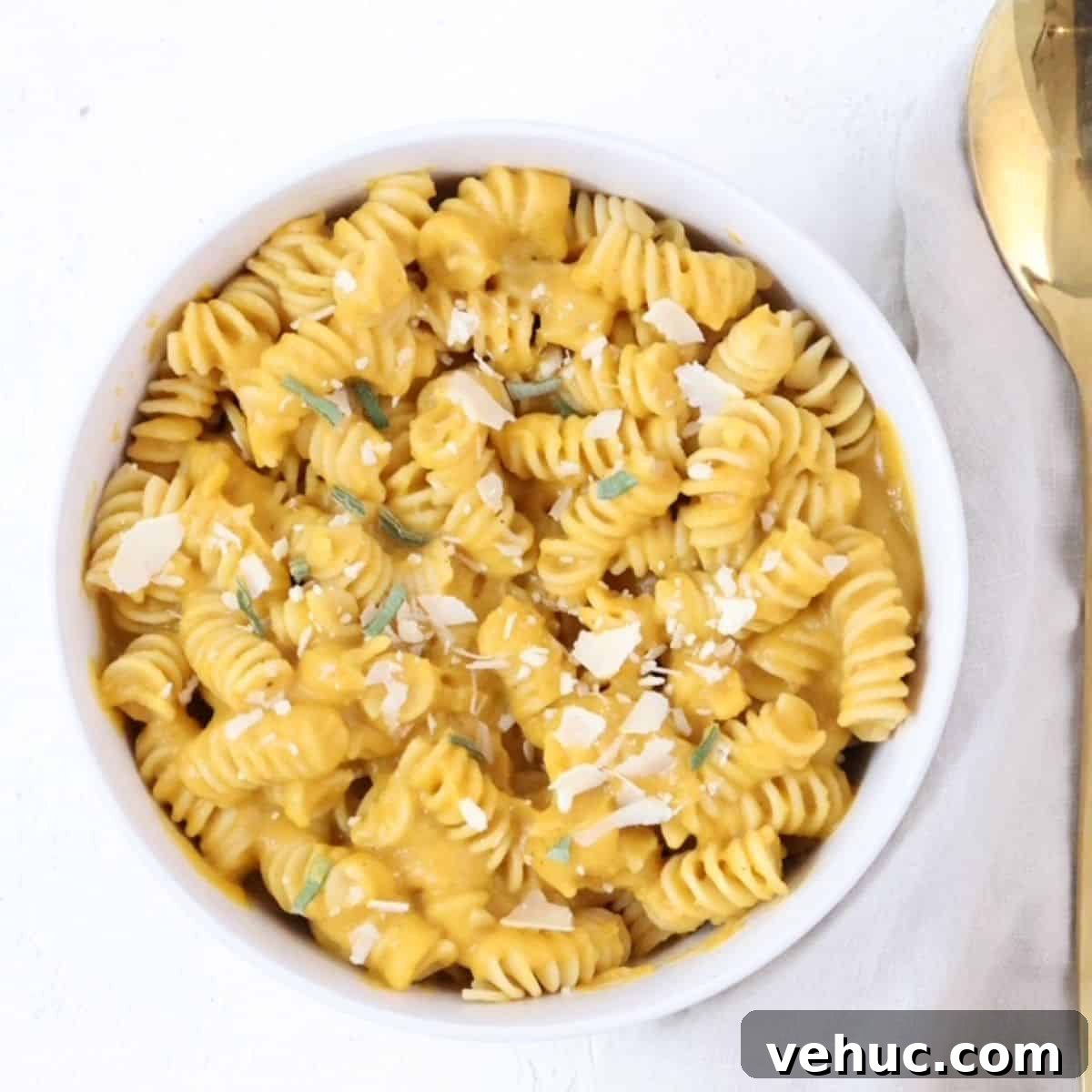
Easy Butternut Squash Pasta Sauce made with roasted butternut squash, pear, onion, garlic, nutmeg, and fresh sage. This creamy, dairy-free sauce is perfect tossed with pasta, stirred into lasagna, or served with Italian sausage.
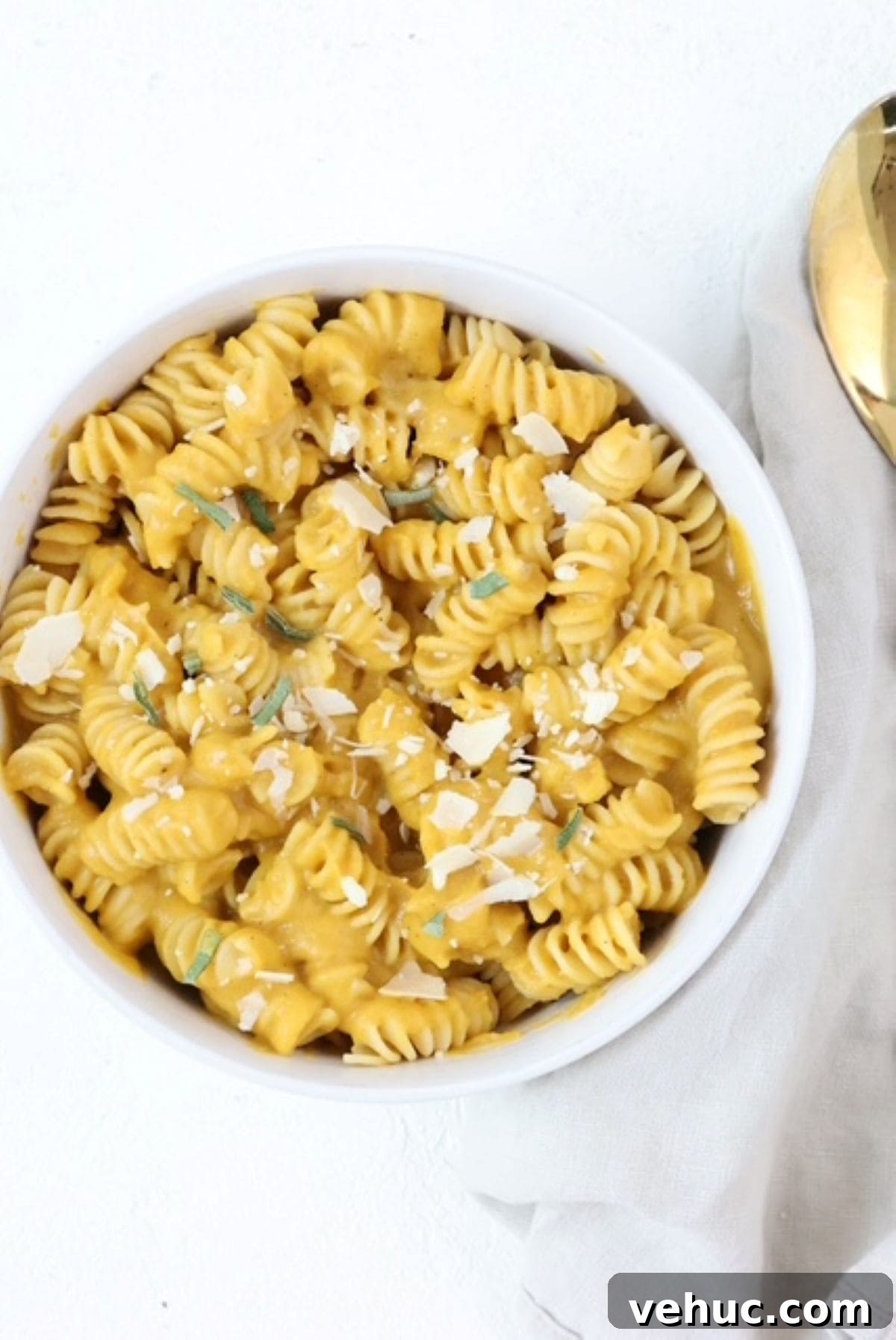
Butternut squash can seem intimidating at first — cutting and cooking it felt unfamiliar to me. I started by adding it to roasted root vegetables, then tried soups and sauces to make it approachable. This roasted butternut squash sauce is a fall favorite: simple to prepare, naturally sweet from pear, and wonderfully comforting over warm pasta.
[feast_advanced_jump_to]
Why You’ll Love This Recipe
- Easy to make: Roast the vegetables, then blend — no sautéing required. Line the baking sheet with parchment for quick cleanup.
- Simple ingredients: Butternut squash, pear, onion, garlic, broth, olive oil, and a few warm spices.
- Kid-friendly and dairy-free: Creamy without cream, so it’s suitable for kids with dairy sensitivities and picky eaters who love pasta.
- Make-ahead friendly: Store in an airtight container in the fridge for a few days. Reheat gently on the stove and thin with a splash of broth or reserved pasta water as needed.
Ingredient Notes
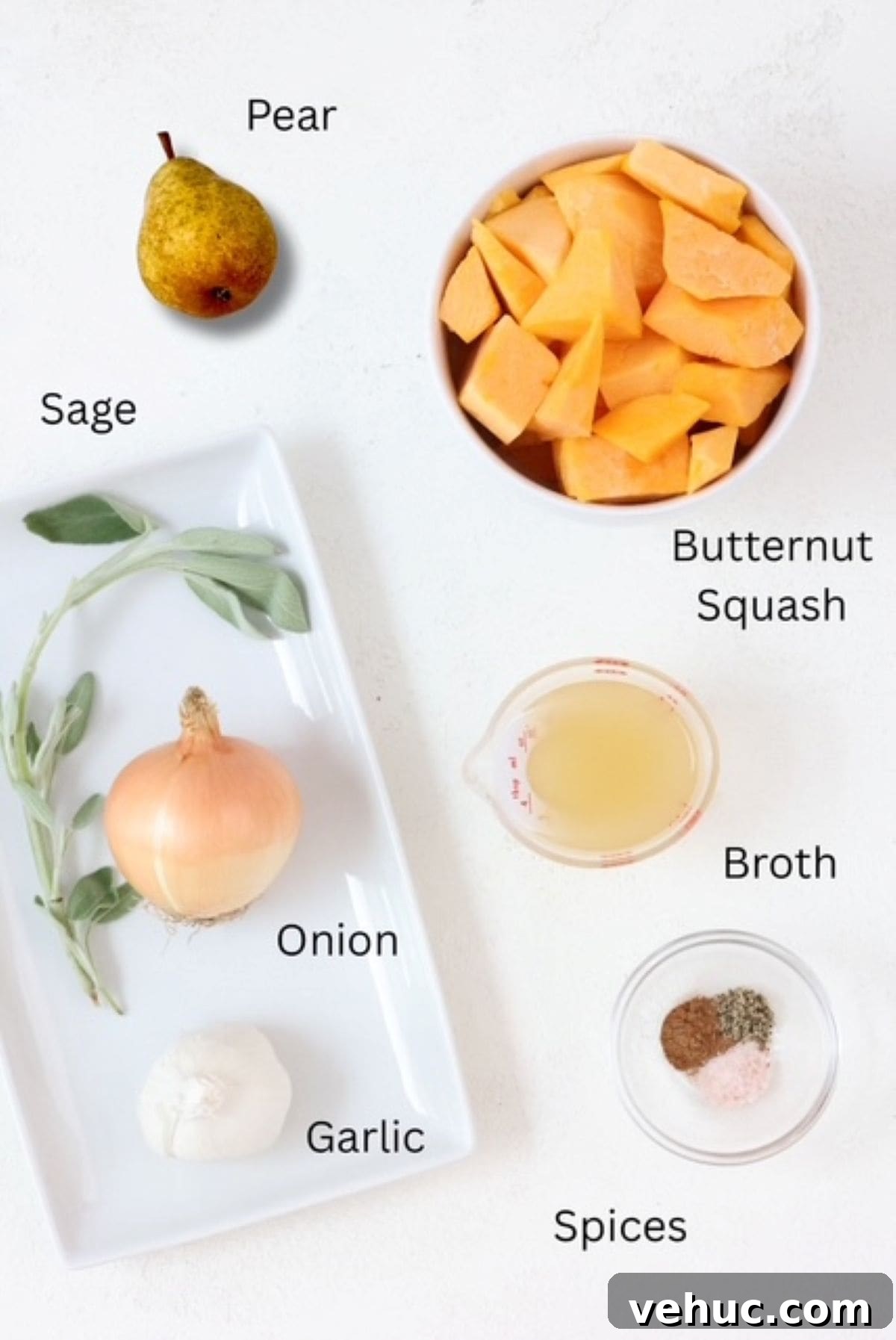
Notes on a few key ingredients:
- Butternut squash: Use fresh and peel and cube it, or buy pre-cut squash to save time. It’s a good source of fiber, potassium, and antioxidants.
- Pear: A Bartlett pear adds gentle, natural sweetness—keep the skin on for texture and nutrients, remove the core and stem.
- Garlic: Use fresh garlic for a bright flavor. If you prefer a mellower, sweeter profile, you can roast the garlic with the squash.
- Fresh sage: Fresh herbs, especially sage, lift the sauce and pair beautifully with roasted squash.
Step-by-Step Instructions
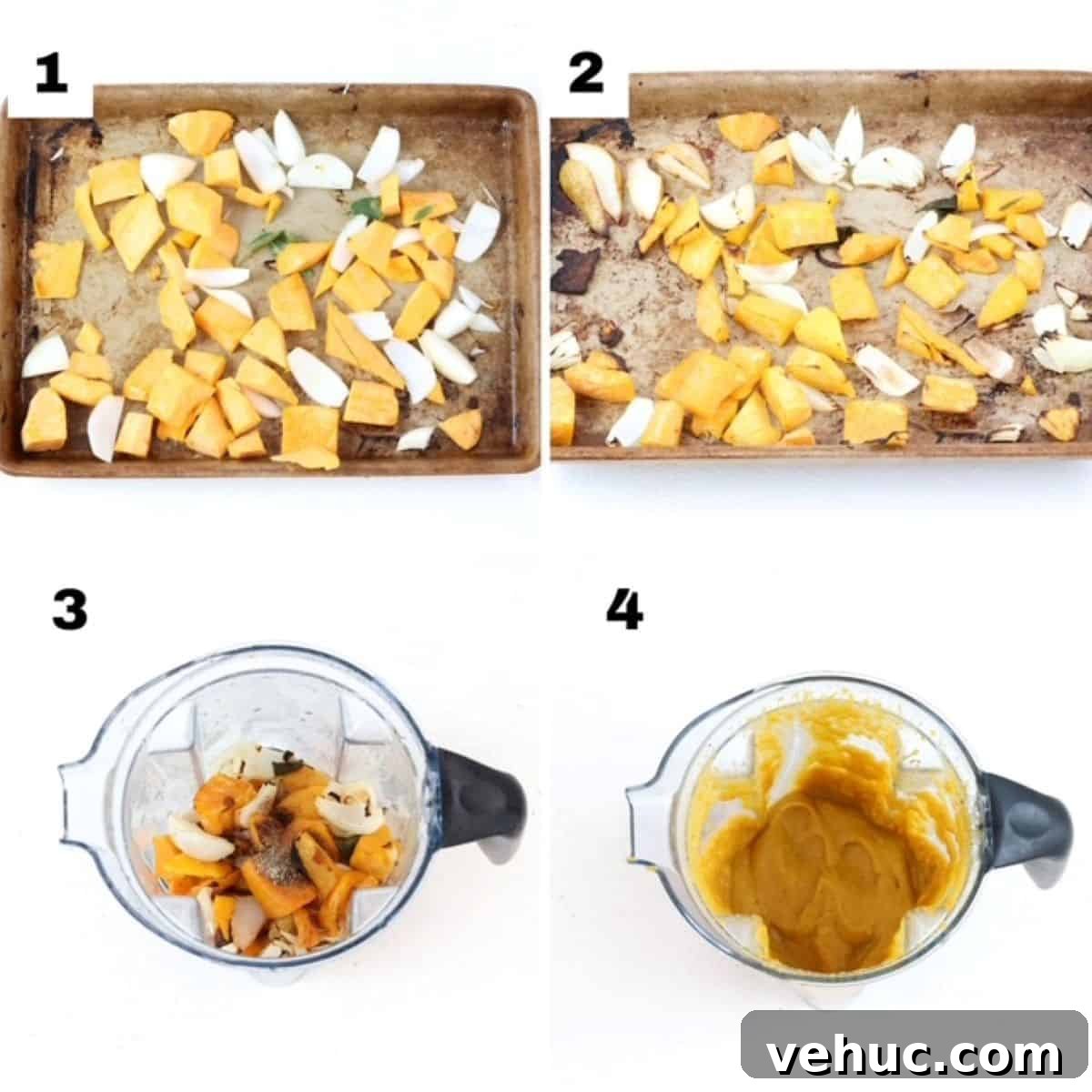
Overview of the process. For exact ingredient amounts and detailed steps, see the recipe card below.
- Arrange butternut squash, onion, pear, sage leaves, and garlic on a sheet pan. Drizzle with olive oil and season with salt and pepper.
- Roast until the squash is tender and slightly caramelized.
- Transfer the roasted vegetables, broth, garlic, and spices to a high-speed blender or use an immersion blender in a pot.
- Blend until completely smooth, adding a little more broth or reserved pasta water to reach the desired consistency. Serve with pasta and garnish as desired.
Dietitian Tip
Using vegetables and fruit to make sauces is an easy way to use leftover produce and boost daily servings of fruits and vegetables.
Helpful Tips
- This recipe yields about two cups of sauce—enough for several servings of pasta.
- If you prefer roasted garlic, add peeled cloves to the sheet pan; otherwise add fresh minced garlic when blending.
- Pre-cut butternut squash speeds up roasting by about 5–8 minutes.
- Use vegetable broth or reserved pasta water instead of chicken broth for a vegetarian option.
- Allow the sauce to cool completely before refrigerating or freezing. It freezes well for up to three months.
- If your blender isn’t rated for hot liquids, let the roasted ingredients cool before blending or use an immersion blender.
How to Serve this Pasta Sauce
Bring a large pot of salted water to a boil and cook your favorite pasta to al dente. Reserve about a quarter cup of pasta water before draining.
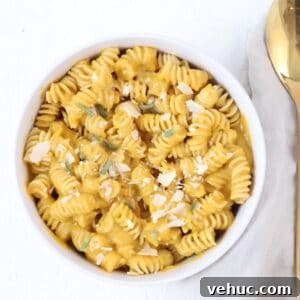
Toss the hot pasta with the butternut squash sauce, adding reserved pasta water or broth a little at a time to reach a silky consistency. Finish with freshly grated Parmesan and torn sage leaves. For extra protein, stir in cooked Italian sausage.
Questions You May Have
A sturdy vegetable peeler is the quickest and safest way to peel a whole squash—much easier than trying to peel with a knife.
Yes. Cool the sauce completely, transfer to a freezer-safe bag or container, remove excess air, and freeze for up to three months.
Related Recipes
- Cherry Tomato Pasta Sauce
- Peanut Butter Sauce for Noodles
- Chicken in White Sauce
More Easy Recipes
- Easy Air Fryer Cod (3-Ingredients!)
- Quick Tuna and Chickpea Salad (High-Protein Lunch)
- Simple Egg Salad with Greek Yogurt (No Mayo)
- Green Goddess Salad with Green Goddess Dressing (Homemade)
Did you make this butternut squash pasta sauce and love it? Please leave a ⭐⭐⭐⭐⭐ rating and a comment below — feedback is the best compliment.
📖 Recipe
Butternut Squash Pasta Sauce
Kristi
Equipment
-
1 High-speed blender (able to handle hot liquids) or a high-powered immersion blender
-
1 Sheet pan
-
1 Sharp chef’s knife
Ingredients
- 2½ cups Butternut squash peeled and cut into chunks
- ½ Bartlett pear washed, seeds and stem removed, skin left on
- 1 small yellow onion sliced or cut into quarters
- 1 clove garlic minced
- ¼ cup broth low-sodium chicken broth (or vegetable broth)
- 1 tablespoon olive oil extra virgin
- ½ teaspoon salt sea salt recommended
- ¼ teaspoon nutmeg ground
- ¼ teaspoon black pepper
- 5 sage leaves fresh
Instructions
-
Preheat oven to 425°F (220°C).
-
Arrange the butternut squash, pear, onion, garlic (peeled if roasting), and sage leaves on a large sheet pan. Drizzle with olive oil, toss to coat, and season with pepper and a pinch of salt.
-
Roast on the top rack for about 25 minutes on convection or about 30 minutes in a conventional oven, until the squash is tender and starting to caramelize.
-
Remove from the oven and transfer the roasted vegetables and pear to a high-speed blender. Add the broth, minced garlic (if not roasted), remaining salt, nutmeg, and black pepper.
-
Blend on high until completely smooth, about 30 seconds to 1 minute. Add up to an additional 1/4 cup broth or reserved pasta water to thin the sauce to your preferred consistency.
-
Toss with cooked pasta and serve. Optional toppings: torn fresh sage, grated Parmesan, or pumpkin seeds for crunch.
Notes
- If you prefer the sweet, mellow flavor of roasted garlic, add peeled cloves to the sheet pan before roasting.
- Pre-cut squash shortens roasting time by a few minutes.
- Because broths vary in saltiness, taste before adding more salt; you may not need extra.
- Roasted tomato can overpower the squash, so it’s best left out of this sauce.
- Taste after blending and adjust seasonings as needed.
Nutritional information is an estimate and will vary depending on exact ingredients and portions used.