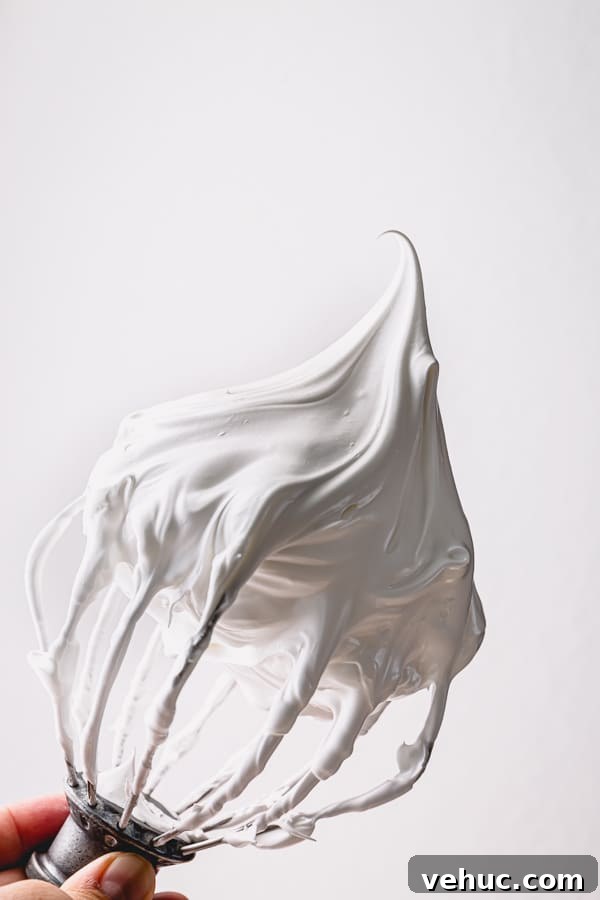
Everything you need to know about making a meringue, with clear explanations of the science, the three main types, visual cues for stages, and six practical tips for the most stable French meringue.
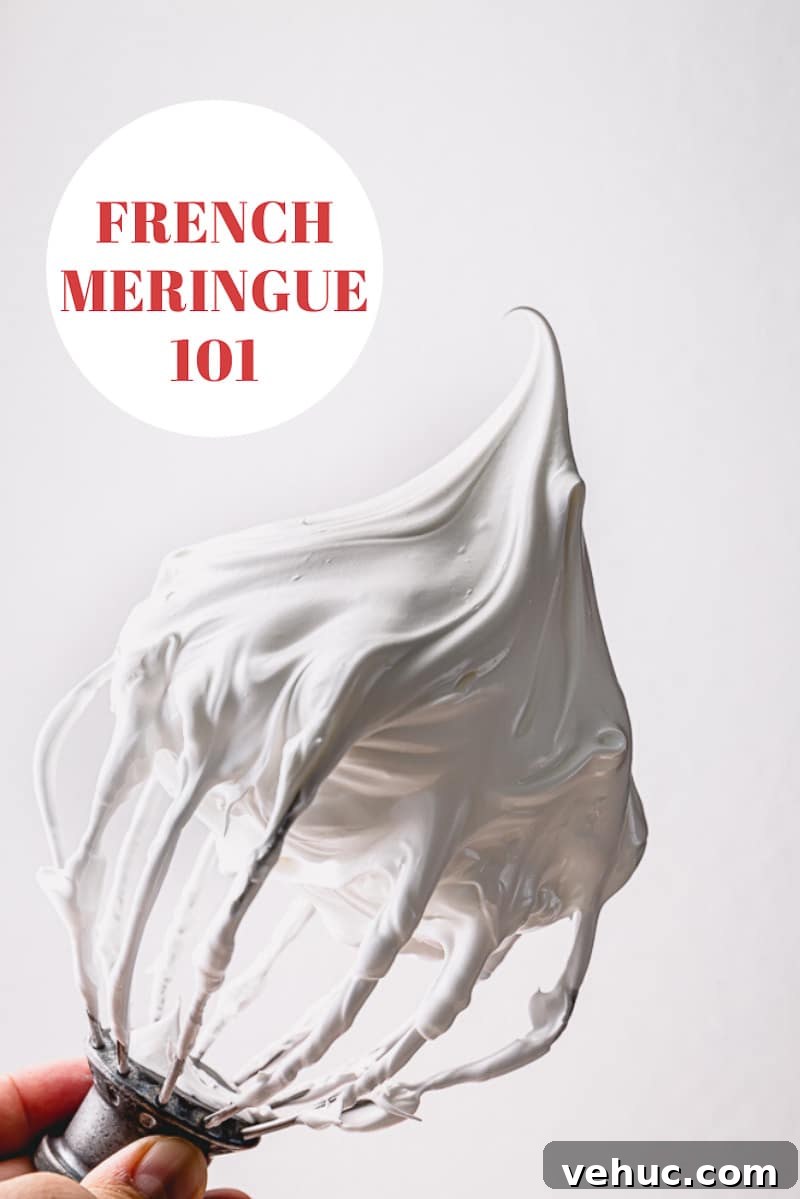
I’m a huge fan of meringue-based desserts: pavlova cake, angel food cake, meringue cookies, lemon meringue pie, divinity, and macarons are just a few favorites. Because meringue is so versatile, it’s worth understanding how it works and how to get reliable results every time.
In this article we’ll cover:
- What meringue is and the basic science behind it
- The three main types of meringue
- The stages of meringue and how to recognize them
- A straightforward French meringue recipe
- Six tips to make the most stable French meringue
If you prefer watching a demonstration, there is a video embedded in the original source.
WHAT IS MERINGUE?
Meringue is whipped egg whites stabilized by sugar and an acid. Understanding the protein and water structure of egg whites helps explain why certain rules exist when making meringue.
Egg whites are about 90% water and 10% protein. These proteins contain amino acids that behave differently around water: some are hydrophilic (water-loving) and others are hydrophobic (water-fearing). When you whisk egg whites, you trap air bubbles and the proteins unfold. The hydrophobic parts migrate to coat the air bubbles, while the hydrophilic parts form a network that holds the foam together.
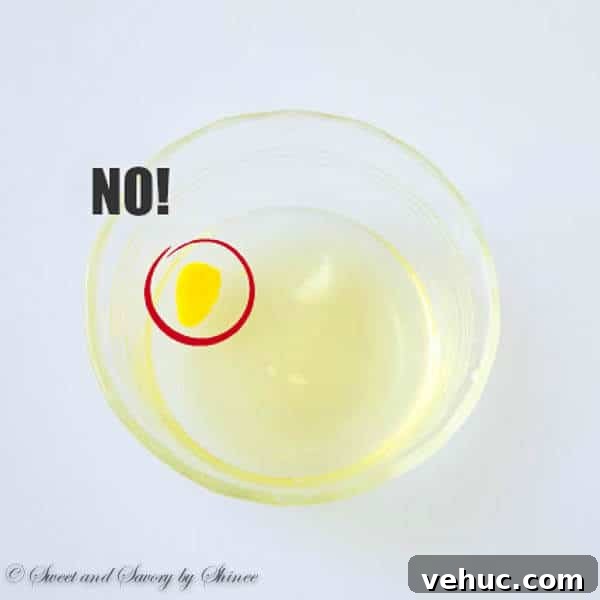
Why no fat?
Fat interferes with foam formation because it competes for the air-water interface and prevents proteins from stabilizing bubbles. Egg yolks contain fat, so even a small trace of yolk in the whites can prevent the meringue from forming properly.
Rule #1: Use clean, grease-free bowls and whisks (glass or stainless steel are best) and avoid any yolk contamination.
Tip 1: Separate cold eggs from the refrigerator—firm yolks are easier to separate cleanly.
Tip 2: Let separated egg whites come to room temperature for about 30 minutes before whipping; room-temperature whites whip more quickly and reach greater volume.
Whipped egg whites on their own are fragile and will collapse quickly without stabilizers. Two common stabilizers are acid and sugar.
Two stabilizers for meringue
- Acid: cream of tartar, lemon juice, or a splash of vinegar.
- Sugar: usually fine granulated (castor) sugar for quicker dissolution.
What does acid do?
Acid slows foam formation somewhat but helps prevent excessive protein bonding, producing a more elastic, stable network around the air bubbles.
What does sugar do?
Sugar slows protein unfolding, protecting the foam from over-beating. As sugar dissolves it creates a syrupy coating around air bubbles, strengthening the foam. Each egg white can hold up to about 50 g (¼ cup) of sugar, and generally a higher sugar-to-white ratio yields a stronger, more stable French meringue.
Be cautious when recipes call for low sugar relative to whites—those meringues are easier to over-beat and can turn grainy and collapse.
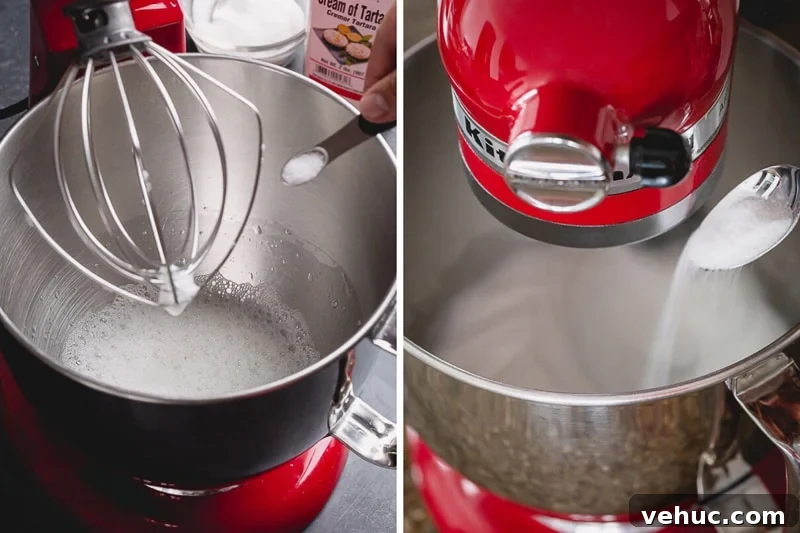
3 TYPES OF MERINGUE
There are three common methods to make meringue, each with its advantages:
- Swiss meringue: Egg whites and sugar are warmed together over a double boiler to around 160°F, then whipped. This produces a smooth, stable meringue commonly used for Swiss meringue buttercream.
- Italian meringue: A hot sugar syrup is cooked to a specific temperature and streamed into whipping whites. Italian meringue is the most stable and is ideal for pie toppings and buttercreams.
- French meringue: Sugar is added directly to whipping egg whites. It’s the simplest method and commonly used for cookies and macarons, though it is less stable than Swiss or Italian meringue.
4 STAGES OF MERINGUE
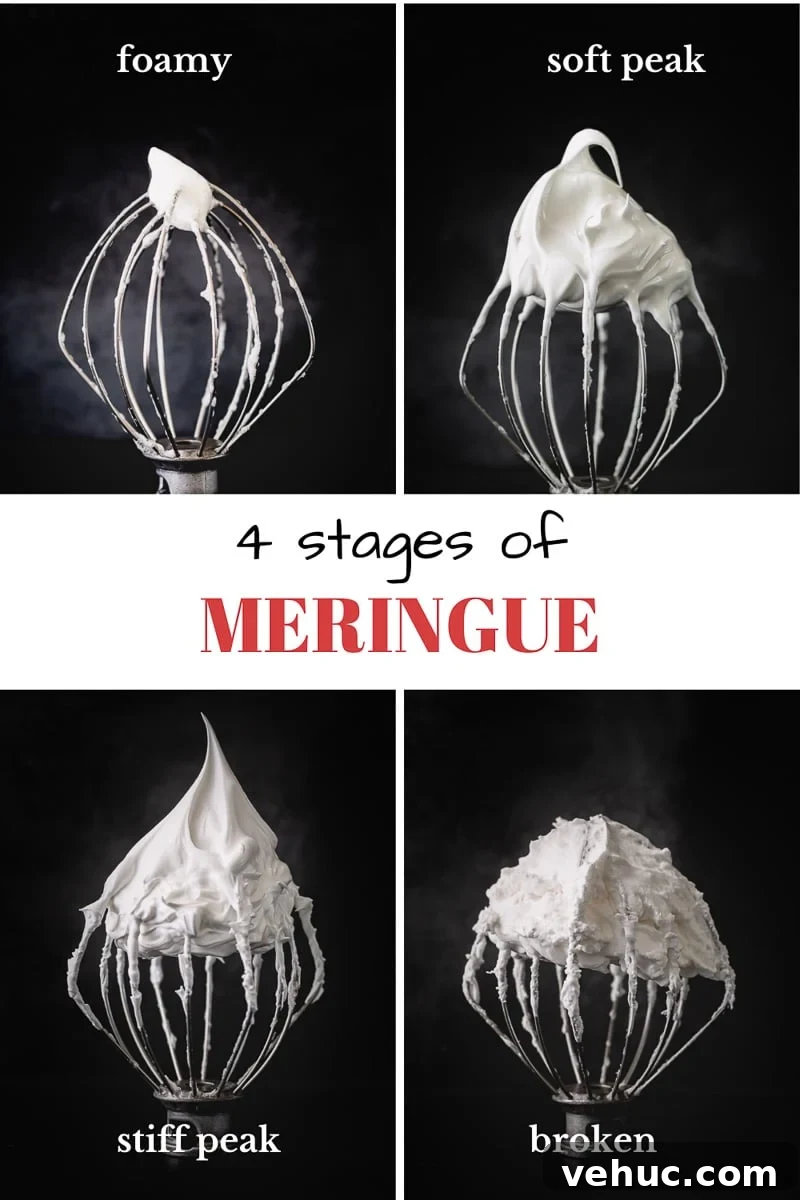
Meringue progresses through predictable stages. Different recipes require different stages; the fourth stage is over-beaten and should be avoided.
Foamy: The first stage. Whites are bubbly and translucent. You can begin adding acid and sugar at this point.
Soft peaks: The mixture becomes glossy and white. When the whisk is lifted, peaks form but curl over rather than stand upright. On a typical stand mixer this can take about 5 minutes at a moderate speed. Soft peaks are used for pavlova, angel food cake, and meringue-topped pies.
Stiff peaks: The meringue is thick and holds a firm, pointy peak when the whisk is lifted. At this stage it will cling to the bowl if inverted. Expect 10–12 minutes on moderate speed in many mixers. Stiff peaks are used for meringue cookies, macarons, and other structured preparations.
Broken/over-beaten: If beaten too long, egg whites separate into a grainy, watery mixture. This is over-whipped meringue and indicates the protein network has collapsed.
How to fix a slightly broken meringue
If the meringue is only slightly over-beaten, gently folding in a small amount of fresh egg white can sometimes revive the texture.
6 TIPS FOR THE MOST STABLE FRENCH MERINGUE
- Cleanliness matters: ensure all equipment is grease-free and dry. Even a tiny drop of yolk or any grease can prevent proper foaming.
- Use room-temperature egg whites for better volume and faster whipping.
- Whisk at a steady, moderate speed. A low-to-medium setting produces a stronger network than starting at the highest speed.
- Add sugar slowly, a tablespoon at a time, allowing it to dissolve before adding more. Dumping sugar in too quickly can deflate the foam, and undissolved sugar causes weeping later.
- Use fine granulated (caster) sugar or baker’s sugar so it dissolves quickly and evenly.
- Make the meringue just before you need it. Even stabilized meringue will begin to break down over time, so plan to use it promptly.

How to Make French Meringue
Print Recipe
Ingredients
- 2 (65-70 g) egg whites at room temperature
- ¼ teaspoon cream of tartar optional
- ¼ teaspoon coarse kosher salt
- 1/3 cup + 2 tablespoons (75 g) fine granulated sugar
Instructions
-
Use a clean, dry mixing bowl with a whisk attachment. Beat the egg whites on medium-low speed until foamy. (A low-to-medium setting on a stand mixer works best.)
-
When the whites are foamy, add cream of tartar and salt, then continue whisking.
-
Add the sugar slowly, about one tablespoon at a time, allowing it to dissolve before adding more.
-
Continue beating on the same medium-low speed to the desired stage: about 5 minutes for soft peaks and 10–12 minutes for stiff peaks depending on your mixer.
-
If making meringue cookies, follow baking directions for those cookies. For other desserts, proceed with the recipe for macarons, pavlova, angel food cake, or lemon meringue pie as directed by that recipe.
⭐️ Did you make this recipe?
Please leave a review and share your experience!
Nutrition