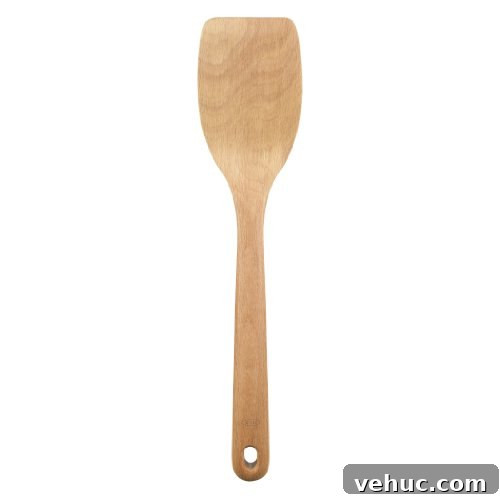
Wooden utensils are gentle on stainless steel cookware, so they won’t scratch the surface of your pots and pans. Their natural, time-honored appearance also adds a warm, classic touch to any kitchen, blending functionality with rustic style. Beyond aesthetics, wood has practical benefits: it won’t conduct heat like metal, so handles stay comfortable during cooking, and it’s less likely to react with acidic foods compared with some metals.
When choosing wooden tools, opt for hardwoods such as maple, cherry, or beech, which are more durable and resist splintering. Proper care extends their life—wash by hand with mild soap, dry promptly, and periodically treat with a food-safe oil to prevent drying and cracking. Avoid soaking or placing them in the dishwasher, as prolonged exposure to water and high heat can warp or split the wood.
Wooden utensils are versatile: spatulas, spoons, tongs, and ladles all work well for stirring, flipping, and serving a wide range of dishes. Their softer edges are ideal for stirring delicate sauces and scraping pans without damaging nonstick or stainless surfaces. For tasks that demand precision—like flipping thin crepes or handling very hot searing—metal tools may still be useful, but many cooks prefer a mix of wooden and metal utensils depending on the job.
From a sustainability perspective, wooden utensils can be an eco-friendly choice when sourced from responsibly managed forests or reclaimed wood. They are biodegradable at the end of their usable life and often require less energy to produce than metal or plastic alternatives. Choosing well-made wooden tools and maintaining them properly means fewer replacements and less waste over time.
In short, wooden utensils offer a combination of practicality, durability, and timeless style. They protect your cookware, remain comfortable to use, and contribute a homey aesthetic to your kitchen—making them a smart choice for both everyday cooking and entertaining.