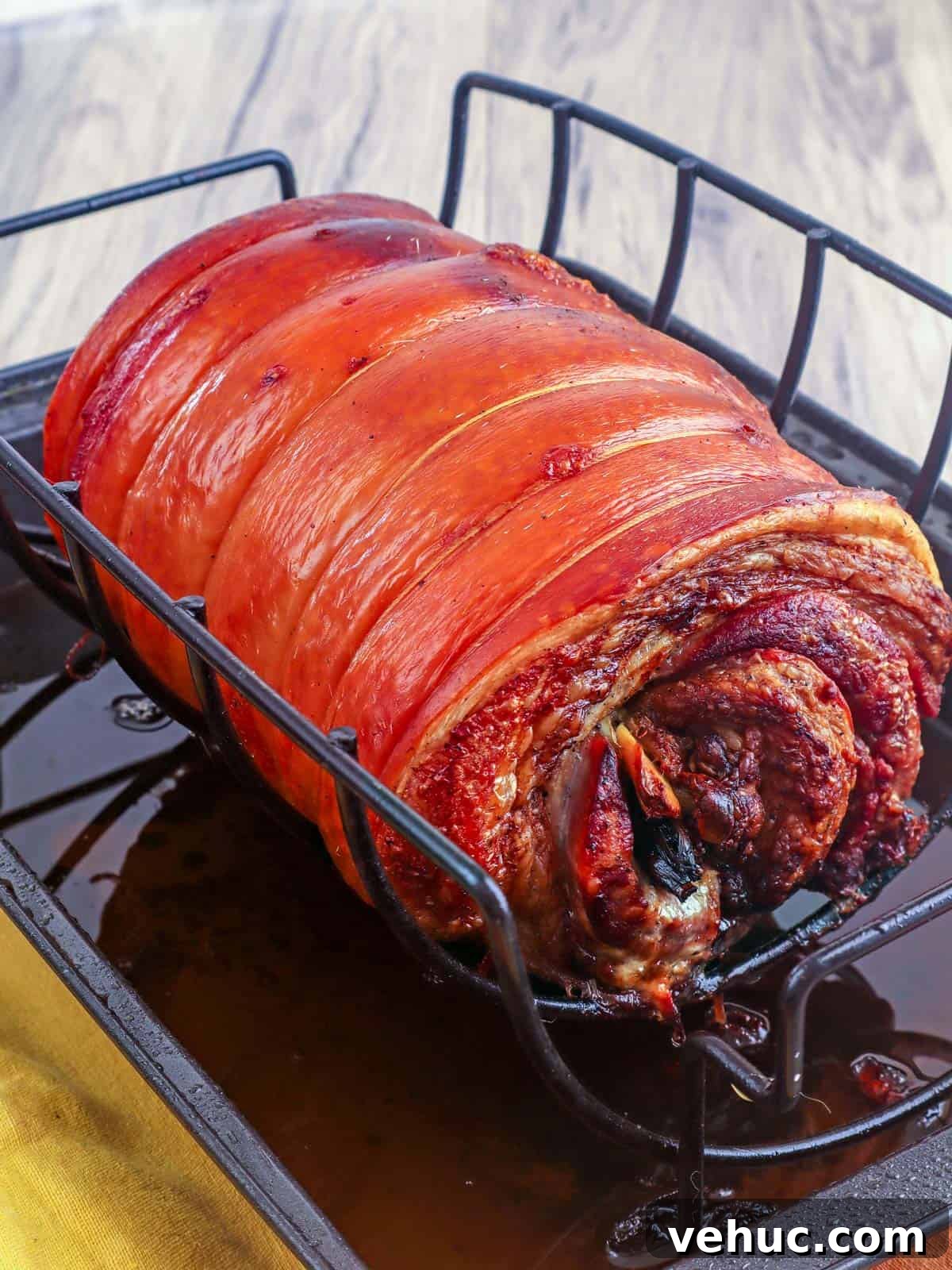
Pork Belly Lechon Roll is slow-roasted in the oven until the skin is crackling crisp and the meat stays juicy. This Filipino-style porchetta is an easy, economical alternative to ordering a whole spit-roasted pig and will be the star of any celebration.
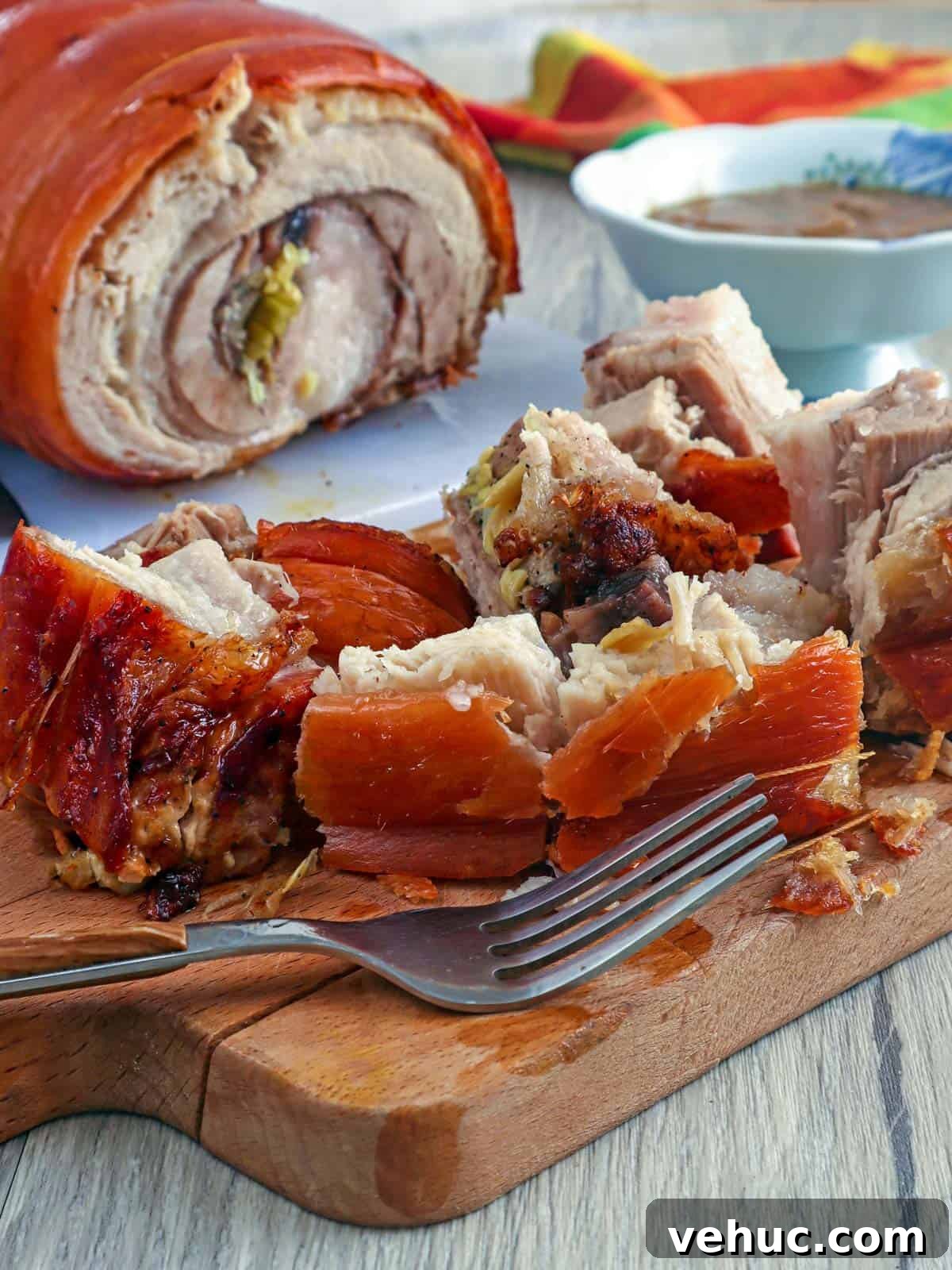
This pork belly lechon roll first appeared on the blog in 2014. With the holidays approaching, I updated the post with new photos and refreshed the text to highlight this accessible, budget-friendly way to serve lechon without buying an entire pig.
Oven-roasting has long been my go-to method for achieving crackling skin and tender meat. I learned the low-and-slow approach by accident years ago and have used it for lechon kawali and crispy pork shoulder with excellent results. It reliably produces moist interior meat while rendering the fat and producing a deeply crisp exterior.

I first realized I could replicate the look and aroma of a roast pig by stuffing and rolling pork belly after attending a family event. A whole lechon was the centerpiece of the party, but most guests left much of it untouched. Watching the leftover carcass made me think a rolled pork belly — seasoned and filled with aromatics like lemongrass — would deliver comparable flavor, better yield, and much less expense.
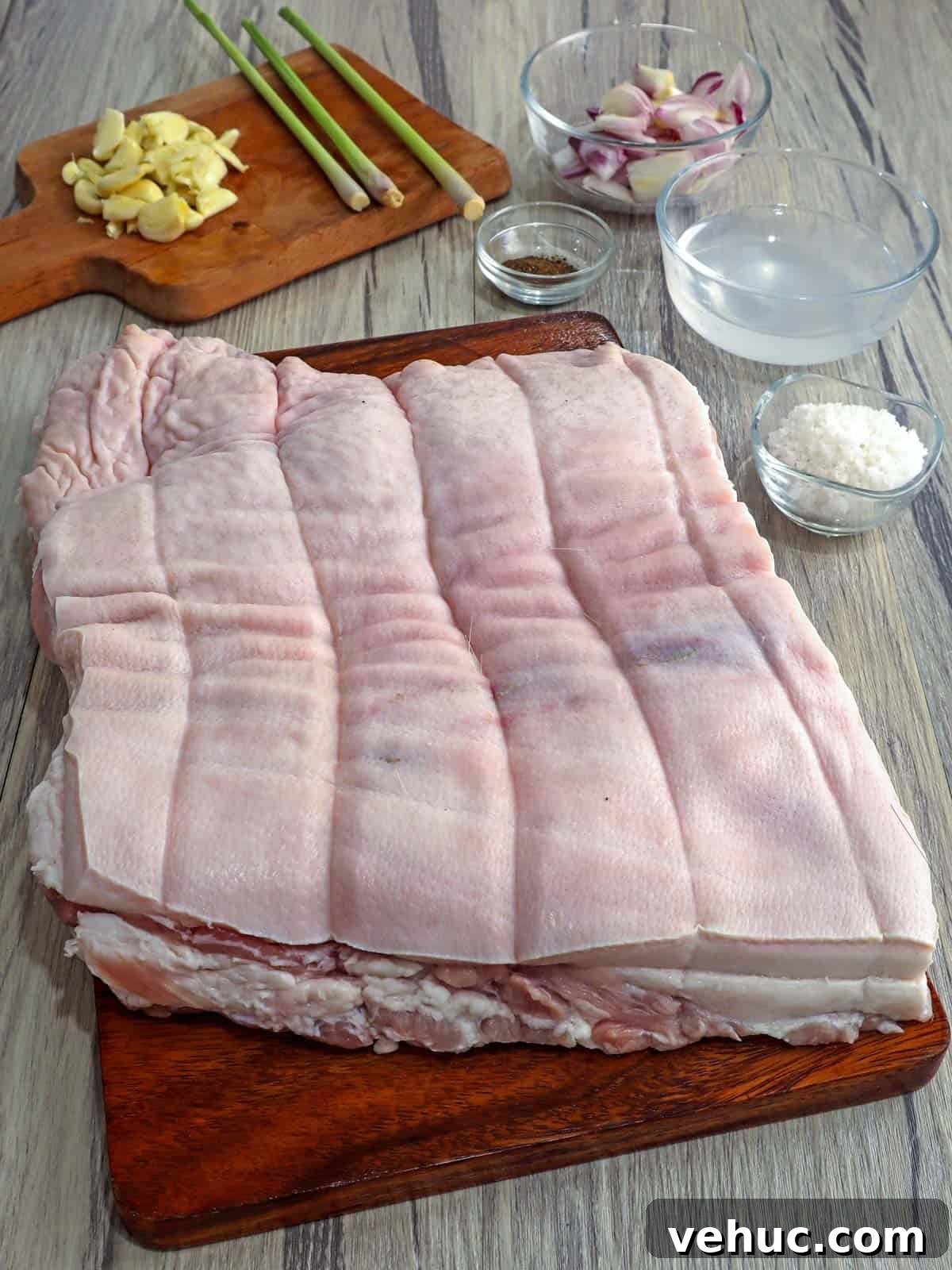
Rolling the belly into a log and stuffing it with lemongrass, shallots, and garlic offers the fragrant notes you expect from traditional lechon. After some quick research I discovered this approach has been around for a long time, but I’m still delighted each time I roast one — the result is impressive and reliably delicious.
The oven-roasted pork belly I photographed here was large, and I had to resist eating pieces during the shoot. Every bite combined ultra-crispy skin with juicy, flavorful meat — perfect served with a tangy liver sauce or simply with steamed rice.
The low-and-slow oven method does something wonderful to pork belly: it renders fat, keeps the meat succulent, and puffs the skin so that a final high-heat blast makes the crackling extraordinarily crisp. It’s a must on holiday tables and special gatherings.
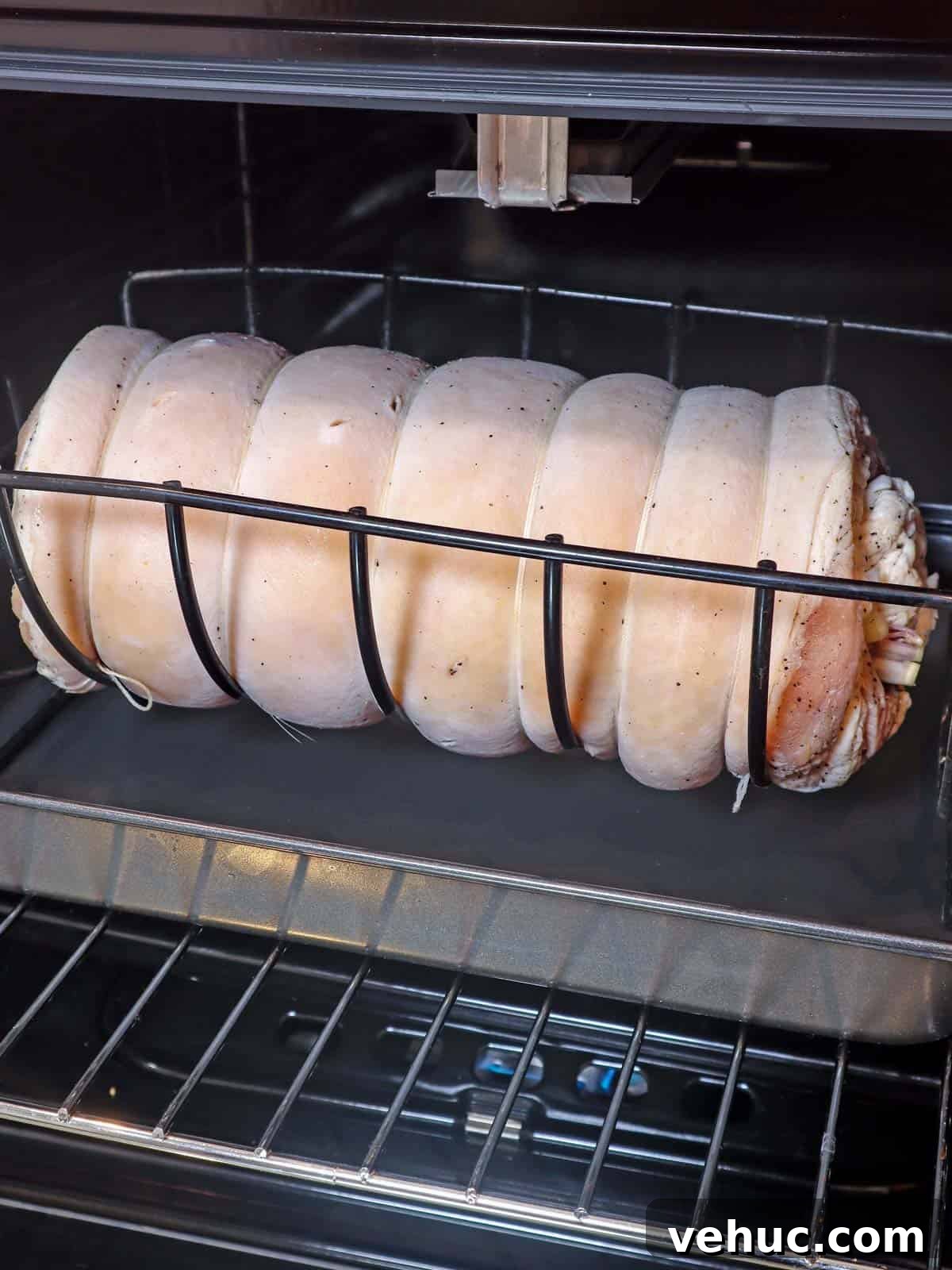
Tools you will need
- Kitchen twine to secure the pork into a tight log
- Roasting rack set over a pan so heat circulates and drippings are collected
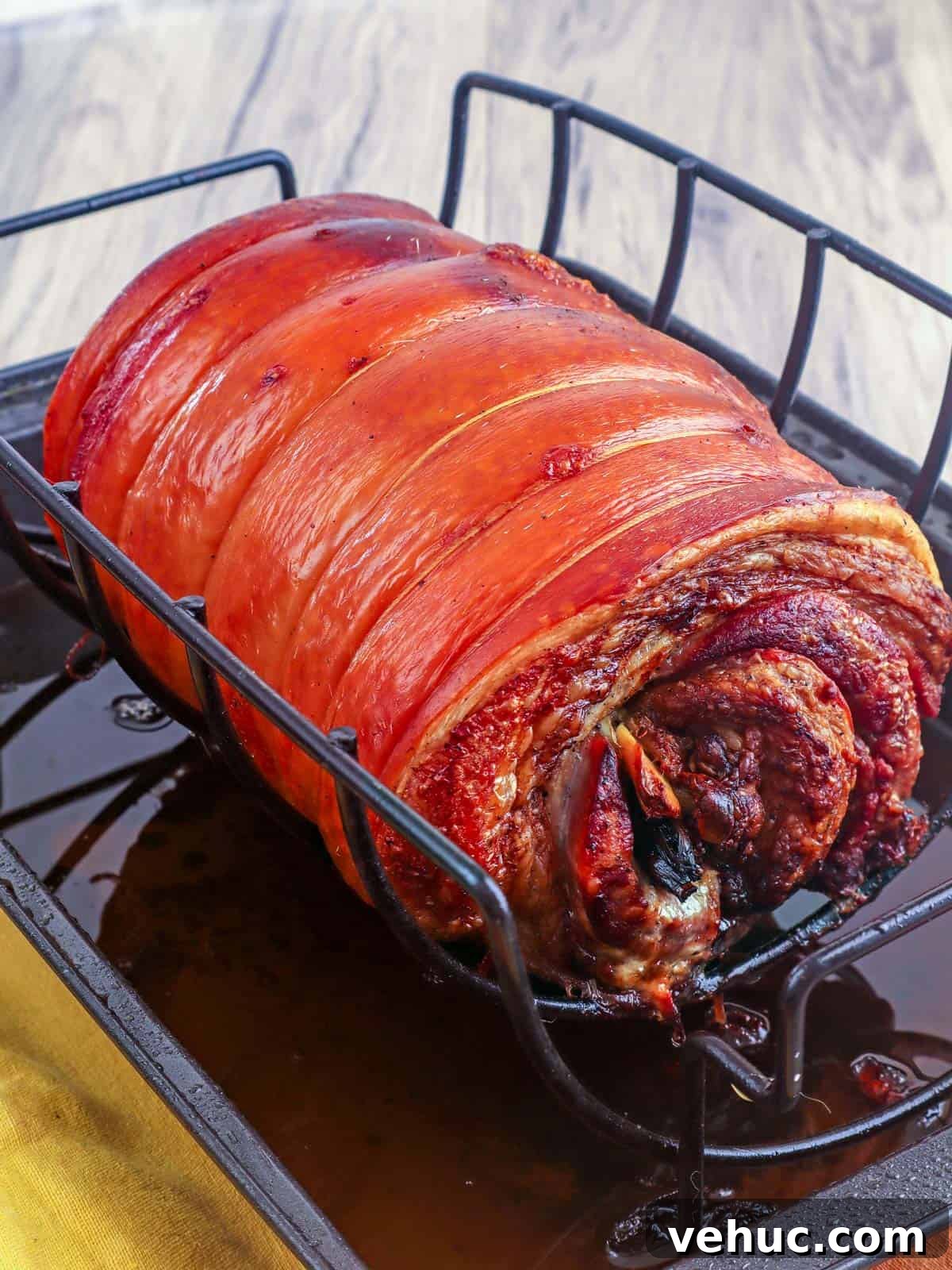
Helpful tips
- This horno-style roast takes about 6 to 7 hours of cooking time; use the largest boneless pork belly you can find to make it worthwhile.
- Prick the skin all over without cutting into the meat to help the skin crisp.
- Refrigerate uncovered, skin side up, overnight to dry the skin — this encourages excellent crackling.
- Avoid overstuffing; you want the belly to roll with a slight overlap so it holds shape.
- Tie the twine snug but not overly tight. The skin will expand and puff as it crisps.
- Roast the belly on a rack above a pan so air can circulate and the meat browns evenly.
- Let the roast rest a few minutes before carving to allow juices to redistribute for moister slices.
- Because lemongrass is fibrous, it’s used here for aroma and can be pulled out before serving.
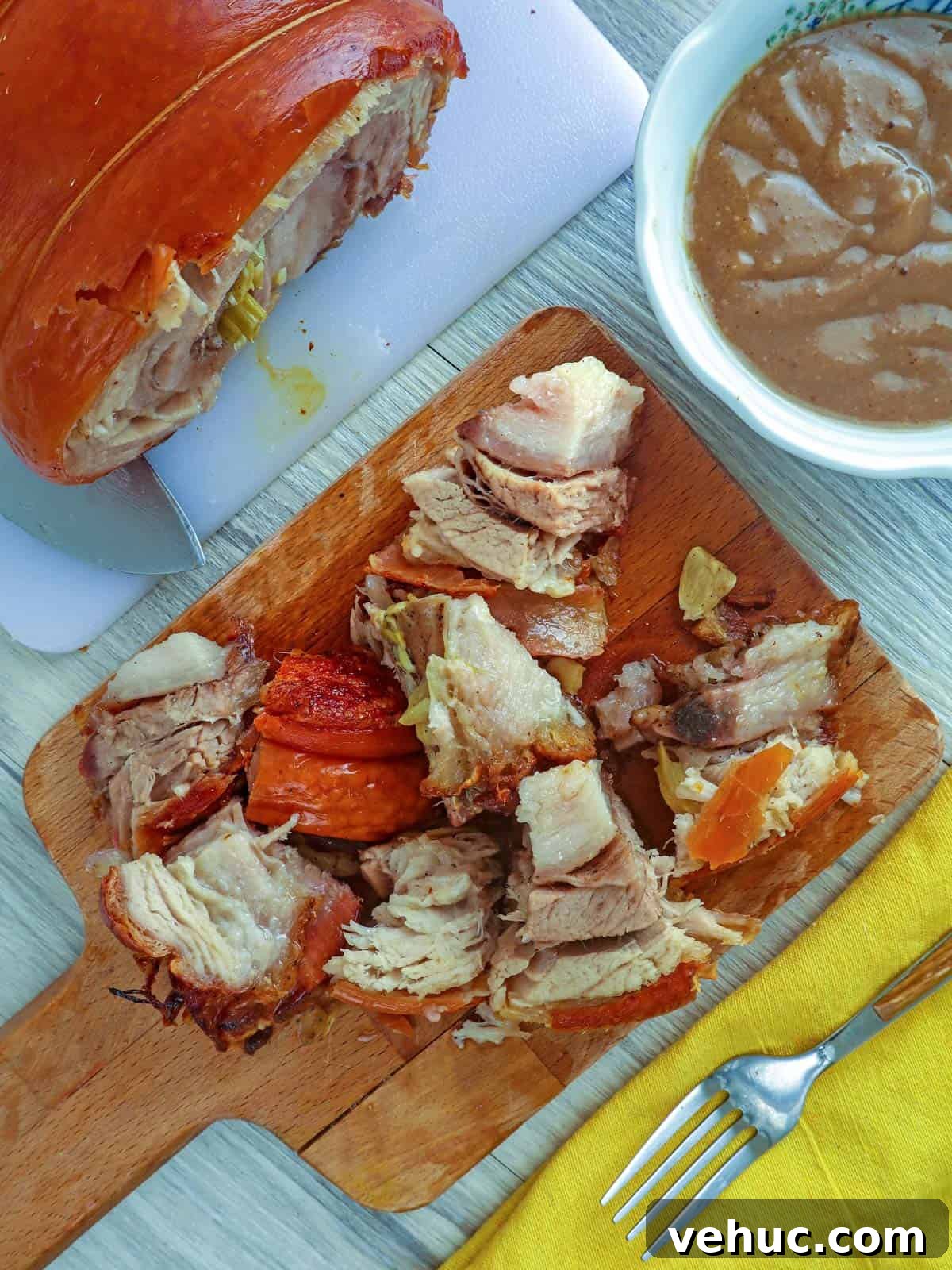
How to serve and store
- Serve slices of lechon pork belly as a centerpiece alongside steamed rice and your preferred dipping sauce for a festive meal.
- Fresh from the oven, the skin stays crisp longer than many other lechon preparations. Keep the roast uncovered while cooling to avoid trapped steam softening the crackling.
- Leftovers lose crunch over time. Use any remaining pork promptly in dishes such as pinakbet, sisig, or paksiw to make the most of the flavorful meat.
More Noche Buena recipes
Oven Roasted Pig’s Head
Sweet and Sour Meatballs
Beef in Creamy Mushroom Sauce
Thank you for including Kawaling Pinoy in your holiday meals. I’m grateful to be part of your celebrations.
Did you make this? Leave a review and tag @kawalingpinoy on social media!
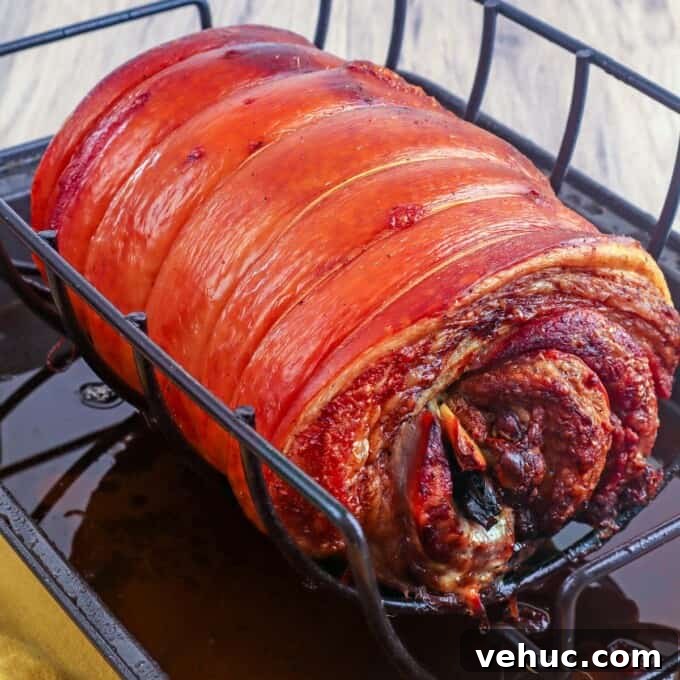
Pork Belly Lechon Roll
Pin It
Email Recipe
Ingredients
- 1 (6 to 7 pounds) whole pork belly without ribs
- 2 tablespoons coarse salt
- ½ teaspoon pepper
- ½ cup vinegar
- 3 stalks lemongrass
- 4 shallots, peeled and thinly sliced
- 1 head garlic, peeled and crushed
Instructions
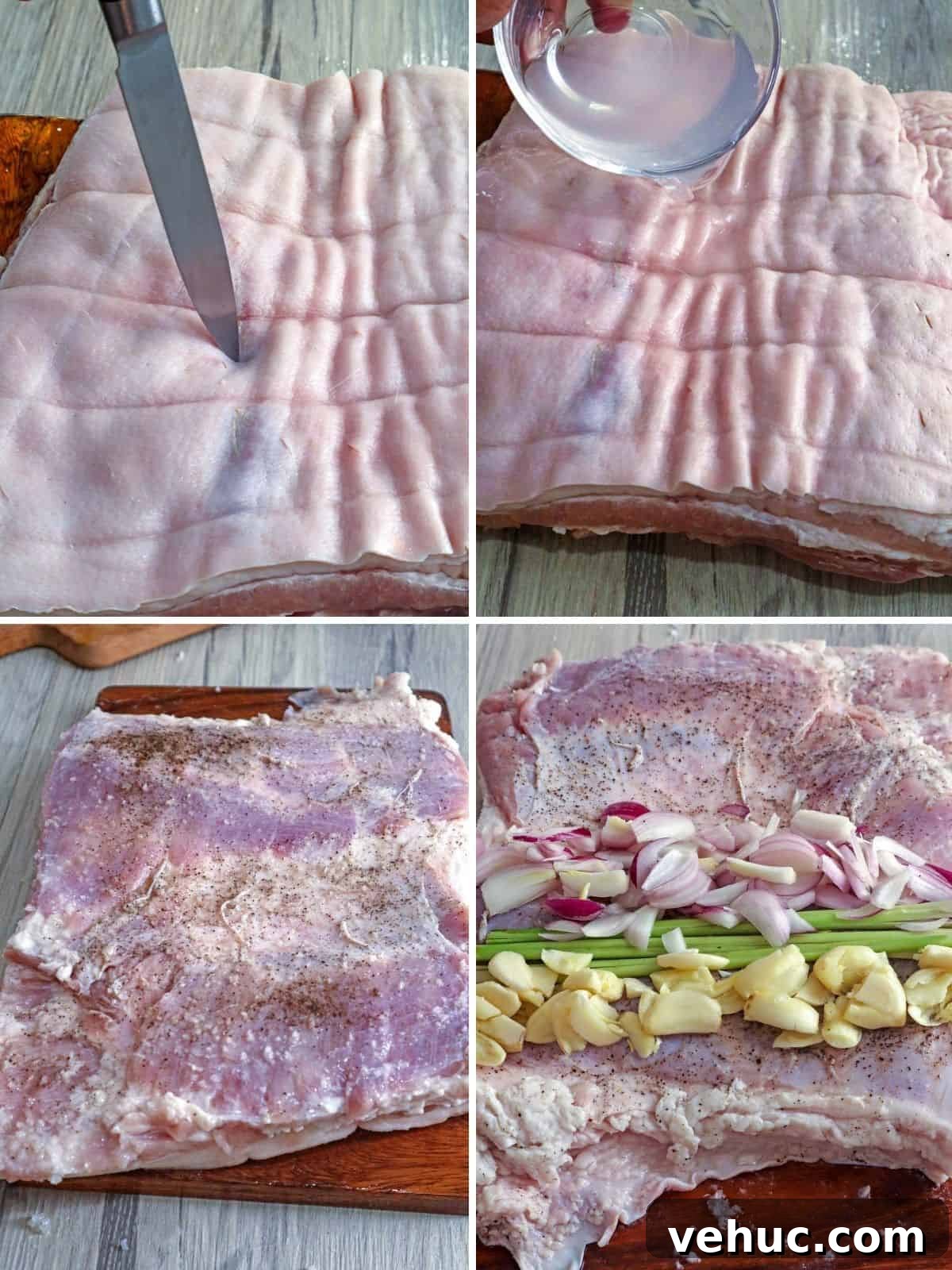
- Use a small knife to prick the surface of the skin all over without cutting into the meat.
- Pour the vinegar over the belly and massage it in. Season with coarse salt and pepper.
- Trim the lemongrass: remove the dry top and woody base, peel away tough outer layers, and pound the stalks lightly to release aroma.
- Place the belly skin-side down on a work surface. Along the longer edge, arrange the lemongrass, shallots, and garlic horizontally.
- Roll the pork belly tightly into a log, finishing with the skin on the outside. Tie the roll in three to four places with kitchen twine to secure it.
- Refrigerate the tied roll uncovered overnight to dry and chill the skin.
- Pat the belly completely dry with paper towels. Place it on a roasting rack set over a pan.
- Bake in a preheated 180°F (80°C) oven for about 3½ hours.
- Increase the oven temperature to 320°F (160°C) and continue roasting 1½ to 2 hours, until the meat is cooked through and begins to brown.
- Raise the oven to 430°F (220°C) and roast 30 to 40 minutes, or until the skin is very crisp and deeply browned.
- Remove from the oven and let the roast rest 10 to 15 minutes before slicing to retain juices.
Notes
- Do not overstuff the belly so it can be rolled with a slight overlap.
- Tie twine snugly but not too tight, as the skin will puff while roasting.
- Allow the roast to rest before slicing so juices redistribute and slices remain moist.
- Lemongrass is mainly for aroma; remove the fibrous stalks before serving if desired.
Video
Nutrition Information
This website provides approximate nutrition information for convenience only. Nutrition data is gathered from standard composition databases and calculators.