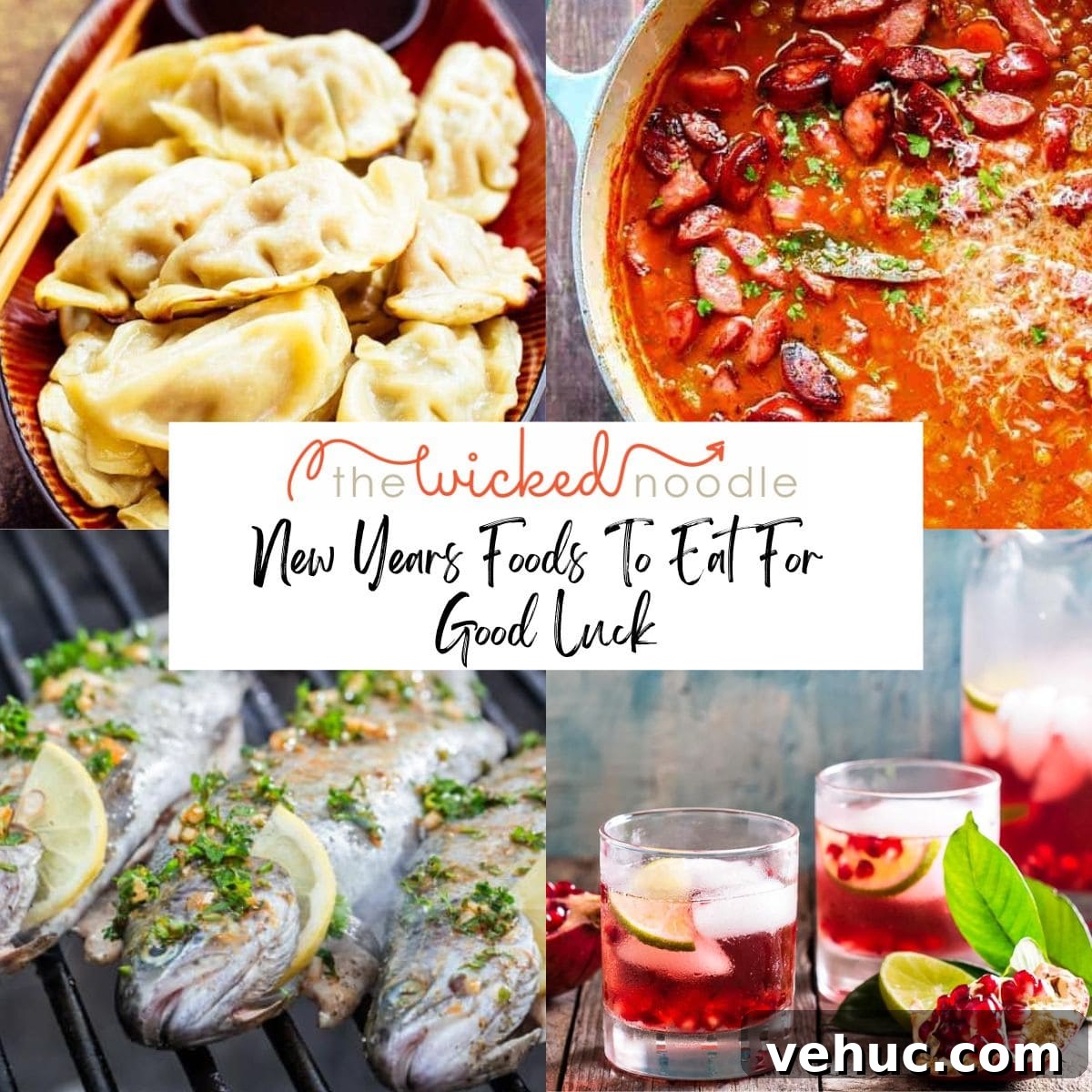
Celebrate the New Year with friends, family, and plenty of food. As you plan your menu, consider adding these traditional New Year’s foods believed to bring good luck.
Food plays a central role in holiday customs around the world. Below are New Year’s food traditions and superstitions from various cultures, plus recipe ideas that feature these auspicious ingredients.
New Year’s Eve will be observed on Wednesday, December 31, 2025, followed by New Year’s Day on Thursday, January 1, 2026.
Ring-Shaped Foods
Ring-shaped foods symbolize a full circle—either the past year completing its course or the start of a year filled with good luck. Cakes and breads in ring forms are common, and in some traditions a coin or trinket is baked into the cake for extra fortune for whoever finds it.
Popular ring-shaped New Year’s foods include:
- Greece: Vasilopita — a traditional cake or bread served at midnight.
- Bulgaria: Banitsa — a filo-based pastry with eggs and feta.
- Europe: King’s Cake — a sweet bread or cake often filled with cream or almonds and decorated.
- Denmark: Kransekage — a tower made of stacked ring-shaped almond pastry.
- Poland, Hungary: Donuts — ring-shaped fried pastries are popular on Sylwester (New Year’s Eve).
Recipe ideas:
- Crescent roll ring variations
- Homemade donuts
Noodles
Noodles represent longevity and good fortune in many cultures. In Japan, soba noodles are traditional for New Year’s, while Chinese families eat “longevity noodles.” The custom is to enjoy long noodles without cutting them—slurping is encouraged!
Recipe ideas for longevity:
- Udon noodle soup
- Szechuan beef pasta
- Korean cold noodle soup
- Quick pho
- Ramen variations
Pork
Pork is associated with progress and prosperity because pigs root forward. Many enjoy pork dishes on New Year’s Day—popular pairings include pork with sauerkraut or cabbage.
Recipe ideas for prosperity:
- Instant pot pulled pork
- Stuffed pork loin
- Slow-cooked pork chops
- Pork loin and pork chop recipes
- Air fryer sausages and spiral ham
Lentils
In Italy, eating lentils on New Year’s Eve or Saint Sylvester’s Day is a tradition thought to bring wealth and prosperity. Lentils are often served with pork for extra luck.
Recipe idea: Hearty lentil soup with smoked sausage and Parmesan.
Fish
Fish symbolize abundance in many cultures—scales resemble coins and schools of fish suggest plenty. In Scandinavia, pickled herring is a traditional New Year’s appetizer. For prosperity, some traditions recommend serving fish whole, head to tail.
Recipe ideas for abundance:
- Grilled whole trout
- Blackened salmon with roasted tomatoes
- Baked salmon with savory mayo toppings
- Baked tilapia prepared in foil
Pomegranate
A Greek custom involves smashing a pomegranate at the door at midnight—the more seeds that scatter, the greater the luck. If smashing fruit isn’t for you, pomegranate-based cocktails and drinks make a festive alternative.
- Pomegranate margaritas
- Pomegranate mojitos
- Poinsettia-style pomegranate drinks
Dumplings
Dumplings are eaten before Chinese New Year because they resemble gold ingots and symbolize sending off the old year and welcoming the new. For the Mongolian Lunar New Year (Tsagaan Sar), steamed meat-filled dumplings called buuz are traditional.
Try air-fryer potstickers or steamed dumplings as an easy, lucky appetizer for your celebration.
More Lucky Foods for the New Year
- Doughnuts (Oliebollen): Dutch fried pastries thought to bring luck.
- Soft Pretzels (Neujahrsbrezel): A sweet German pretzel eaten for good luck.
- Buttered Bread: In Ireland, buttered bread on New Year’s Day is a talisman against hunger.
- Black-Eyed Peas: A common Southern tradition associated with luck and prosperity.
- Grapes: In Spain, eating 12 grapes at midnight promises good luck for each month of the year.
- Greens: Collards, cabbage, and other greens symbolize wealth and good health and are often paired with cornbread and black-eyed peas.
- Kagami Mochi: Japanese stacked mochi cakes displayed at New Year as a symbol of good fortune; other traditional sweets like candied chestnuts and sweet potatoes are also served.
- Spring Rolls: Golden rolls eaten during Chinese New Year represent gold bars and bring wishes of prosperity.
- Bánh Chưng: A square sticky rice cake central to Vietnamese Tết, symbolizing the earth and gratitude to ancestors.
- Tteokguk: A Korean rice cake soup eaten on Seollal; it symbolizes aging a year with wishes for long life and good health.
- Onions: In some Greek traditions, onions hung at the door symbolize health, rebirth, fertility, and longevity.
Other Foods To Eat For Good Luck On New Years
- Cabbage
- Collard greens
- Cornbread
- Oranges
- Tamales
What NOT To Eat On New Years
Alongside lucky foods, many cultures avoid certain items believed to bring bad luck. Consider skipping these to keep good fortune on your side:
- Crab, shrimp, and lobster (thought to move sideways/backwards)
- Certain bottom-feeding fish (some traditions consider them unlucky)
- Chicken and turkey (birds that scratch backward)
- Hollow bread (large air pockets can be seen as a bad omen)
- White foods in some cultures (white can symbolize mourning or death)
Celebrate with festive dishes:
- Champagne cocktail selections
- Sugared cranberries
- Cranberry pecan cheeseballs
- Coconut rum balls
- Crescent roll appetizers
Whichever traditions you choose to honor, filling your table with meaningful foods is a delicious way to welcome the year ahead. Wishing you a joyful and prosperous New Year!