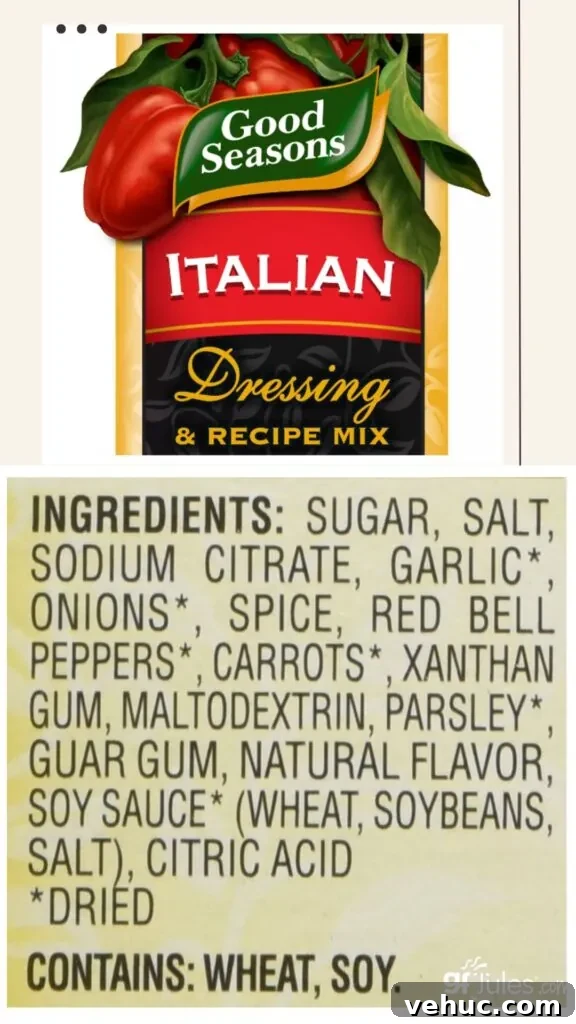
In 2011 a reader pointed out that Kraft Foods changed the ingredients in Good Seasons Italian Dressing, adding wheat so the product was no longer gluten-free. Ingredient changes like this are unfortunate but not uncommon. Manufacturers regularly reformulate products, so it’s essential to read ingredient labels each time you purchase mainstream items—even those you buy regularly.
When companies produce both gluten-containing and gluten-free products, their primary customer base is often not the gluten-free community. As a result, gluten-free consumers can be overlooked during ingredient decisions and reformulations. In the case of Good Seasons Italian Dressing, powdered soy sauce was added to the ingredient list, and soy sauce commonly contains wheat, which introduced gluten into the product.
If you prefer powdered dressing mixes, look for products that are explicitly labeled gluten-free. Some brands clearly identify gluten-free varieties; for example, certain dressing lines prominently label their gluten-free options, and other companies maintain lists of gluten-free products based on internal allergen controls, sanitation procedures, and production scheduling designed to prevent cross-contamination.
Are Spices Gluten Free?
Individual spices are naturally gluten-free, but anti-caking agents, carriers, or flavorings can introduce gluten-containing ingredients. Always read labels. Some companies do a better job labeling their spices as gluten-free, and the most reliable options are brands that carry independent third-party gluten-free certification. Certifications like those from the Gluten Free Certification Organization (GFCO) require testing to very low levels of gluten (typically below 10 ppm), providing extra assurance for sensitive consumers.
Brands with strong labeling practices or certifications are preferable when you have gluten-related concerns. Even large spice companies that are not certified often provide transparent allergen statements and clearly declare common allergens such as wheat on product labels. If a product lacks an ingredient statement, it should be assumed to contain only what the product name indicates (for example, “black pepper” contains only black pepper).
Manufacturers commonly declare the following allergens on spice labels and ingredient statements: wheat; milk and milk products; peanuts; tree nuts; egg; soy; shellfish; sesame (for certain markets beginning in 2023); fish; yellow dye #5; MSG; sulfites over 10 ppm; and gluten-containing grains such as barley, rye, oats, spelt, triticale, and kamut. When labeling is complete and accurate, consumers can better assess product safety.
Are Seasoning Blends Gluten Free?
Seasoning blends are more complex because they combine spices with anti-caking agents, carriers, sugars, salts, or dairy-derived ingredients like lactose or whey, and sometimes starches or flours. These additional components can introduce gluten, so scrutinize ingredient lists carefully.
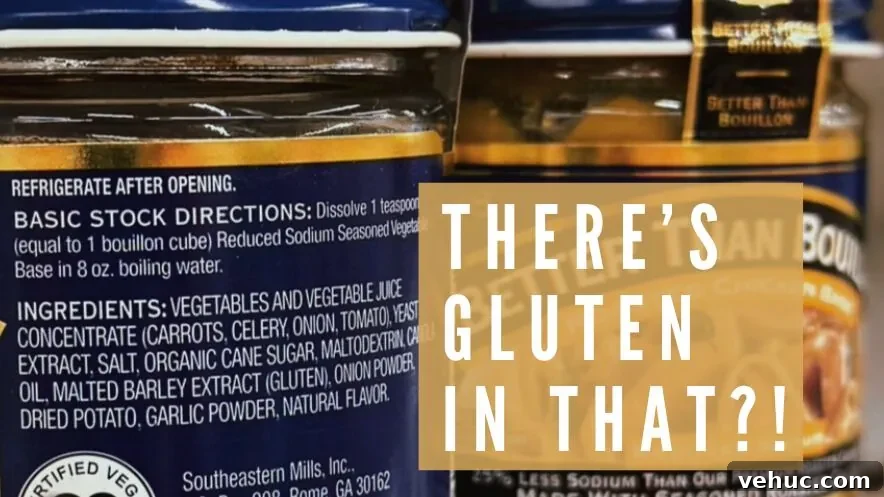
Wheat must be declared as an allergen on labels, but barley-derived ingredients—often listed as “malt”—are not part of the top nine allergens and may be less obvious on ingredient lists. That makes barley-containing ingredients harder to spot. Even products such as soup bases, stocks, and bouillons can contain gluten, so reading labels is crucial for anyone avoiding gluten.
Labeling errors or misunderstandings by manufacturers add further risk. For example, some companies have failed to identify wheat-containing ingredients correctly, such as listing “flour” without recognizing it contains wheat. The FDA has issued recalls when undeclared wheat was discovered in products after long periods of mislabeling. These incidents highlight that not all manufacturers follow labeling regulations consistently, so consumers must remain vigilant.
Occasionally a product will be labeled “gluten-free” despite containing obviously gluten-containing ingredients such as soy sauce or soy sauce powder. Some companies have incorrectly claimed that fermentation renders wheat gluten-free—a misunderstanding of fermentation chemistry and regulatory definitions. Such mislabeling reinforces the need to read every ingredient list and not rely solely on gluten-free claims printed on packaging.
As a final note: be cautious and inquisitive. Check ingredient lists each time you buy a product, prefer brands with clear allergen statements or third-party gluten-free certification, and report labeling inconsistencies when you find them. What brands do you trust for clear labeling of seasonings, spices, dressings, and soups, and which have you found lacking?