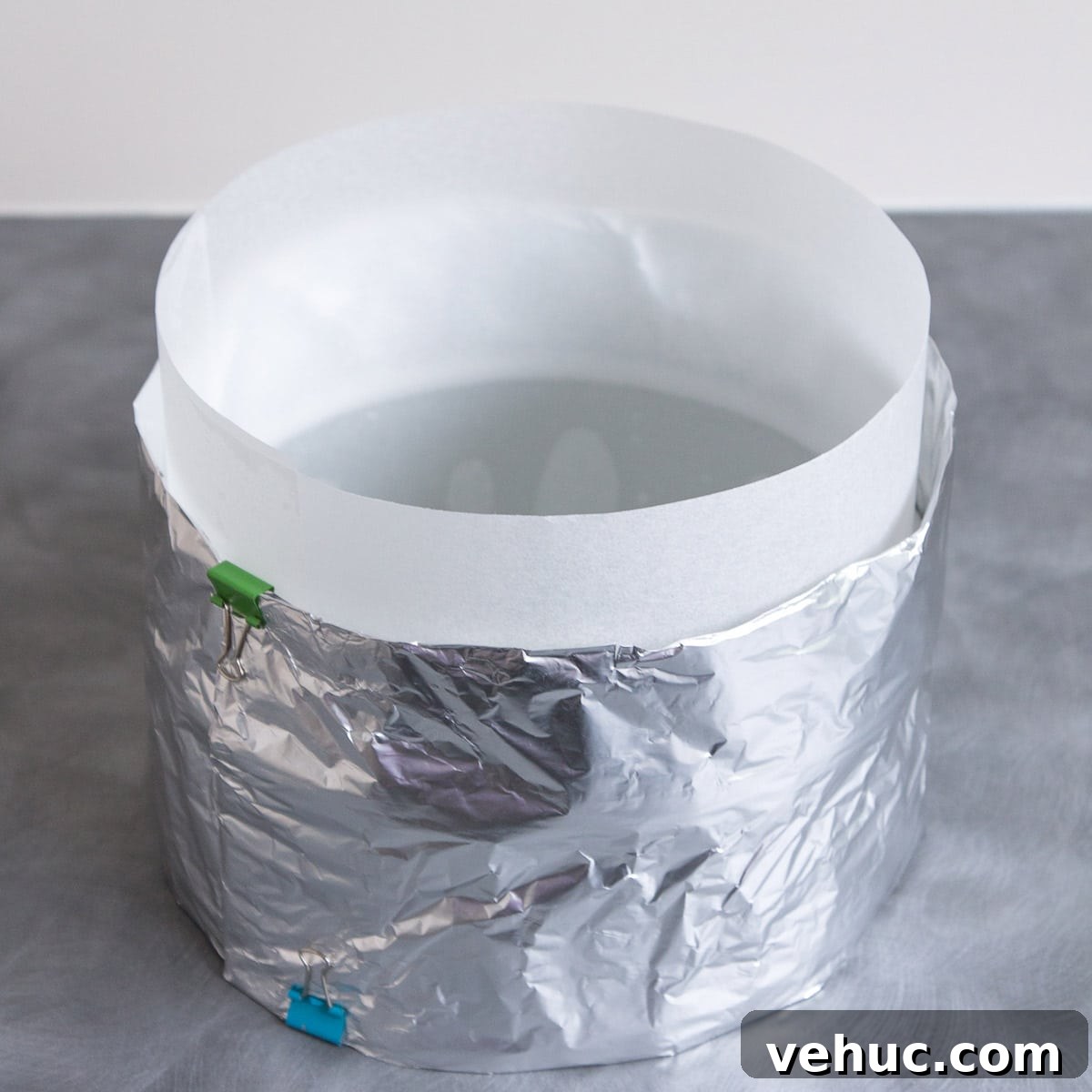
If you hate dry, crusty cake edges and want level, easy-to-trim layers, learn how to make simple DIY cake strips for more even baking and softer edges.
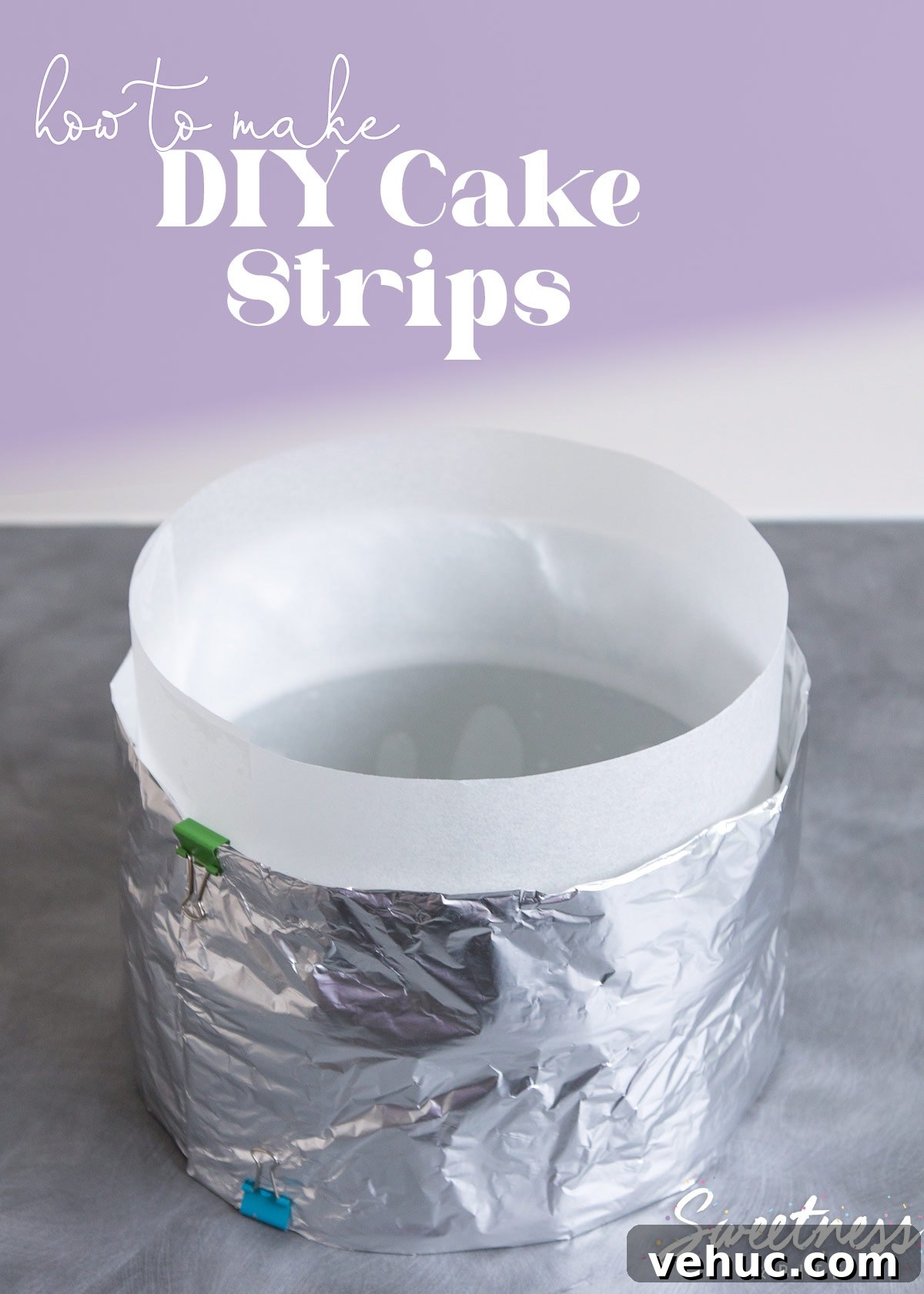
Dry cake edges are one of the most common baking disappointments. They can leave you trimming away precious cake or masking dryness with syrups and fillings. One of the easiest ways to avoid dry, over-browned sides is to use baking or cake strips. These simple tools help cakes bake evenly, reduce doming and keep the outer edge soft.
Cake strips come ready-made, but you can also make effective DIY versions at home with aluminium foil and paper towels. Homemade strips are adjustable for any pan size and are inexpensive to make. Below is a straightforward, SEO-friendly guide to what cake strips are, when to use them, and how to make both foil lids and reusable baking strips to improve your cakes.
What Are Cake Strips?
Cake strips—also called baking or bake-even strips—are damp insulated strips that wrap around the outside of your cake pan. They slow the rate of browning at the edges and help the cake rise more uniformly, resulting in flatter tops and softer crusts. That makes leveling or stacking layers far easier and wastes less cake when trimming.
You can buy commercial cake strips, but many bakers make their own from damp fabric or paper towels sealed in foil. I prefer the paper towel and foil method because it avoids the wet-fabric smell in the oven while delivering the same insulating effect. DIY strips are especially handy because you can tailor the length and height to fit round, square, or odd-shaped pans.
When Should I Use Baking Strips?
Baking strips are most useful for cakes that bake at lower temperatures for longer periods, or for recipes prone to over-browning—such as dense mud cakes, fruit cakes, and recipes with high sugar content. They give the center more time to set before the outer edge forms a hard crust, which prevents doming, cracking, and dry edges.
Foil Lids for Cakes
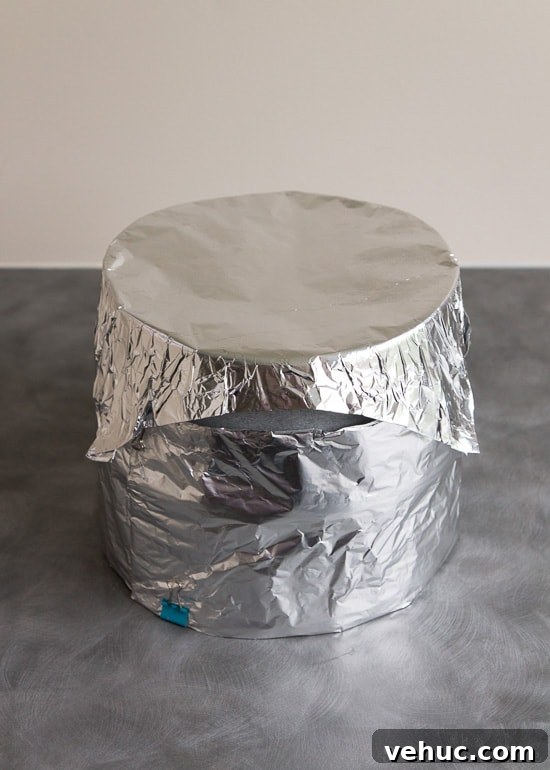
A foil lid is another simple tool to prevent over-browning on the top of a cake. You can form a square of foil over the outside of an upturned cake pan to create a shallow “hat.” This stays on better than a loose sheet and protects the top from direct heat. For dense cakes, you can use the lid from the beginning of baking to reduce doming; for lighter cakes, add the lid late in the bake—about the last 5–10 minutes—if the top starts to brown too quickly.
Foil lids add a little prep time but can save you from trimming away browned or cracked tops later.
How to Make DIY Cake Strips
Make the strips and line the pan before you mix your batter. Once batter is mixed, it should go into the prepared tin and into the oven as soon as possible for best results.
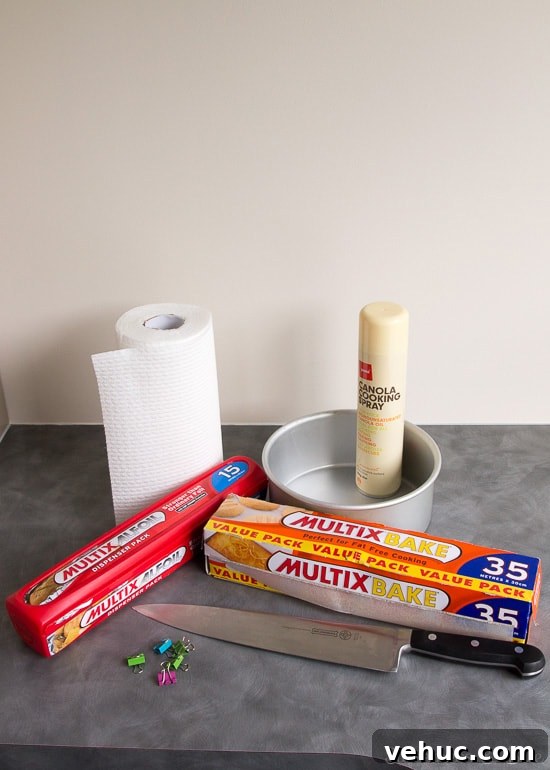
What you’ll need:
- Non-stick baking paper (parchment)
- Aluminium foil
- Heavy-duty paper towels
- Oil spray or softened butter
- A large knife or scissors
- Metal binder clips
To Make a Foil Lid
Cut a square of foil large enough to cover the pan with a small overhang. Fold each edge over once or twice to strengthen the rim, then press the foil over an upturned cake pan to form a shallow lid. For square pans, fold the corners neatly around the sides. Set the lid aside to use later if needed.
Line the Cake Pan
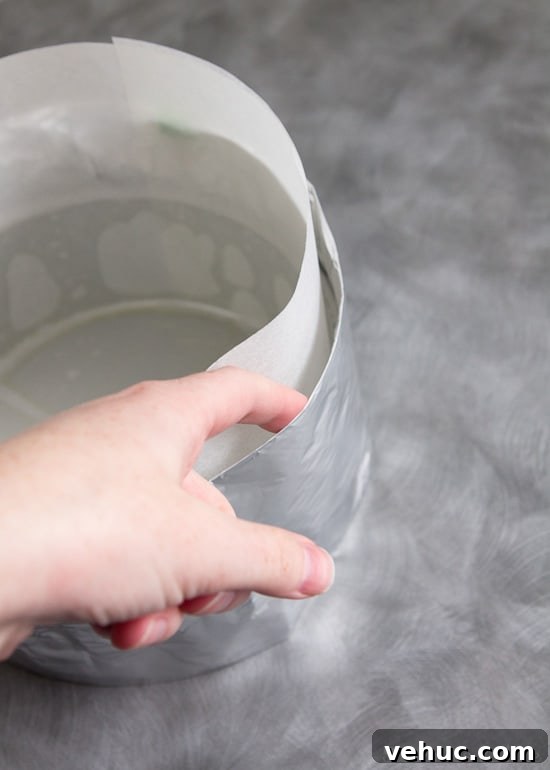
Measure a long strip of baking paper to fit around the pan’s circumference. Tear or cut another piece large enough for the base. Fold the long strip in half lengthwise, then use a knife to cut it down the fold so you have two long side strips.
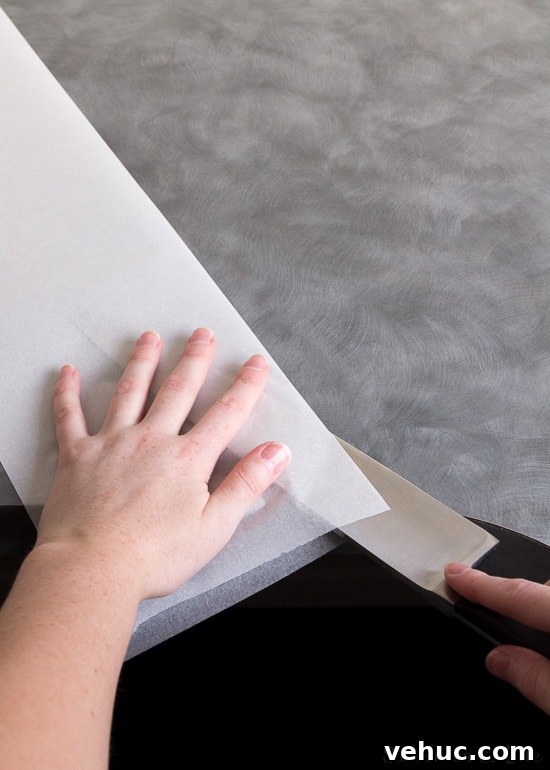
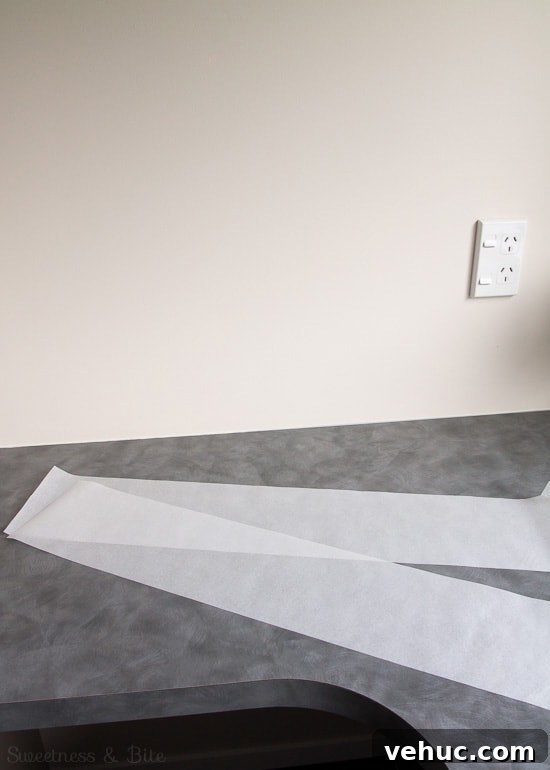
Trace the base of the tin on the smaller piece of baking paper, fold into quarters, cut and unfold to create a perfect circle base. Lightly spray or grease the tin, press the long strip around the inside wall and secure the overlap with a little oil so it sticks. Place the circle on the bottom and smooth out any air bubbles.
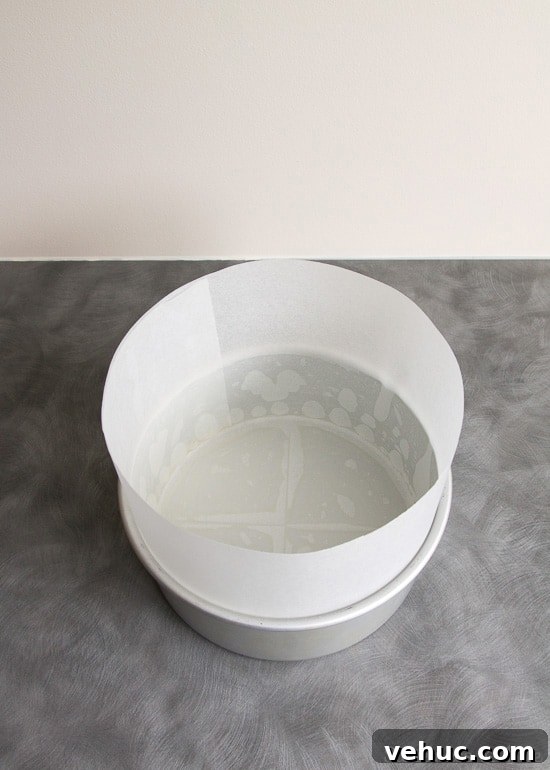
Make the Baking Strips
Choose strip height to match your pan: my pans are 3″ tall, so I use tall strips. Adjust foil and paper towel width for shorter tins.
Tear off foil long enough to wrap the pan with about a 10 cm overlap. Take two paper towel strips the same length. Fold the foil lengthwise and open it; place the folded paper towels on one half of the foil and fold the other half over to enclose them.
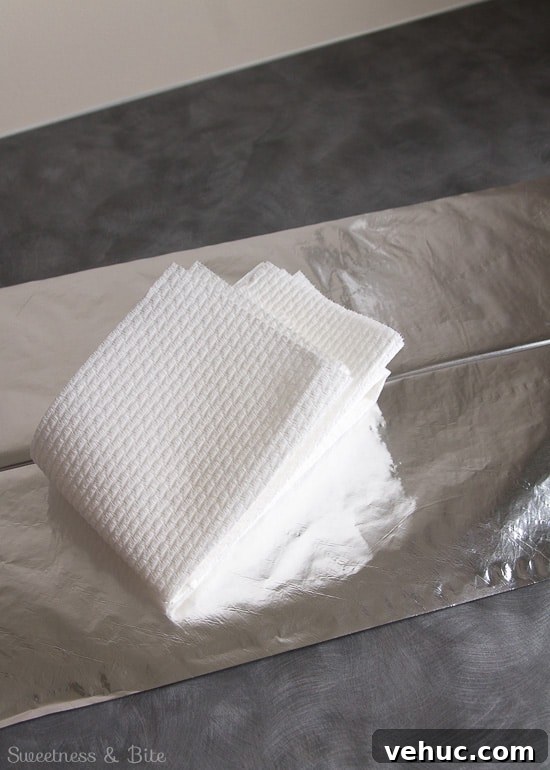
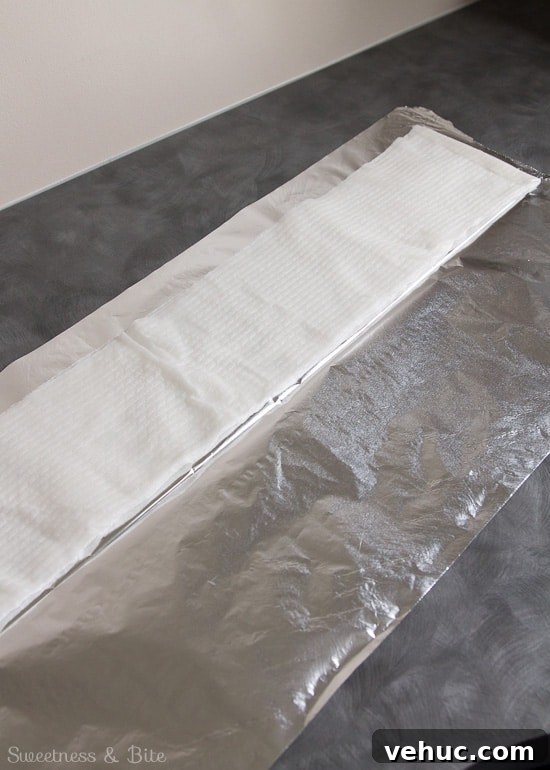
Saturate the paper towels with cold water, then squeeze out excess so they don’t drip but remain very wet. Fold foil edges over the towels and fold the top edge down twice to seal. Trim towels if they protrude so the foil can wrap at least once around them.
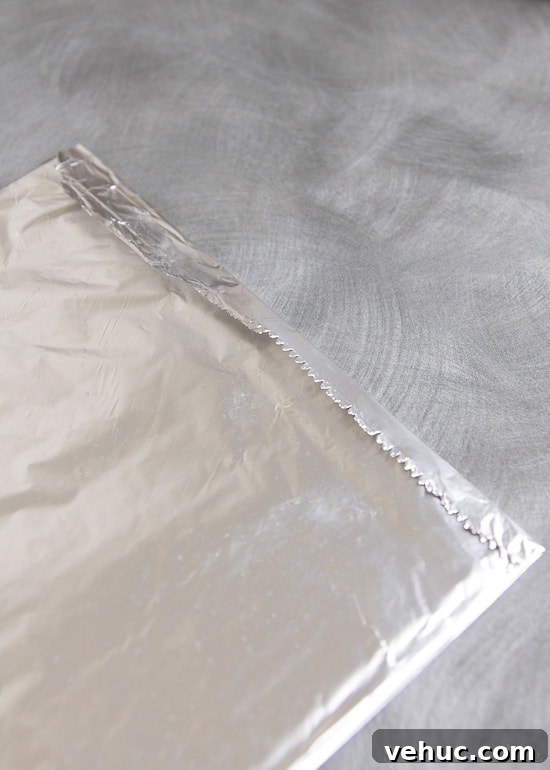
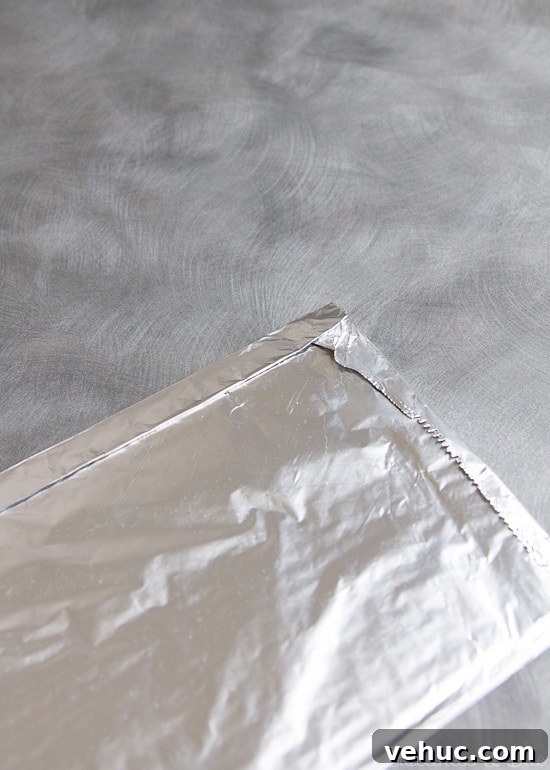
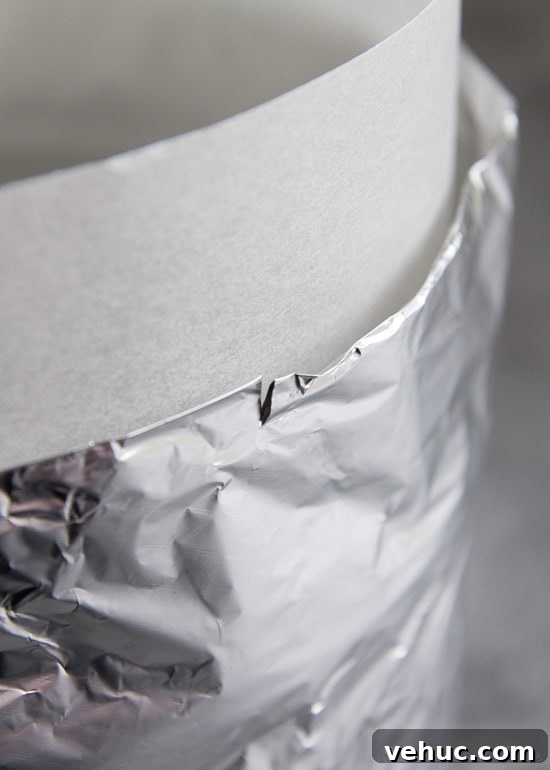
Place the strip with the folded (sealed) edge toward the pan and wrap it snugly around the cake tin. Pull tight and secure with metal binder clips. You can use large clips at the overlap and near the top and bottom to keep the strip flat and in contact with the pan.
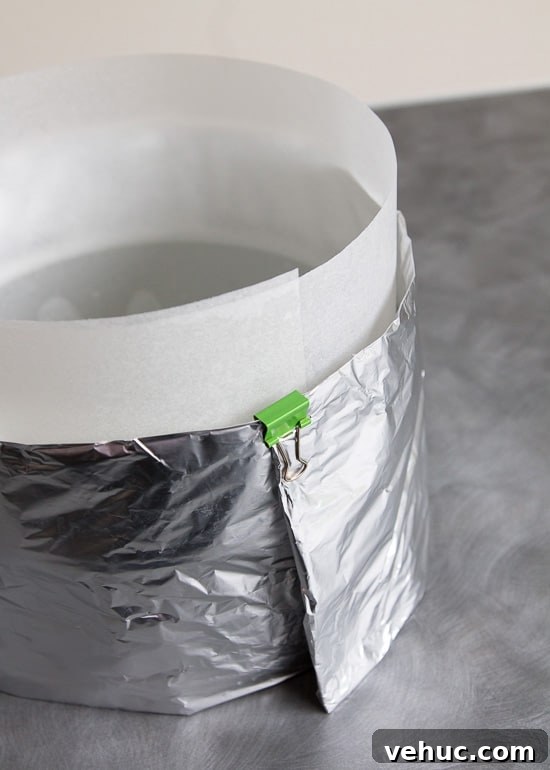
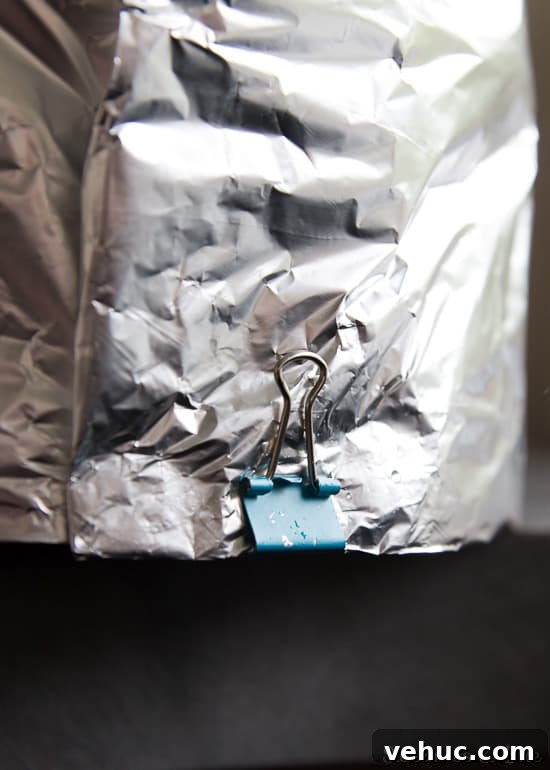
If you’re using a square tin, crease the strip at the corners so it sits flat above the pan edge—this helps shape any rise above the rim. Run a finger along the top of the strip to smooth bumps; if your cake rises above the tin it could take on that shape.
Snip small vents at the top edge of the strip in a few spots to allow steam to escape; this prevents the foil from puffing and distorting the strip during baking.
Fill the lined tin with batter and, if using a foil lid, place it on before the pan goes into the oven. After baking, remove the clips (they’ll be hot) and peel away the strips. If the towels dry out and begin to smell, you can remove them before the cake finishes; they’ve usually done most of their work by then. For long bakes you can re-wet or replace the paper towels—use oven mitts and allow the clips and foil a little time to cool before touching.
Baking Time
Wrapped pans insulate the edges, so cakes often take longer to bake than the recipe indicates. Start checking later than the recipe’s minimum time and use a skewer or other doneness tests to confirm the center is fully cooked.
Reusing DIY Cake Strips
These foil-and-towel strips are reusable. Carefully open the foil, replace or re-wet the paper towels and reseal. If the foil has become dented or damaged, replace it for a better fit next time.
More Cake Tips
- Use simple syrup to add moisture and flavor to layers after baking.
- Test cake doneness with a skewer, touch test, or internal temperature for reliable results.
- Adjust strip height and thickness to suit the pan and recipe—taller or denser cakes may need taller strips or extra insulation.
If you have questions about making or using cake strips, try them on your next bake and adjust the method for your oven and recipes. Consistent, even results come with a little practice, and these simple strips can make a big difference in moisture, rise and finish.
~Natalie
x