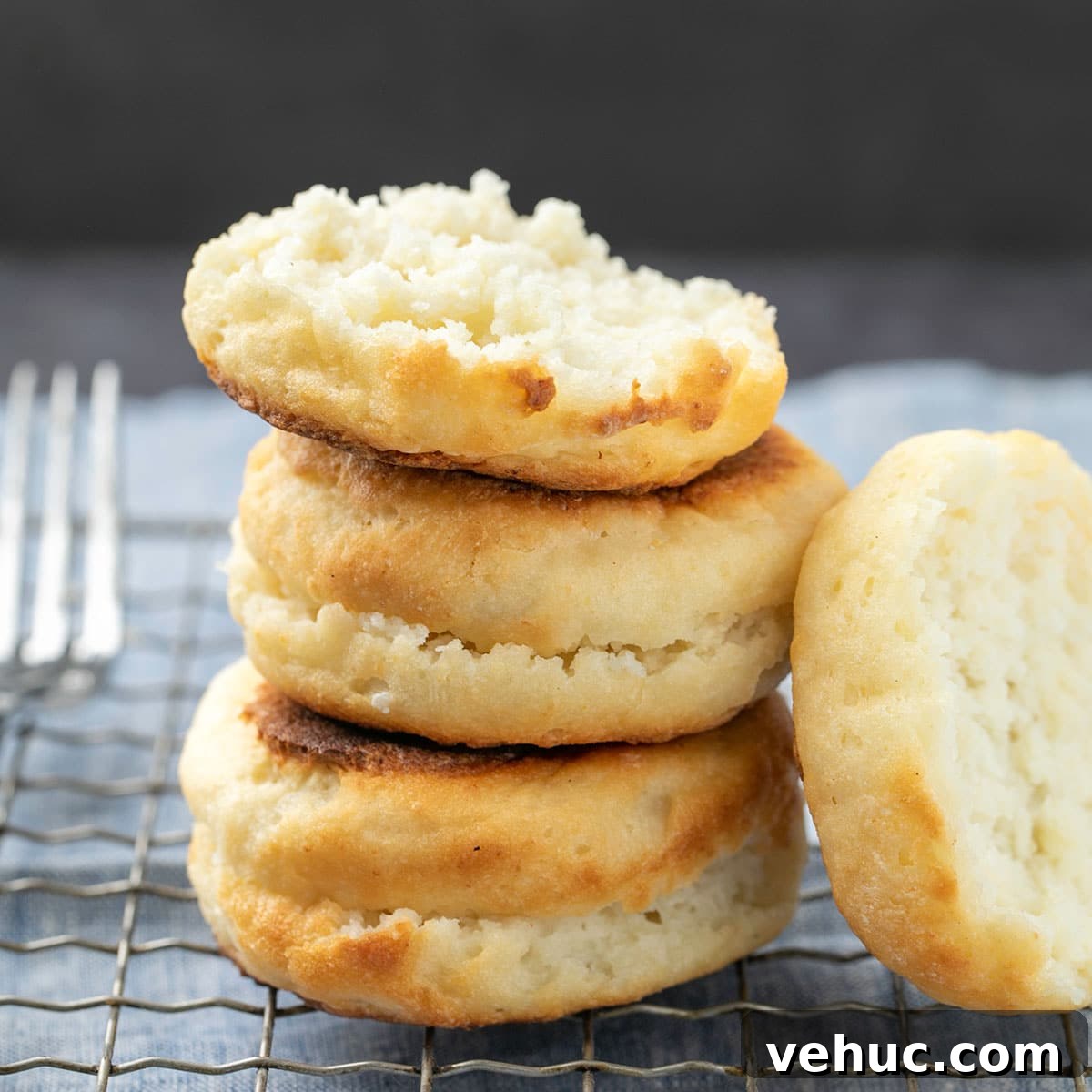
These gluten free English muffins are light and airy, crisp at the edges, and full of the nooks and crannies that make English muffins so satisfying. Once they cool and are fork-split, they freeze and reheat well, making them ideal for quick breakfast sandwiches.
The dough is very wet and high-hydration, which helps the muffins rise tall and develop an open, tender interior. Because they rise while warm and then settle as they cool, I’ll explain how to shape and handle the dough without fighting it — and how to skip shaping if you prefer.
“I’ve made them 3x now – fantastic recipe and even better flavor and texture than the wheat flour ones.”
Why this recipe works
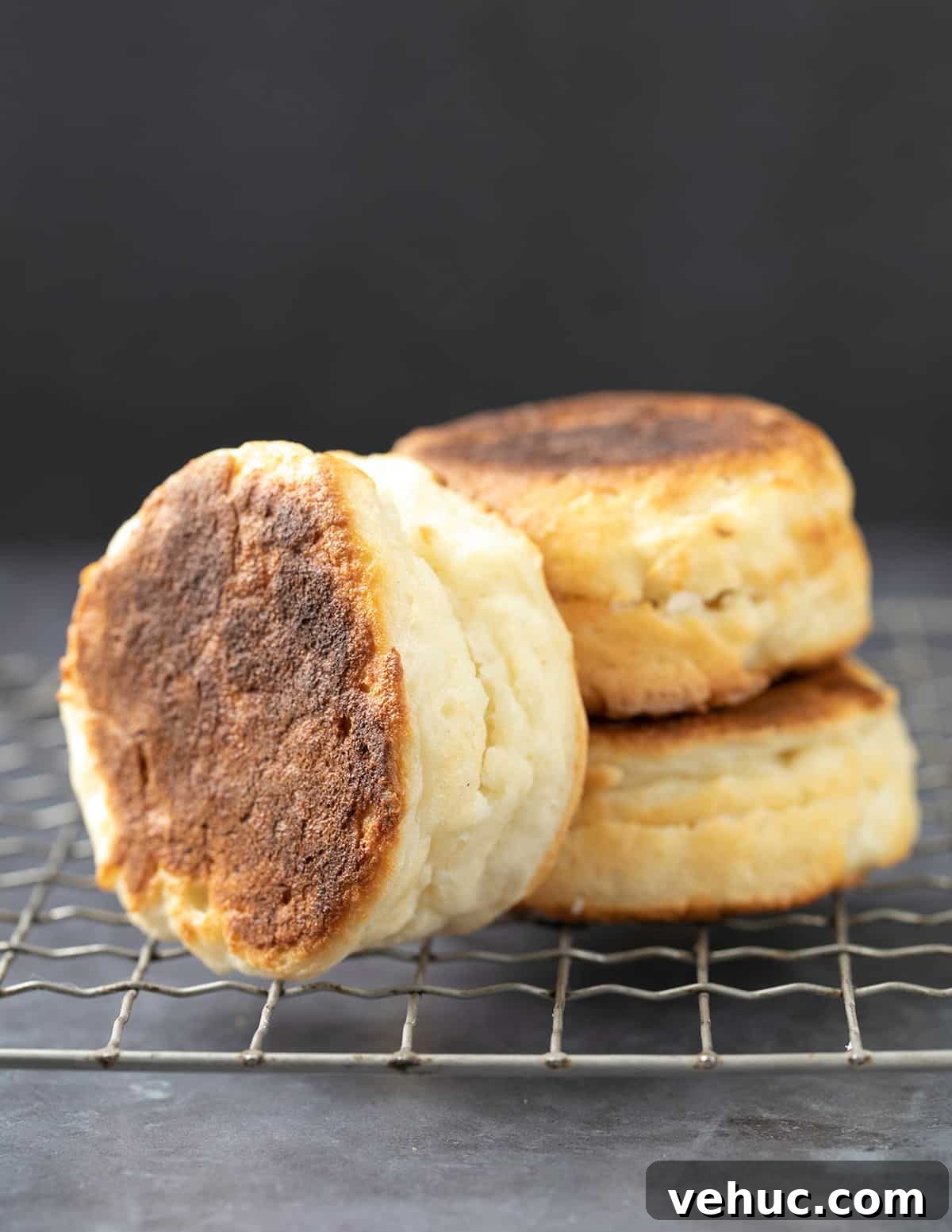
These gluten free English muffins behave and look like the classic skillet-cooked muffins: flat-edged rounds that cook entirely on the stovetop in a covered skillet. The method creates a crisp exterior and a soft, open crumb inside.
The secret is the wet dough and a slow refrigerator rest. High hydration creates big nooks and crannies; the overnight chill develops flavor and helps the flours hydrate so the dough is easier to handle.
Fork-splitting — not cutting with a knife — preserves the airy pockets and produces the uneven, craggy surface that soaks up butter and jam.
Recipe ingredients
Below are the ingredients and why each one matters for structure, texture, and flavor.
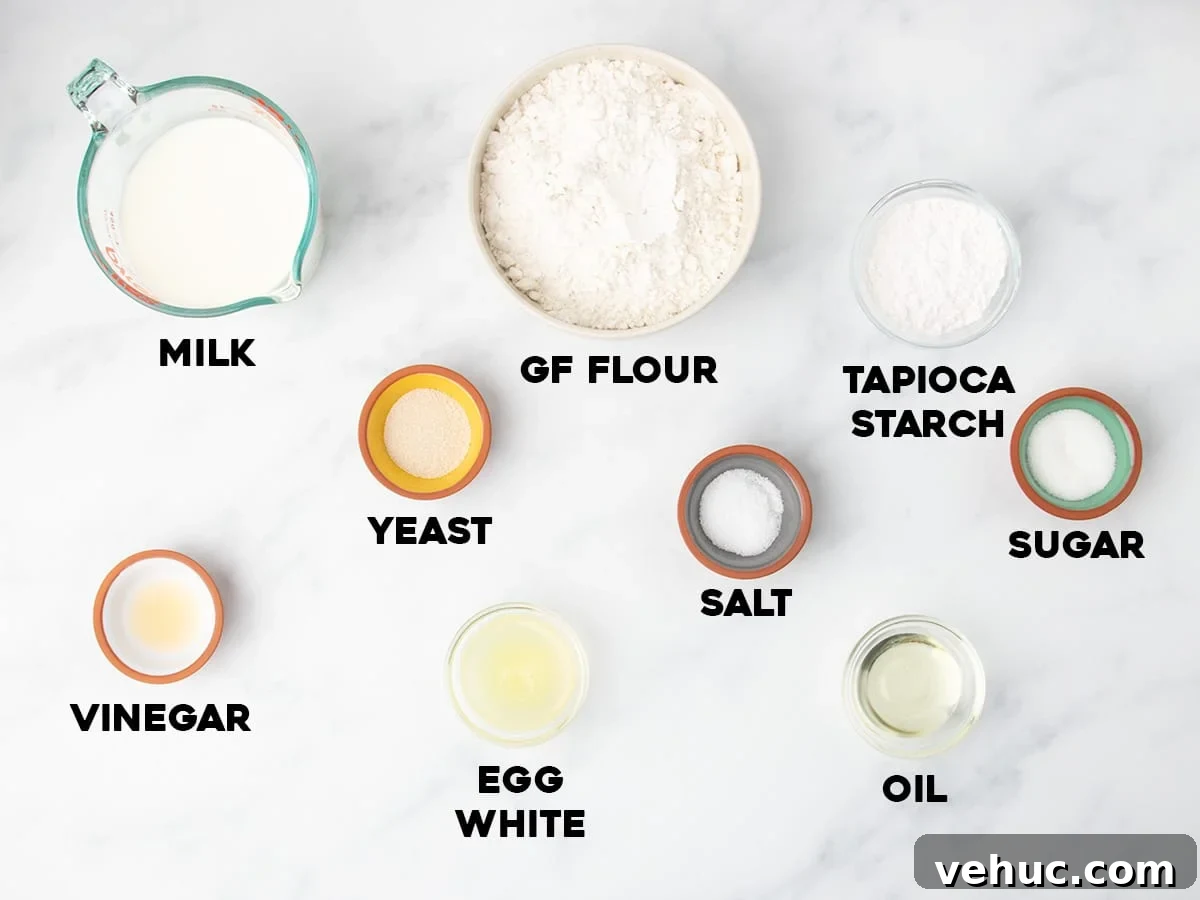
- All-purpose gluten free flour blend – Use a finely ground rice-based blend formulated for yeast breads to provide structure. Blends labeled for bread or multipurpose with added xanthan gum work best. Some 1-to-1 blends lack the strength needed here.
- Tapioca starch – Adds stretch and chew; even if your flour blend contains tapioca, this recipe uses extra to improve texture and crispness.
- Sugar – Feeds the yeast and adds a touch of sweetness.
- Instant yeast – Gives the rise without pre-proofing; instant or rapid-rise yeast works well.
- Salt – Balances flavor and controls yeast activity.
- Warm milk – Adds moisture, flavor, and richness while activating the yeast.
- Apple cider vinegar – A small amount improves rise and flavor.
- Egg white – Adds structure so muffins hold their airy rise as they cool.
- Neutral oil – A little fat keeps muffins tender and moist at room temperature.
How to make gluten free English muffins (step-by-step)
The following overview highlights the key steps. See the recipe card for exact amounts and timing.
1. Make the dough
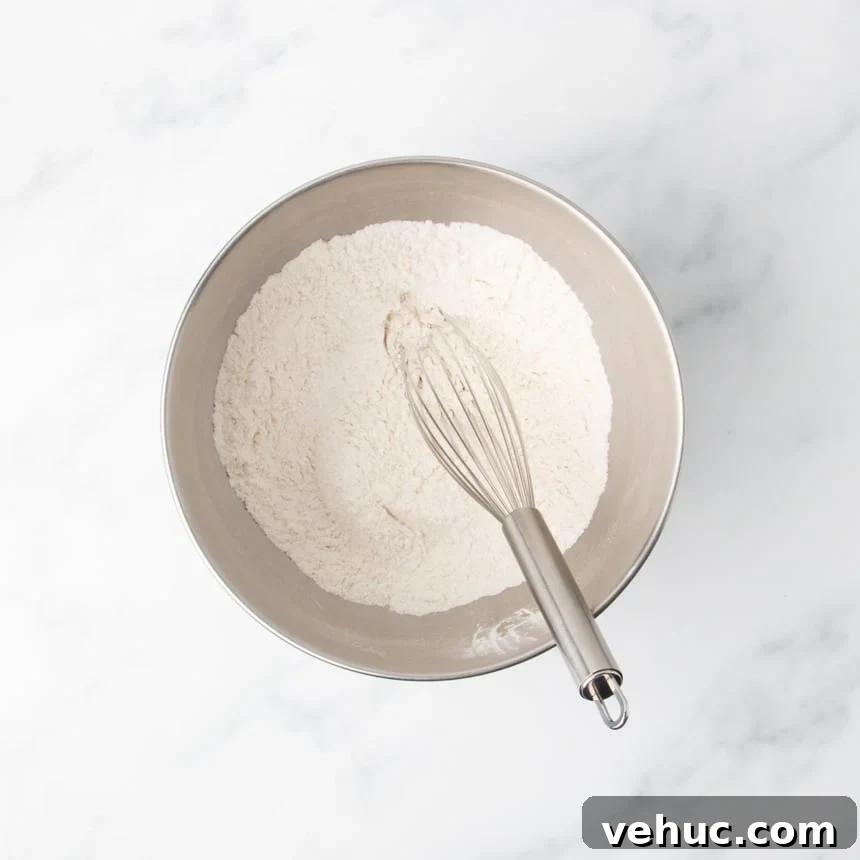
Whisk together the dry ingredients (gluten free flour blend, xanthan gum if needed, tapioca starch, sugar, and instant yeast). Add salt separately so it doesn’t contact the yeast in a concentrated area.
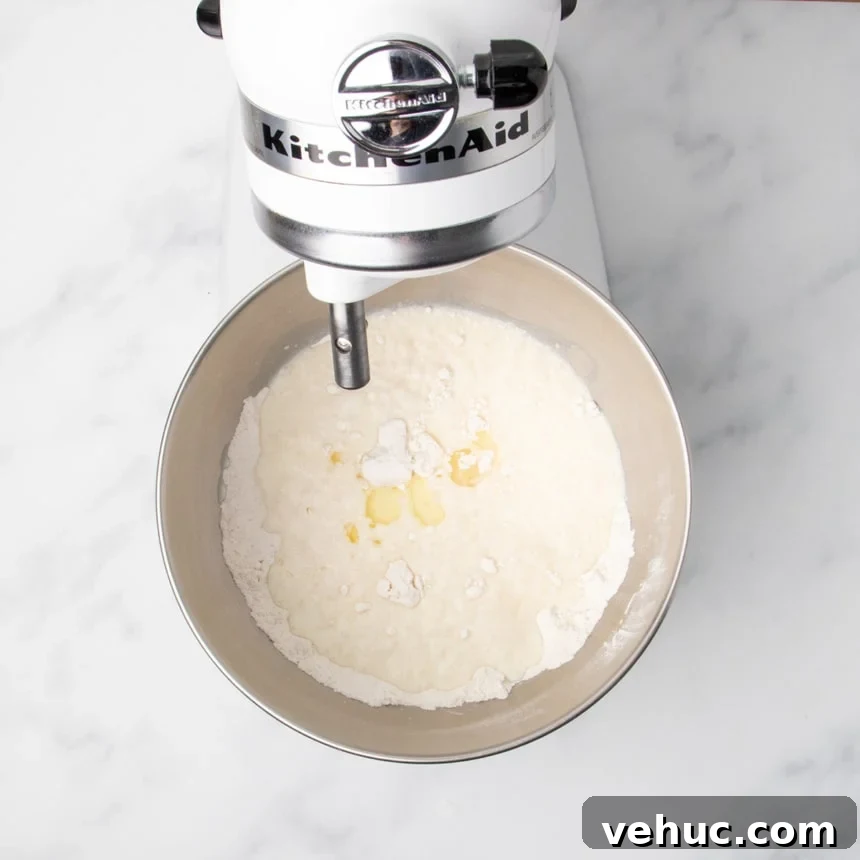
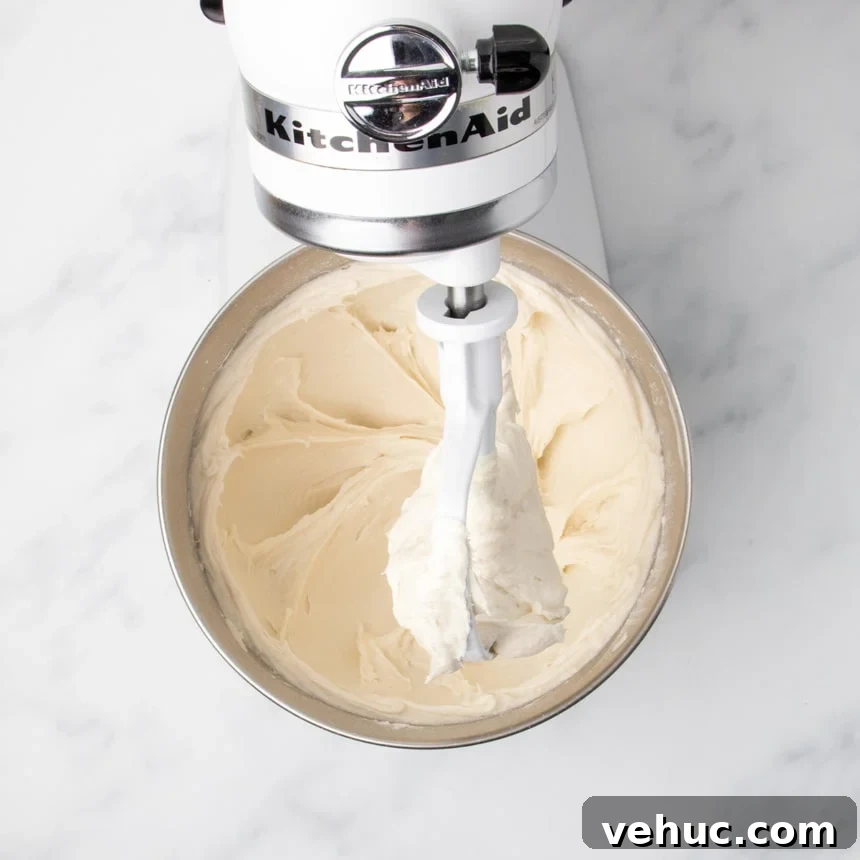
Add the warm milk, apple cider vinegar, egg white, and oil, then beat with a paddle attachment at medium-high speed for about 3 minutes. The dough will be very wet and sticky but should become somewhat aerated and hold together.
2. Chill the dough
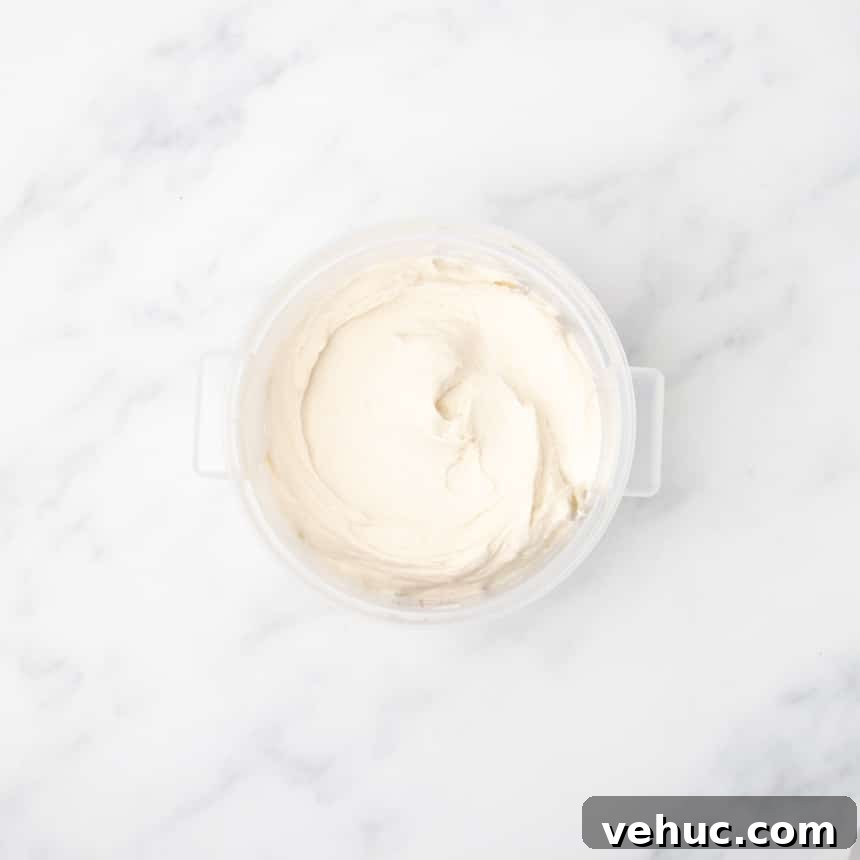
Transfer the dough to a tightly sealed container and refrigerate for at least 12 hours. This slow rest develops flavor and allows the flours to absorb moisture, which makes shaping easier later. The dough will rise slowly while chilled.
3. Shape the dough
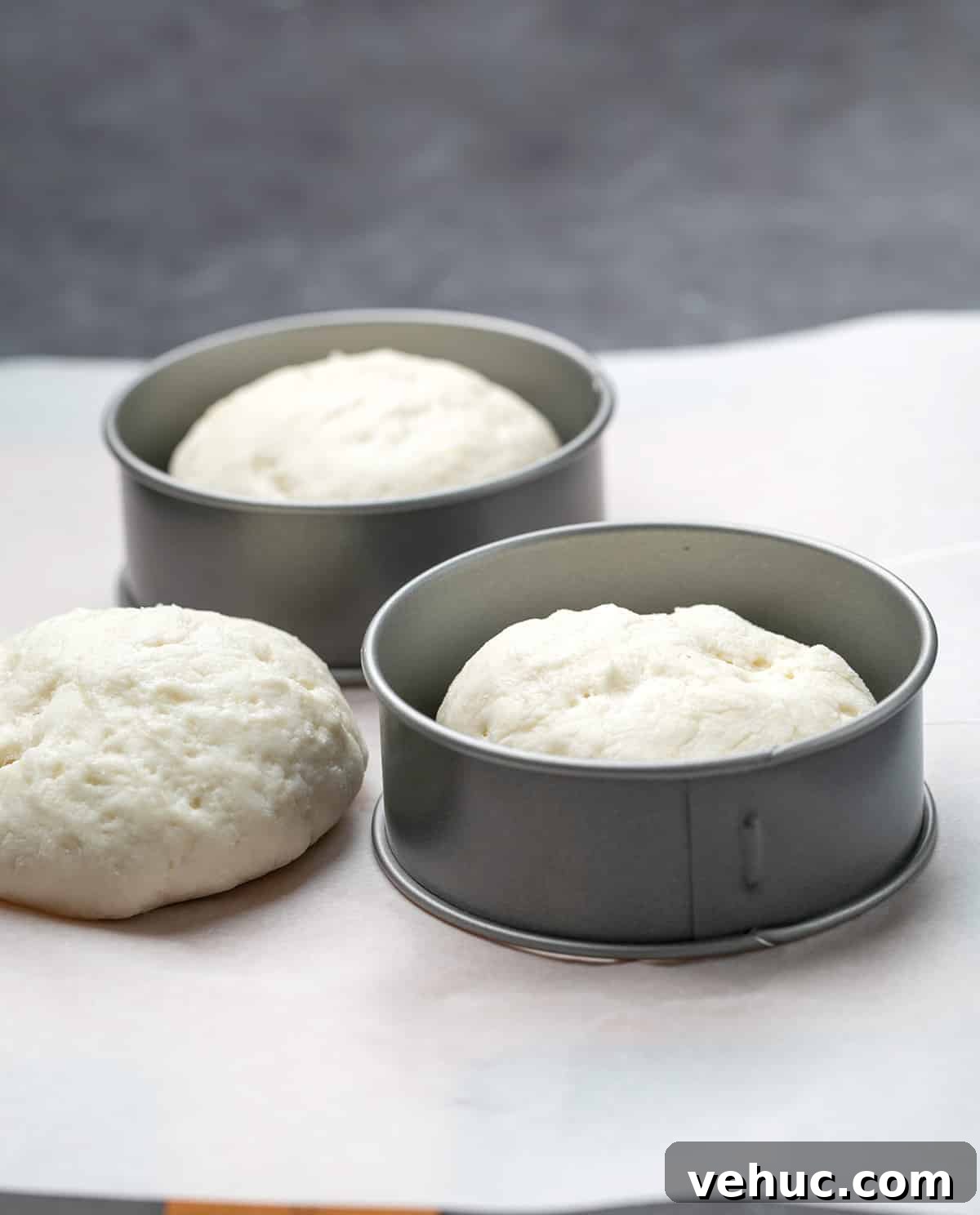
Generously dust a flat surface with tapioca starch. Using a spring-loaded scoop or two spoons, portion about 1/3 cup of dough per muffin. Work with a very light touch, dusting as needed so the sticky exterior smooths while the interior remains wet. Roundness isn’t critical because the muffins will rise during cooking.
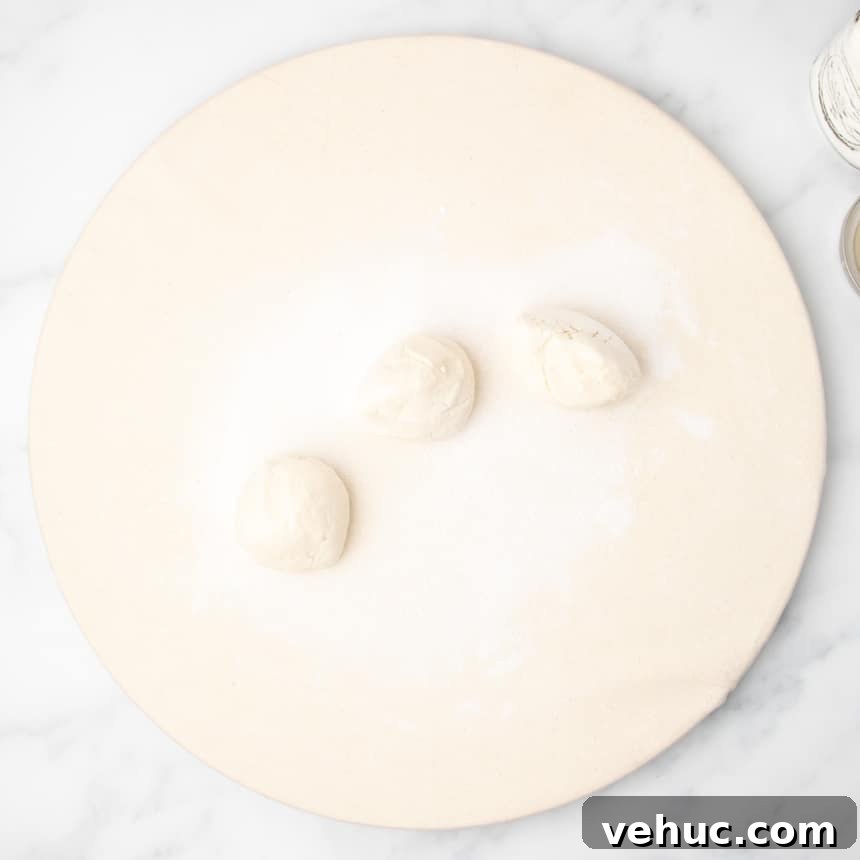
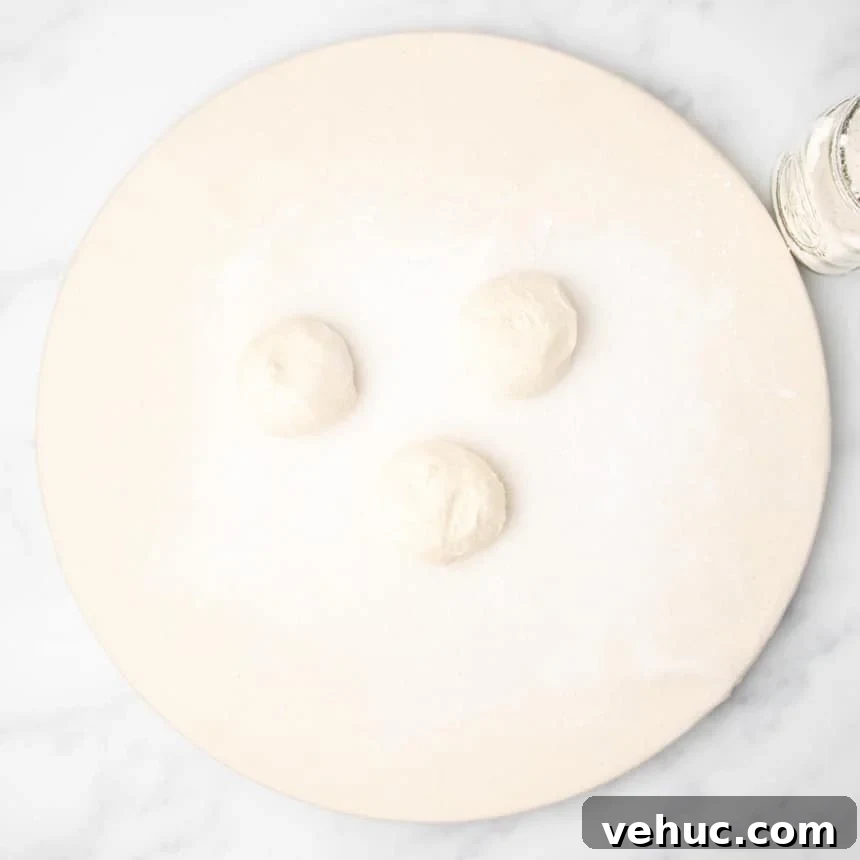
4. Cook the muffins on one side
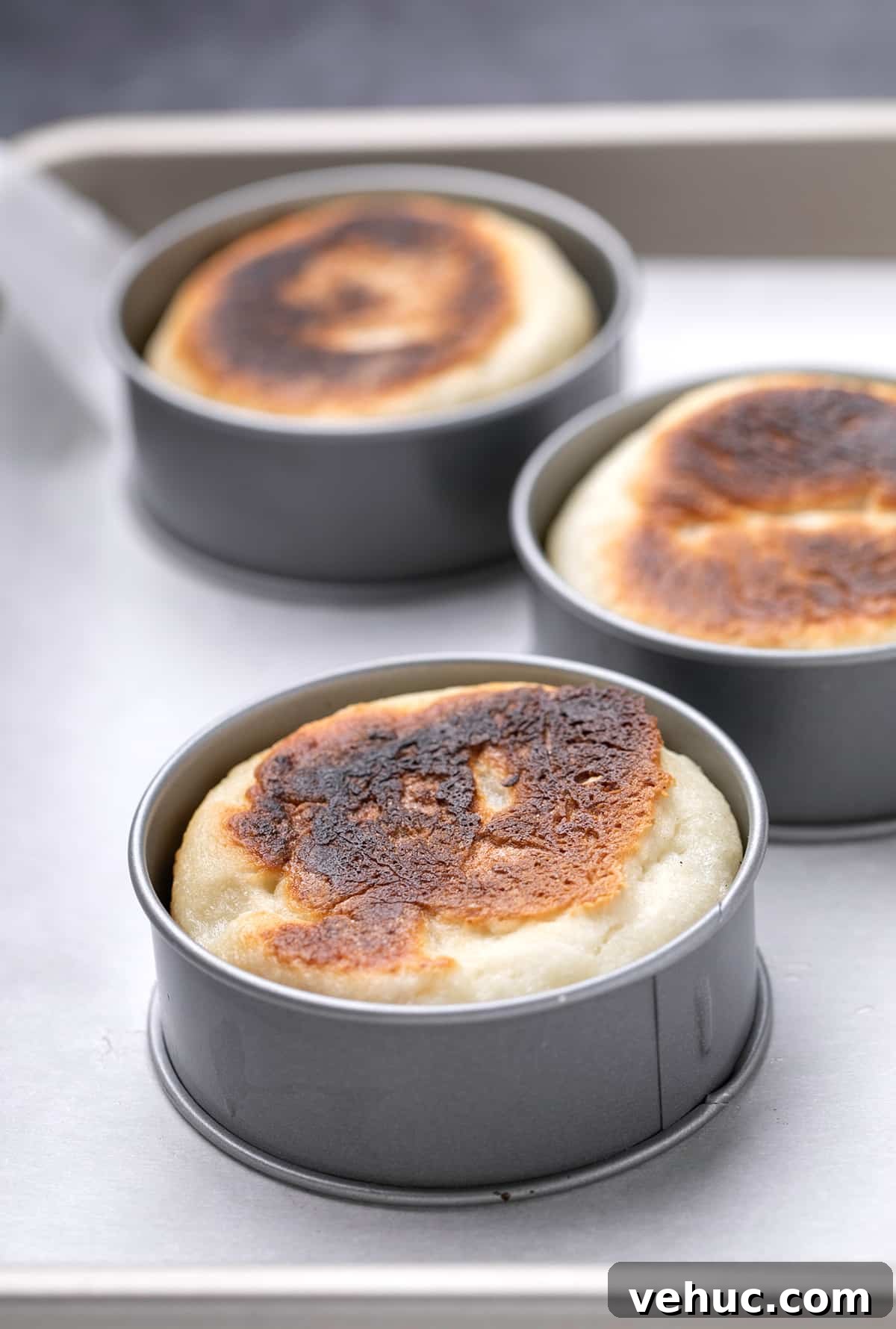
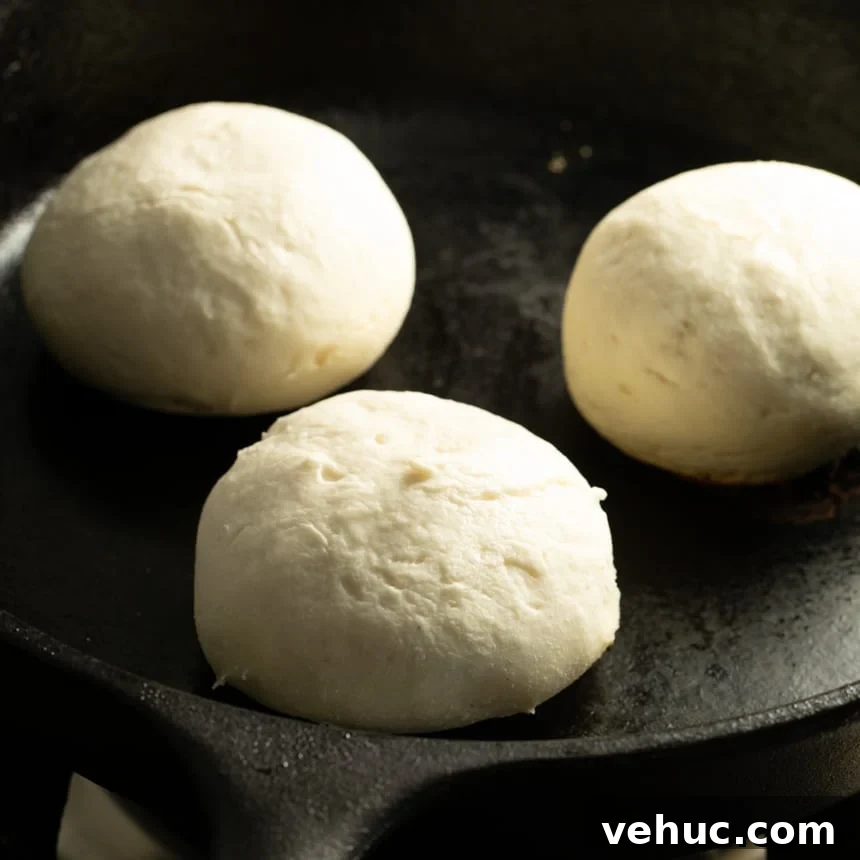
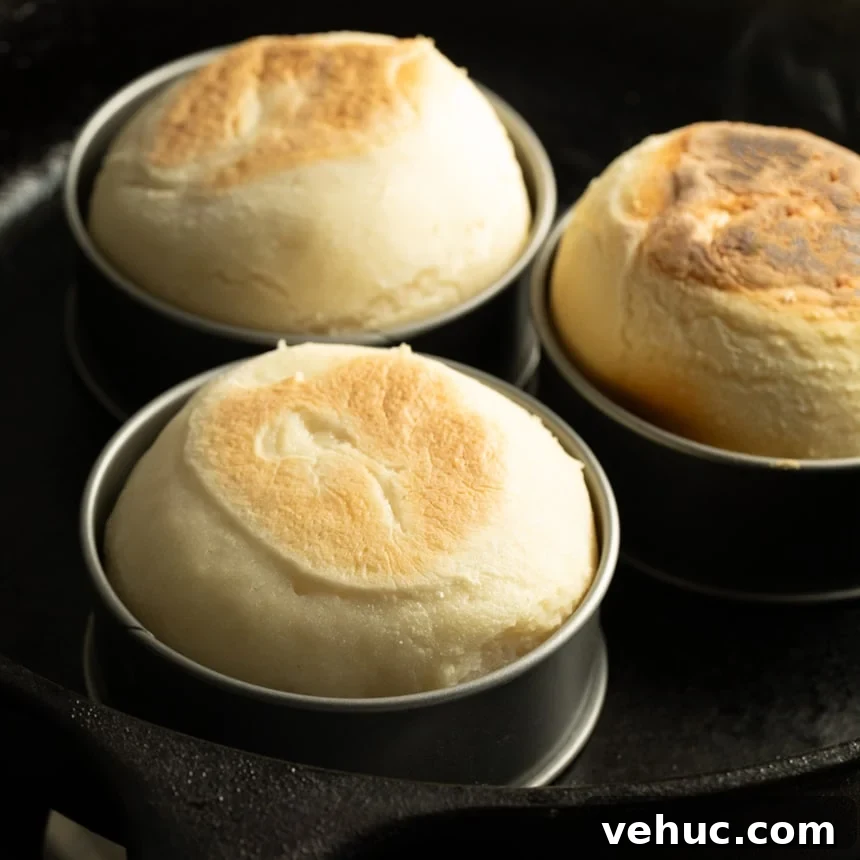
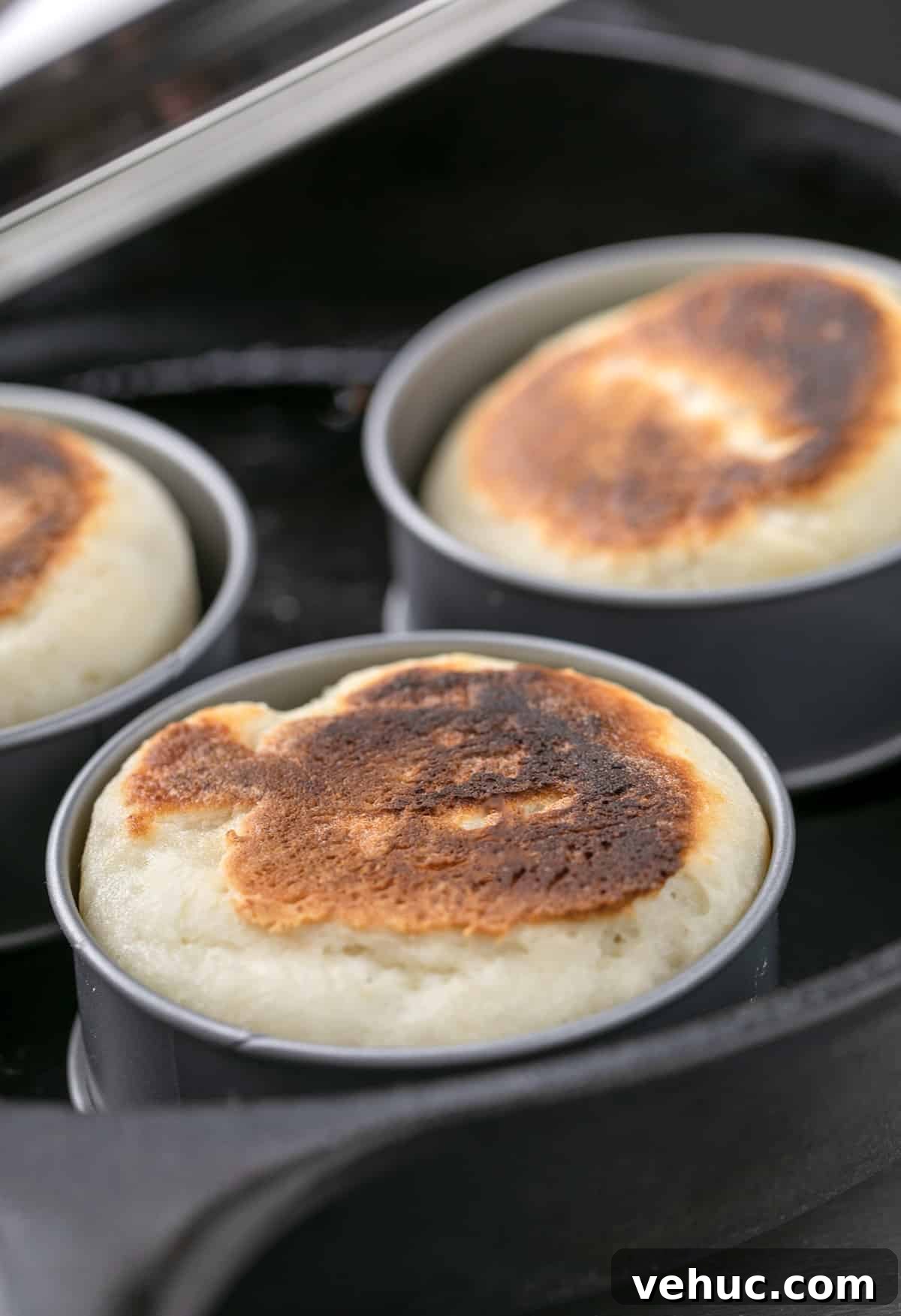
Heat a lightly greased cast-iron skillet or nonstick pan over medium heat; have a lid ready. Place shaped dough pieces in the skillet with at least 1 inch between them. Use greased English muffin or crumpet rings if you want flat edges and taller muffins.
Cover the skillet to trap steam and cook for about 10 minutes until the bottoms are lightly golden and the sides look set (not wet).
5. Flip and finish
Remove the rings if that makes flipping easier, flip each muffin with a spatula, replace the rings, cover, and continue cooking for about 15 minutes more. Muffins should be browned on both sides and register roughly 200°F in the center. A toothpick should come out with moist crumbs but not wet batter.
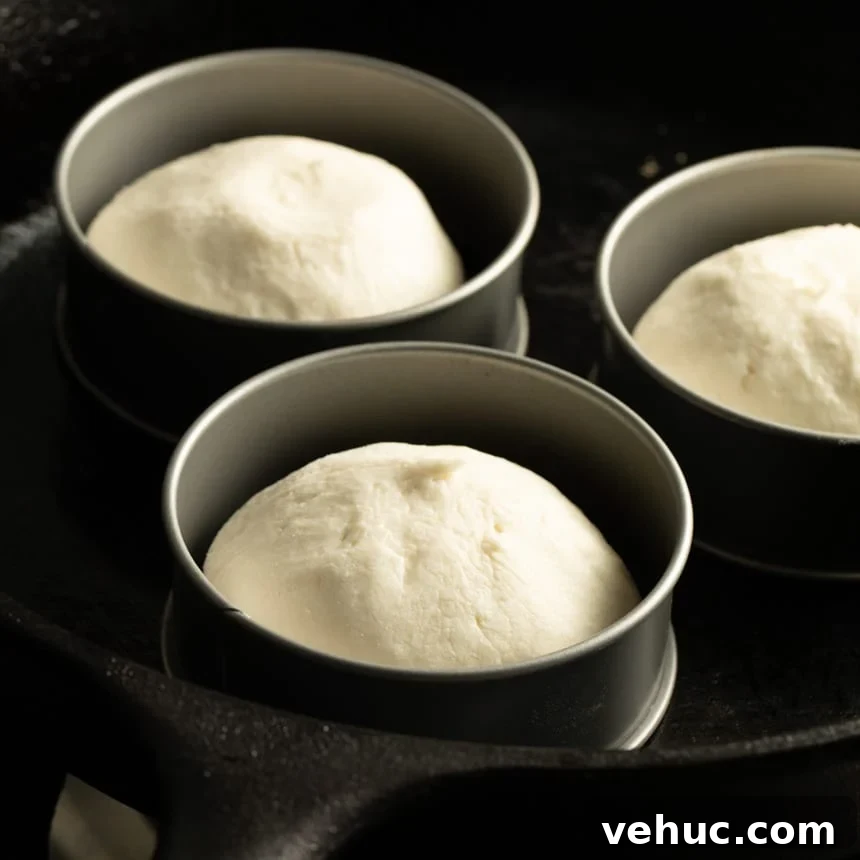
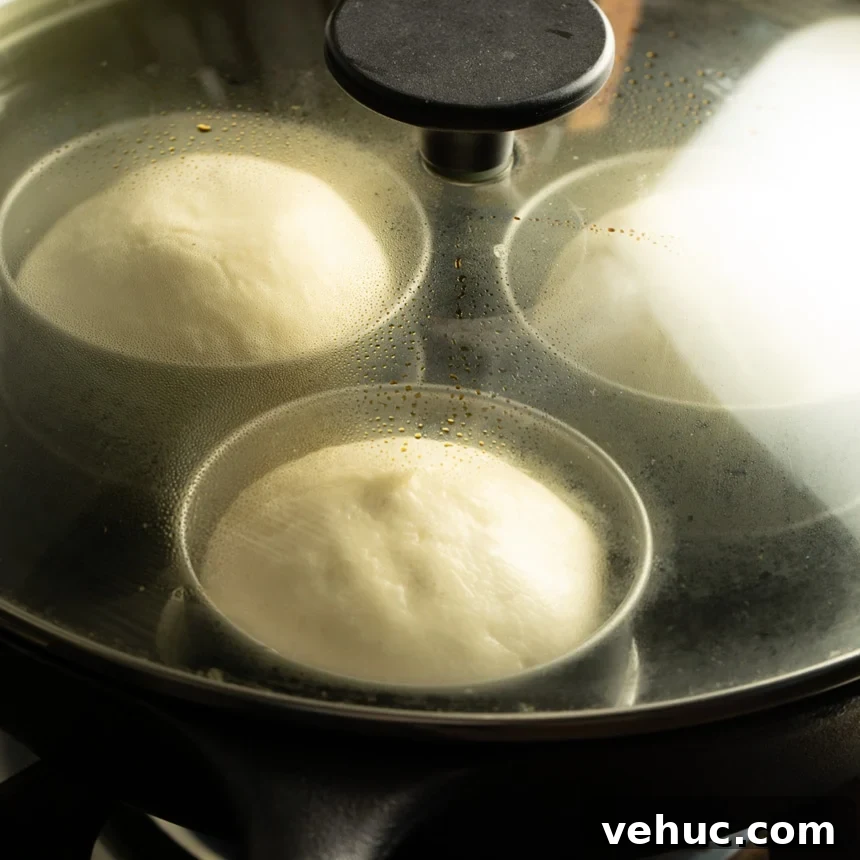
6. Cool and split
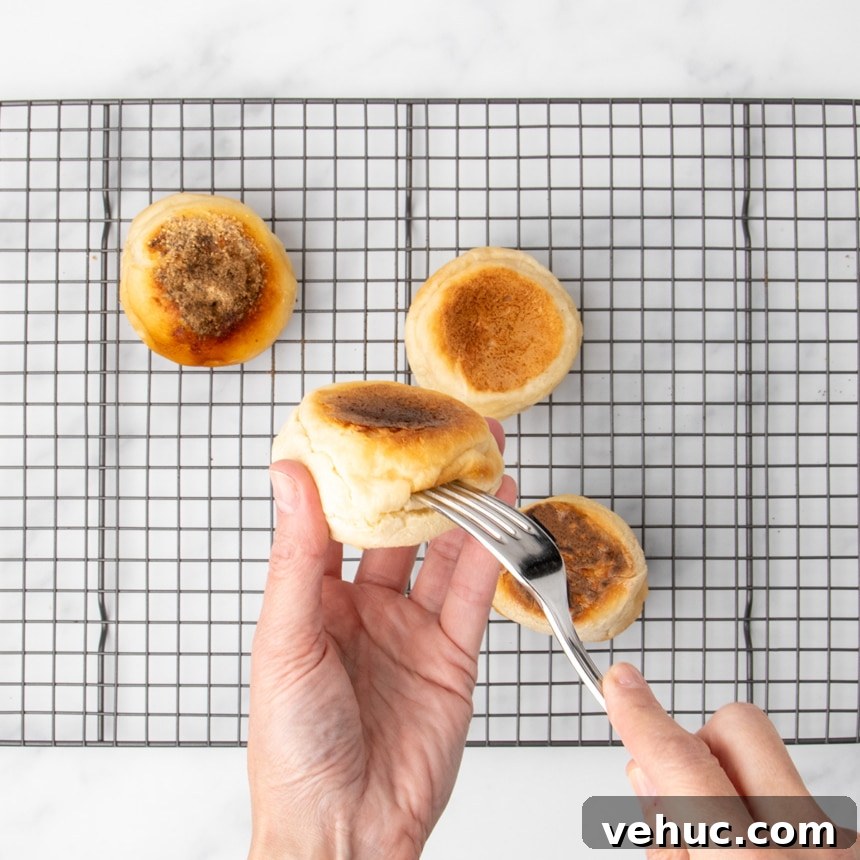
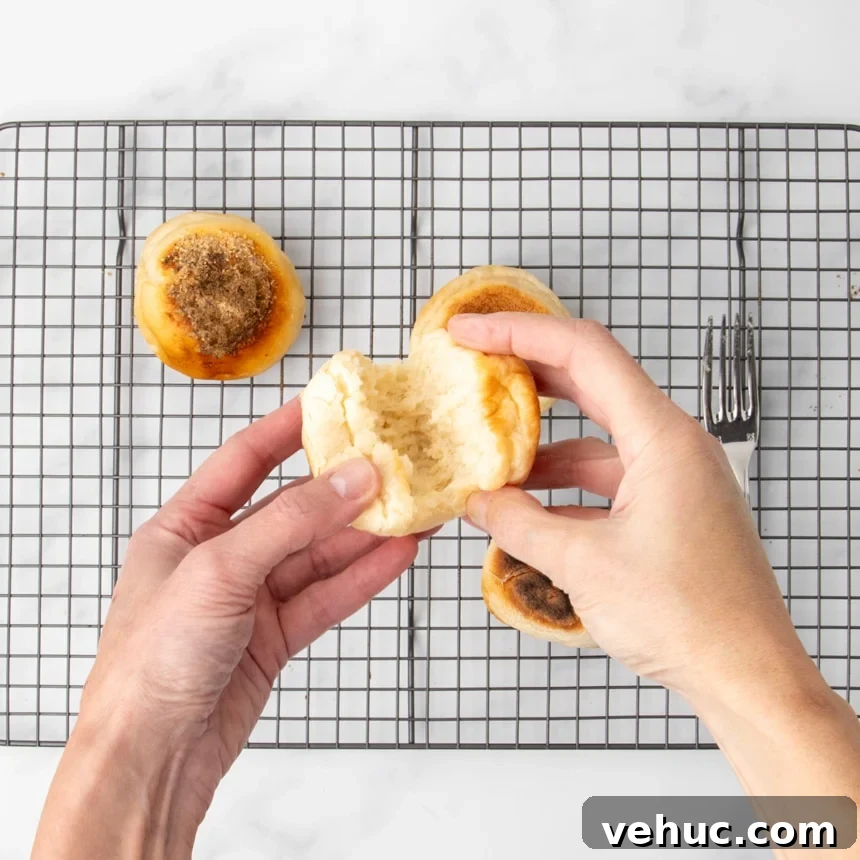
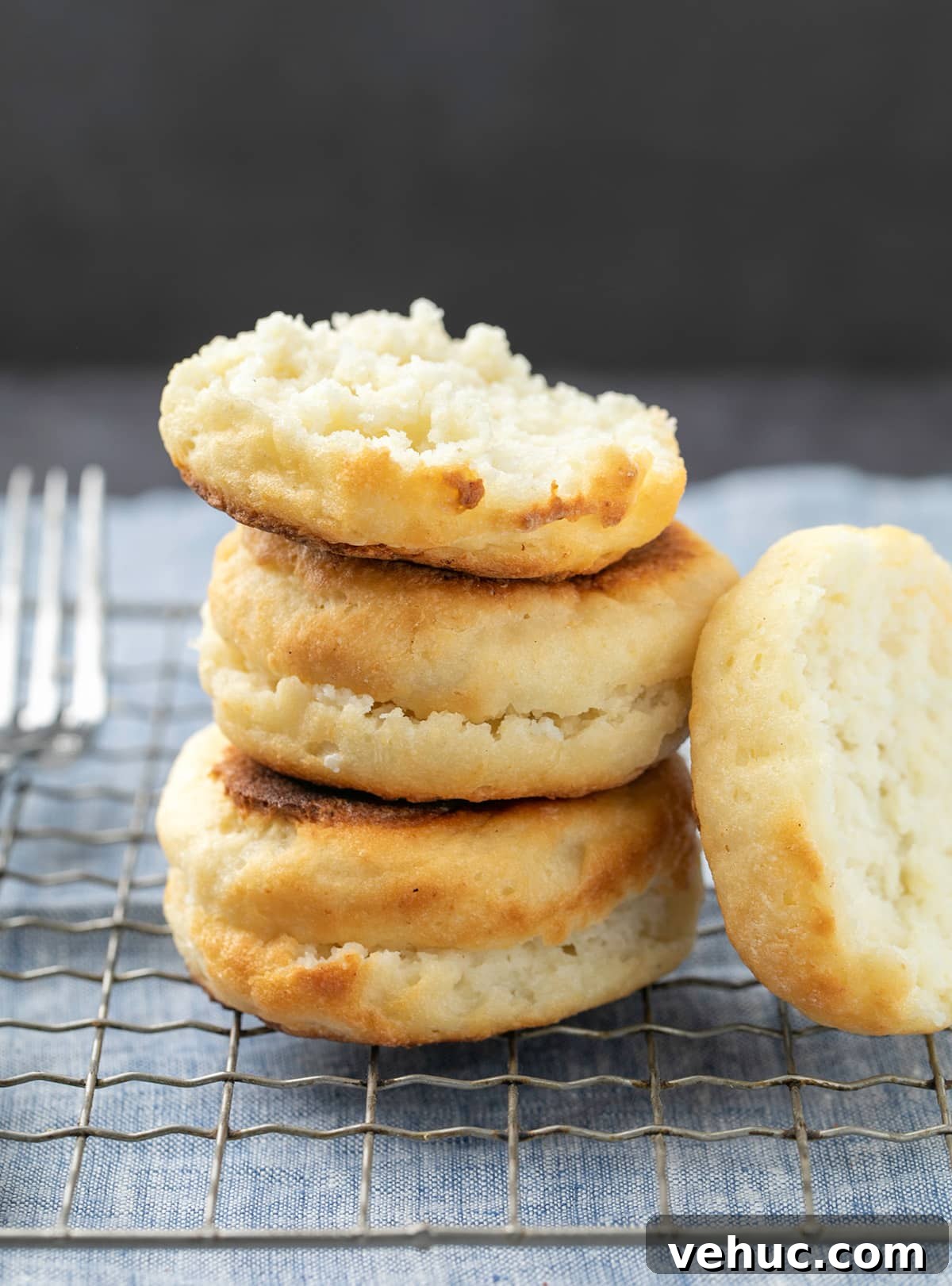
Transfer muffins to a wire rack and let them cool for about 10 minutes until they are just warm and have started to deflate slightly. Fork-split each muffin by inserting the tines parallel to the top and working around the perimeter, then gently pull the halves apart to reveal the craggy interior.
Expert tips
Keep the dough wet
A very wet dough produces the best nooks and crannies. Use tapioca starch to keep the exterior manageable while avoiding working excess flour into the dough — too much added flour reduces hydration and yields dense muffins.
Skip shaping if needed
If handling sticky dough is intimidating, simply scoop mounds of 1/3 cup directly onto a hot, greased skillet, surround them with greased rings, and cook as directed. The results are still excellent.
Don’t slice them open
Fork-splitting preserves the airy structure and creates the classic irregular surface that catches butter and spreads.
Chill the dough
Refrigerate the raw dough for at least 12 hours to improve flavor and hydration; it can rest up to 5 days. Cold dough is easier to work with and yields better texture.
Ingredient substitutions
Dairy-free
Use an unsweetened, neutral-flavored nondairy milk with some fat (canned coconut milk, soy, or almond) in place of cow’s milk. Avoid strongly flavored or textured milks.
Egg-free
Replace the egg white by weight with aquafaba (the liquid from a can of chickpeas) for similar structure.
Instant yeast
Instant yeast is preferred. If using active dry yeast, use about 25% more and dissolve it in some warm milk first.
Tapioca starch
Tapioca is uniquely stretchy; as an alternative you could try superfine glutinous rice flour, but results will differ.
If you enjoyed this recipe, you might also like the gluten free pop tarts recipe.
Gluten Free English Muffins Recipe
Equipment
-
4 English muffin rings or tall round cookie cutters (or rings cut from aluminum cans)
-
Stand mixer fitted with a paddle attachment (or a food processor with a plastic blade)
Ingredients
- 2 ¼ cups all purpose gluten free flour blend (about 315 g)
- 2 ¼ teaspoons xanthan gum (omit if your blend already contains it)
- ¼ cup tapioca starch/flour (plus more for sprinkling)
- 1 tablespoon granulated sugar
- 2 teaspoons instant yeast (about 6 g)
- 1 ½ teaspoons kosher salt
- 1 ½ cups milk, warm (about 95°F)
- ½ teaspoon apple cider vinegar
- 1 egg white (about 25 g), at room temperature
- 1 tablespoon neutral oil (canola, vegetable, grapeseed, or avocado)
Instructions
Make the dough
-
In a stand mixer fitted with the paddle attachment, whisk together the flour blend, xanthan gum, tapioca starch, sugar, and yeast. Add the salt and whisk again.
-
Add the warm milk, apple cider vinegar, egg white, and oil, then mix until combined.
-
Increase speed to medium-high and mix about 3 minutes until the dough looks aerated and sticky but cohesive.
-
Transfer to a sealed container and refrigerate for 12 hours to 5 days.
Shape the dough
-
Heat a 10-inch cast iron skillet over medium to medium-low (or heat a griddle to about 350°F). Lightly grease the pan.
-
Grease four metal rings (or tall cookie cutters or aluminum can rings). Sprinkle a flat surface with tapioca starch, scoop 3–4 portions of about 1/3 cup each, and shape lightly into 3-inch rounds with floured fingers.
Cook the muffins
-
Place the shaped pieces about 1 inch apart in the prepared skillet and put rings around each muffin.
-
Cover and cook 10 minutes or until the bottoms are lightly browned and sides are mostly set.
-
Remove rings if needed, flip each muffin, replace rings, cover, and cook another 15 minutes until browned and fully cooked (about 200°F internal).
-
Remove rings and transfer muffins to a wire rack to cool until just warm. They will deflate slightly.
-
Fork-split each muffin around the middle, gently pry open, and serve warm.
Video
Notes
Nutrition
Nutrition information is an approximation.
Storage suggestions
Store muffins for up to 2 days at room temperature in a sealed container. Do not refrigerate, as that speeds staling. For longer storage, fork-split, wrap each muffin tightly in plastic wrap, and freeze for up to 3 months.
You can also keep the raw dough refrigerated for up to 5 days and cook only what you need each day.
FAQs
The recipe originated in the United Kingdom and the name “English muffin” was adopted in the United States in the late 1800s.
No. Rings help create flat edges, but you can cook scooped mounds without rings or improvise with jar rings, folded foil, or egg molds.
Yes. A griddle works as well as a skillet; just cover the muffins with a lid tall enough to trap steam while they cook.
Yes. This recipe calls for extra tapioca starch to boost stretch and crispness. Each ingredient serves a purpose, so omit nothing without expecting changes to texture.