Why Gratitude Matters Now More Than Ever
In a world of busy schedules, deadlines, and endless comparison, it’s easy to miss the good already present in our lives. We hurry from one task to the next, fixating on what’s missing or what comes next, and in doing so we often lose sight of the small, steady blessings that sustain us each day.
Gratitude offers a different way of seeing. It isn’t about denying life’s difficulties or pretending everything is perfect. Instead, it’s a gentle redirection of attention toward moments of beauty, comfort, and connection that persist even during hard times. That shift in focus can meaningfully improve physical health, strengthen relationships, and support emotional balance.
Best of all, gratitude is free, available to everyone, and supported by scientific research showing its measurable benefits.
The Science of Gratitude: More Than Just Positive Thinking
Gratitude is much more than a motivational slogan. A growing body of research in psychology and neuroscience shows that practicing gratitude changes the way our brains and bodies respond to life.
Appreciating what is good reshapes neural pathways, encouraging the brain to notice positive experiences rather than defaulting to what’s wrong. This process calms the mind, eases physical tension, and alters our emotional climate.
Regular gratitude practice has been linked to tangible benefits, including:
- Reduced stress and anxiety
- Improved sleep quality
- Stronger immune function
- Deeper, more satisfying relationships
- Greater overall happiness and life satisfaction
Research by gratitude experts has shown that simple habits—like keeping a gratitude journal—lead to increased optimism, better physical health, and stronger social connection. Gratitude stimulates neurotransmitters such as dopamine and serotonin, which help regulate mood and promote well-being. Remarkably, the brain responds to small moments of appreciation—your morning coffee, a warm hug, a deep breath—so even brief practices can send signals of safety and positivity through your system.
In short, gratitude is not merely positive thinking. It’s a biological and emotional reset that is available to everyone at any time.
How Gratitude Has Shaped My Life (And Can Shape Yours)
My own relationship with gratitude began during a period of burnout. I was moving through life on autopilot—checking boxes, meeting deadlines, and pushing myself to stay productive. Eventually my body and spirit signaled that something needed to change.
I started with something very simple: a small notebook in which I wrote three things I was grateful for each morning. At first it seemed almost trivial. Some days the entries were ordinary—
- a hot cup of tea
- a warm message from a friend
Other days I had to look a little harder. But I kept the habit. Over time it shifted how I experienced daily life. I became more present and less reactive, more likely to notice sunlight on a desk, laughter in the next room, or the relief of a slow breath. I grew more patient with others and gentler with myself. My relationships deepened because I showed up with more awareness and appreciation.
Gratitude didn’t erase challenges, but it provided a steadier, kinder foundation. Instead of constantly reacting, I began living with intention—and that made a real difference.
6 Simple Ways to Practice Gratitude Daily
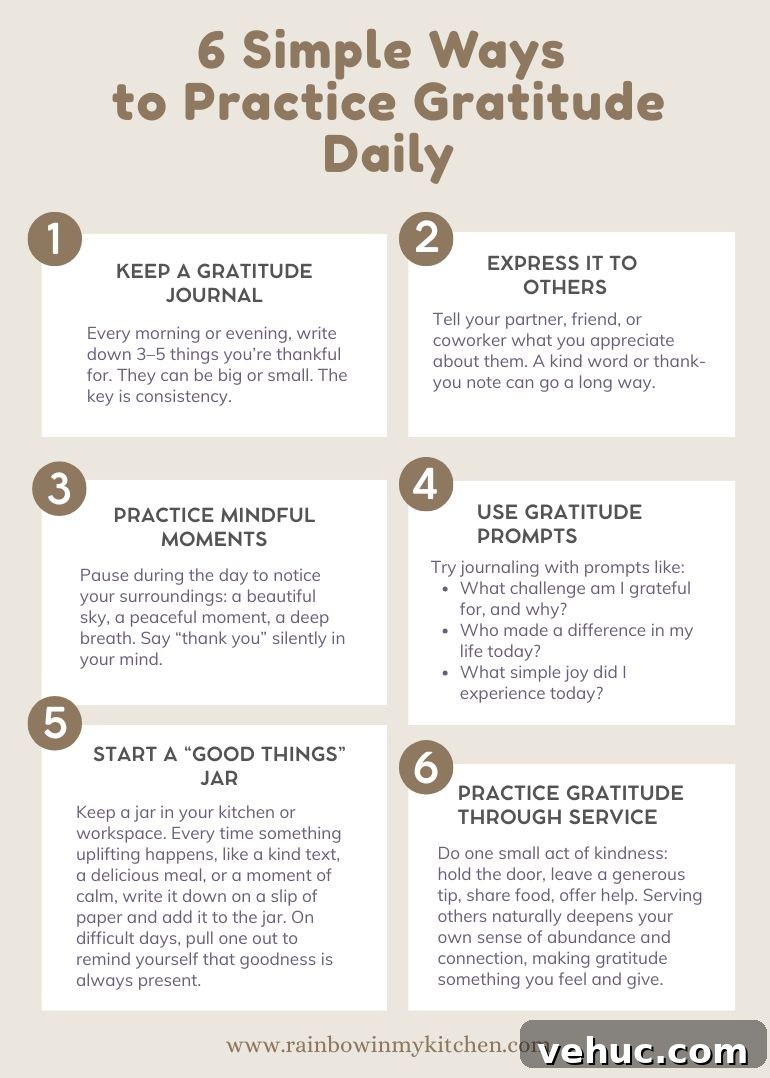
You don’t need an elaborate ritual to benefit from gratitude. Try these practical, sustainable approaches:
1. Keep a Gratitude Journal
Each morning or evening, write down three to five things you appreciate. They can be small or large; consistency matters most.
2. Express It to Others
Tell someone what you value about them. A sincere thank-you, a short note, or a kind comment can strengthen bonds.
3. Practice Mindful Moments
Pause during the day to notice your surroundings: the sky, a moment of calm, a deep breath. Offer a quiet “thank you” inwardly.
4. Use Gratitude Prompts
Prompts can guide reflection. Try questions like:
- What challenge am I grateful for, and why?
- Who made a difference in my life today?
- What simple joy did I experience today?
5. Start a “Good Things” Jar
When something uplifting happens—a kind message, a good meal, a peaceful moment—write it on a slip and add it to a jar. On tough days, read a few notes to remember the good.
6. Practice Gratitude Through Service
Small acts of kindness—holding a door, offering help, sharing food—deepen connection and reinforce a sense of abundance.
How Gratitude Improves Relationships
Gratitude transforms how we relate to others. When we notice and acknowledge the good in people, conversations soften and connections deepen. Appreciative attention creates a space where others feel seen and valued, which encourages openness, kindness, and emotional availability.
Regular expressions of gratitude can:
- Reduce conflict
- Increase emotional intimacy
- Promote forgiveness and trust
A simple “thank you” can change the tone of a relationship—thanking a partner for dinner, recognizing a friend’s support, or acknowledging a coworker’s effort. These small recognitions accumulate, making relationships feel more resilient and meaningful.
Gratitude turns ordinary acts into opportunities for connection and reminds people: I see you. I value you. You matter.
Gratitude and Your Health: A Holistic Perspective
Gratitude aligns naturally with holistic wellness—whether your focus is nutrition, movement, mental health, or mindful living. It’s a physiological tool that helps activate the parasympathetic nervous system—the body’s rest-and-digest mode—lowering chronic stress and supporting recovery.
Gratitude integrates easily into daily practices that already nourish you:
- Eating mindfully? Pause to appreciate the aroma and nourishment on your plate.
- Finishing a yoga or meditation session? Close with a brief, grateful acknowledgment.
- Walking in nature? Let your steps guide you to notice steady, renewing aspects of the environment.
Approaching wellness with gratitude transforms practices from tasks into relationships—between body, mind, and spirit. Gratitude nourishes inner resources that logic alone cannot reach: peace, resilience, and joy. That inner nourishment radiates outward, influencing how we move through life.
Gratitude Is a Daily Practice, Not a Destination
The strength of gratitude lies in its accessibility. You don’t need perfect circumstances to practice it—only a moment to pause, breathe, and notice what supports you. Gratitude is something we return to repeatedly, especially when life feels messy or overwhelming.
Each day offers a small choice: to notice the good, honor what matters, and give attention to sources of meaning. Over time, these small choices cultivate a life that feels fuller, gentler, and more grounded.
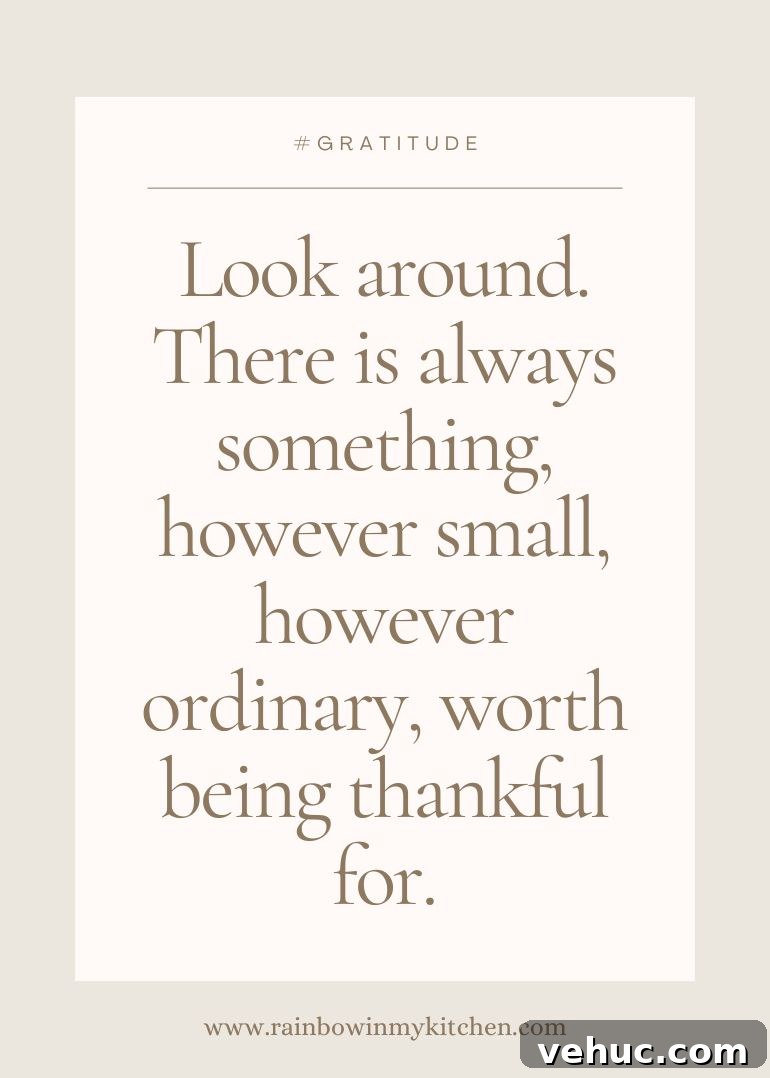
Start today. Look around—there is always something, however small or ordinary, worth being thankful for.
Thank you for reading. I appreciate your time and presence in this moment.
How Do You Practice Gratitude?
Let’s inspire one another. Share one thing you’re grateful for today in the comments below—your example may encourage someone else.
Did this post resonate with you?
If it did, consider sharing it with a friend or saving it for later. Practicing gratitude together helps build kinder, more connected communities.