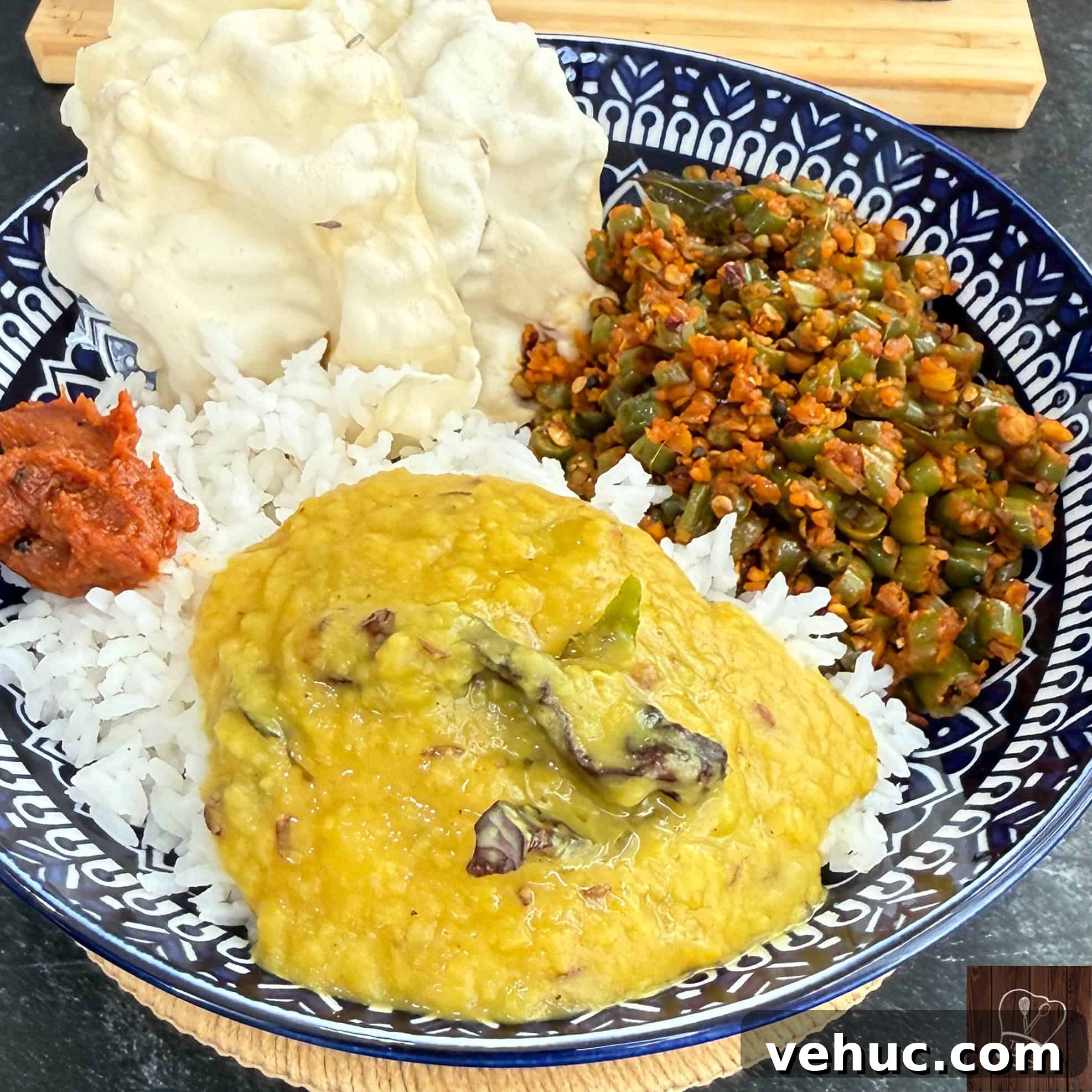
Mudda Pappu — also called muddapappu, paruppu kadaiyal, Andhra pappu or telugu pappu — is a simple, comforting South Indian dal. Below is a clear, concise recipe with step-by-step pictures and a video. If you prefer the video, check the paruppu masiyal recipe and consider subscribing to the channel.
What is Mudda Pappu?
Mudda Pappu is a traditional Andhra-style dal made from toor dal (arhar), turmeric and salt, finished with a simple ghee tempering. It is prepared to a thick, mashable consistency and served hot with rice, a drizzle of ghee and pickles like avakaya.
Why dry roast toor dal before cooking?
Dry roasting the toor dal brings out a nutty aroma and enhances the overall flavor. It also helps the dal cook more evenly and contributes to the characteristic taste of Mudda Pappu.
Water ratio for Mudda Pappu
Use 1½ cups of water for 1/2 cup toor dal to get the traditional thick, mashable texture typical of Andhra-style pappu.
Pressure-cooking time
Pressure cook the dal for 4 whistles so it becomes soft enough to mash smoothly.
Adding garlic
Garlic can be added to the tempering for extra flavor. Roast the garlic lightly in ghee until golden before adding the other tempering spices.
What gives the authentic Andhra flavor?
The tempering of ghee with cumin seeds, red chilli, curry leaves and a pinch of asafoetida creates the classic Andhra aroma and depth of taste.
Desired consistency
Mudda Pappu should be thick, soft and easily mashable — not watery. It should hold shape when mixed with rice and feel comforting on the palate.
Can I make it without a pressure cooker?
Yes. Cook the dal in a pot over low heat until very soft, adding extra water if needed. This method takes longer but yields the same comforting result.
Serving suggestions
Serve Mudda Pappu with hot steamed rice, a spoonful of ghee, and a spicy pickle or a simple vegetable side. It also goes well with plain rotis or dosas.
Why use asafoetida?
Asafoetida adds a savory depth and helps with digestion, making the dal lighter on the stomach.
Will it be spicy?
No — traditional uppu paruppu is mild and comforting. Adjust the number of chillies if you want more heat.
Ingredients
Pressure cook
1/2 cup toor dal
1 + 1/2 cup water
1/4 teaspoon turmeric powder
Salt, to taste
To temper
1 tablespoon ghee
2–3 dried red chillies (adjust to taste)
1 teaspoon cumin seeds
A few curry leaves
A pinch of asafoetida
How to make Muddapappu (step-by-step)
- Dry roast the toor dal in a pan on medium heat until it smells aromatic and the color slightly deepens. This adds a nutty flavor.
- Wash the roasted dal well under running water.
- Transfer the dal to a pressure cooker or pot, add 1½ cups water and turmeric powder. Pressure cook for 4 whistles, or simmer in a pot until very soft.
- When the pressure releases, add salt, mash the dal well and mix to a smooth, thick consistency.
- In a small pan, heat the ghee. Add garlic (if using) and roast until golden.
- Add red chillies, curry leaves, cumin seeds and a pinch of asafoetida to the hot ghee. Fry briefly until the spices sizzle and release their aroma.
- Pour the hot tempering over the mashed dal and mix. Bring the dal to a quick boil, then turn off the heat.
- Serve hot with steamed rice, a spoon of ghee and your favorite pickle or vegetable side.
muddapappu
Print
Pin
Comment
Ingredients
pressure cook
- 1/2 cup toor dal
- 1 + 1/2 cup water
- 1/4 teaspoon turmeric powder
paruppu
- Salt, to taste
to temper
- 1 tablespoon ghee
- Red chillies
- 1 teaspoon cumin seeds
- Curry leaves
- Asafoetida
Instructions
-
Dry roast toor dal until aromatic and slightly darkened.
-
Wash the dal thoroughly.
-
Add dal, water and turmeric to a cooker and pressure cook for 4 whistles (or simmer until very soft).
-
Add salt, mash the cooked dal and mix to a thick consistency.
-
Heat ghee in a small pan, add garlic (optional) and roast until golden.
-
Add red chilli, curry leaves, cumin seeds and asafoetida; let them splutter and release aroma.
-
Pour the tempering over the dal, bring to a quick boil, then turn off the heat.
Video
Subscribe to my YouTube channel
Check out Traditionally Modern Food
Tried this recipe?
Mention @traditionallymodernfood or tag #traditionallymodernfood