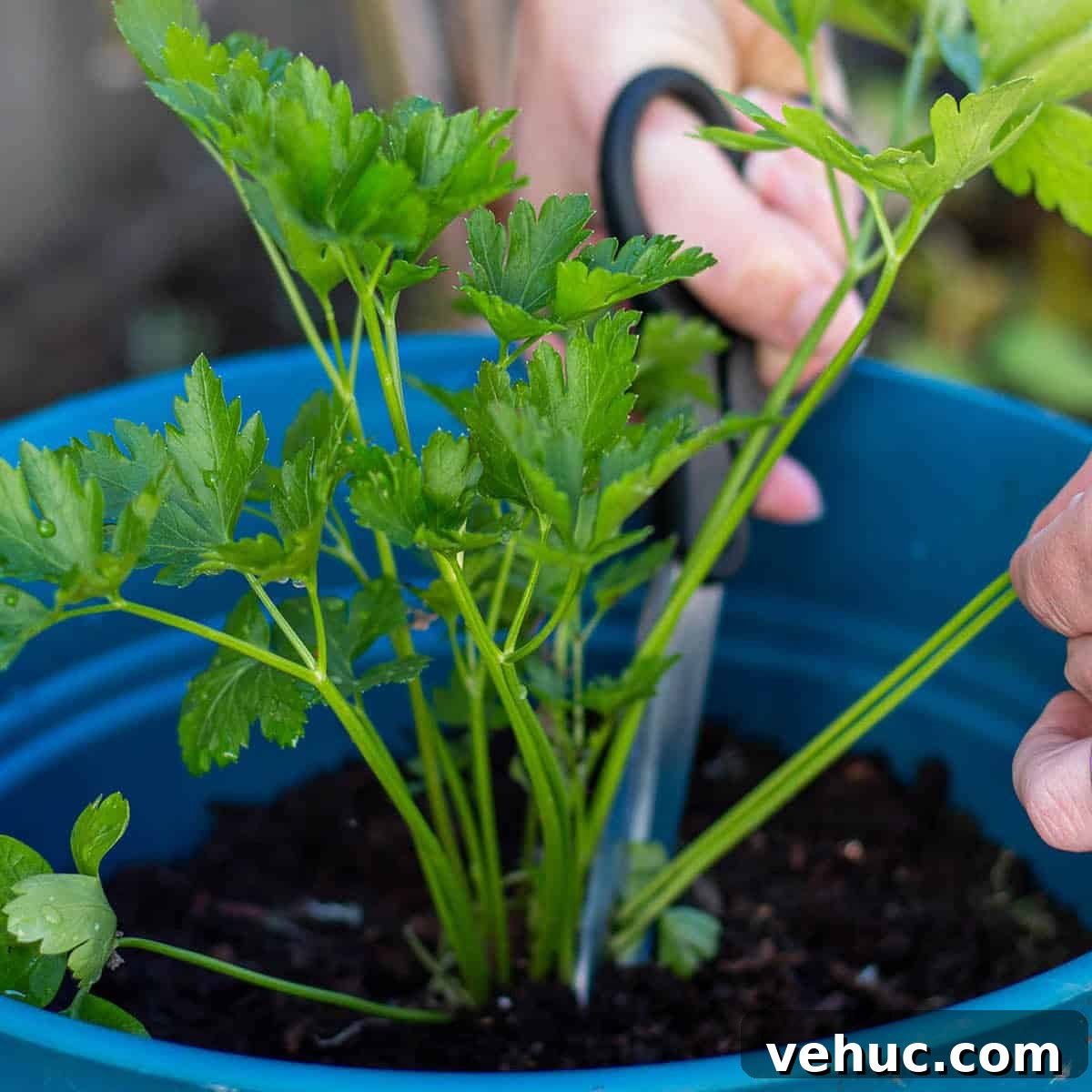
Learn how to harvest and trim parsley to encourage larger, healthier plants and enjoy a continuous supply of fresh herb throughout the summer. With the right harvesting technique, you may never need to buy parsley again.
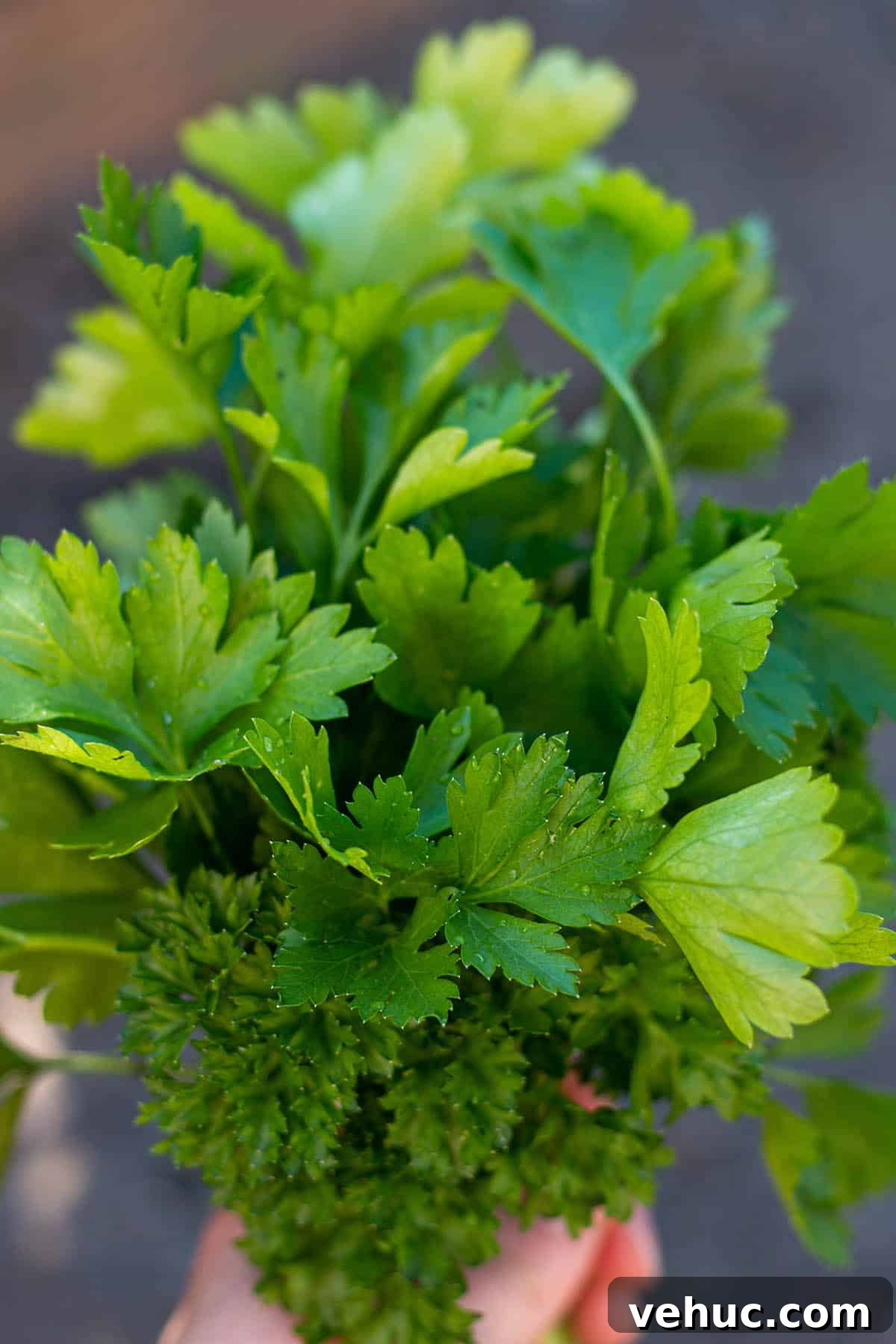
Growing fresh herbs at home is an easy way to have flavorful ingredients on hand. Parsley is particularly forgiving and does well in garden beds, raised planters, and containers—making it a great choice for yards, balconies, and apartments.
When added to soups, sauces, salads, or as a finishing touch, fresh parsley brings brightness and depth to dishes. A single plant can supply many meals when cared for and harvested correctly.
Parsley typically comes in two common varieties: Italian (flat-leaf) and curly-leaf. They differ mainly in appearance, but both are grown and pruned the same way.
Because parsley is easy to grow and versatile in the kitchen, it’s a valuable addition to any home cook’s herb collection.
How to Grow Parsley
Parsley thrives with minimal care. Choose a location that receives about 6–8 hours of direct sunlight and use nutrient-rich, well-draining soil. It tolerates partial shade but performs best with steady sun exposure.
Parsley can be started from seed or transplanted from nursery plants. In some climates it behaves as a biennial, persisting for two seasons, but flavor may decline in the second year—so many gardeners replant each spring for best results.
If sowing from seed, start indoors 6–8 weeks before your last frost date and move seedlings outdoors after soil and temperatures warm. Parsley adapts well to containers if space is limited, and it can also be grown indoors on a sunny windowsill.
In very hot climates, provide afternoon shade to prevent stress and bolstered growth. Overall, parsley is forgiving and suitable for a wide range of growing situations.
How to Cut Parsley From the Plant
Proper harvesting stimulates new growth, so regular, careful cutting will keep your parsley productive through the season. Only harvest once the plant is well established and has several healthy stems and leaves.
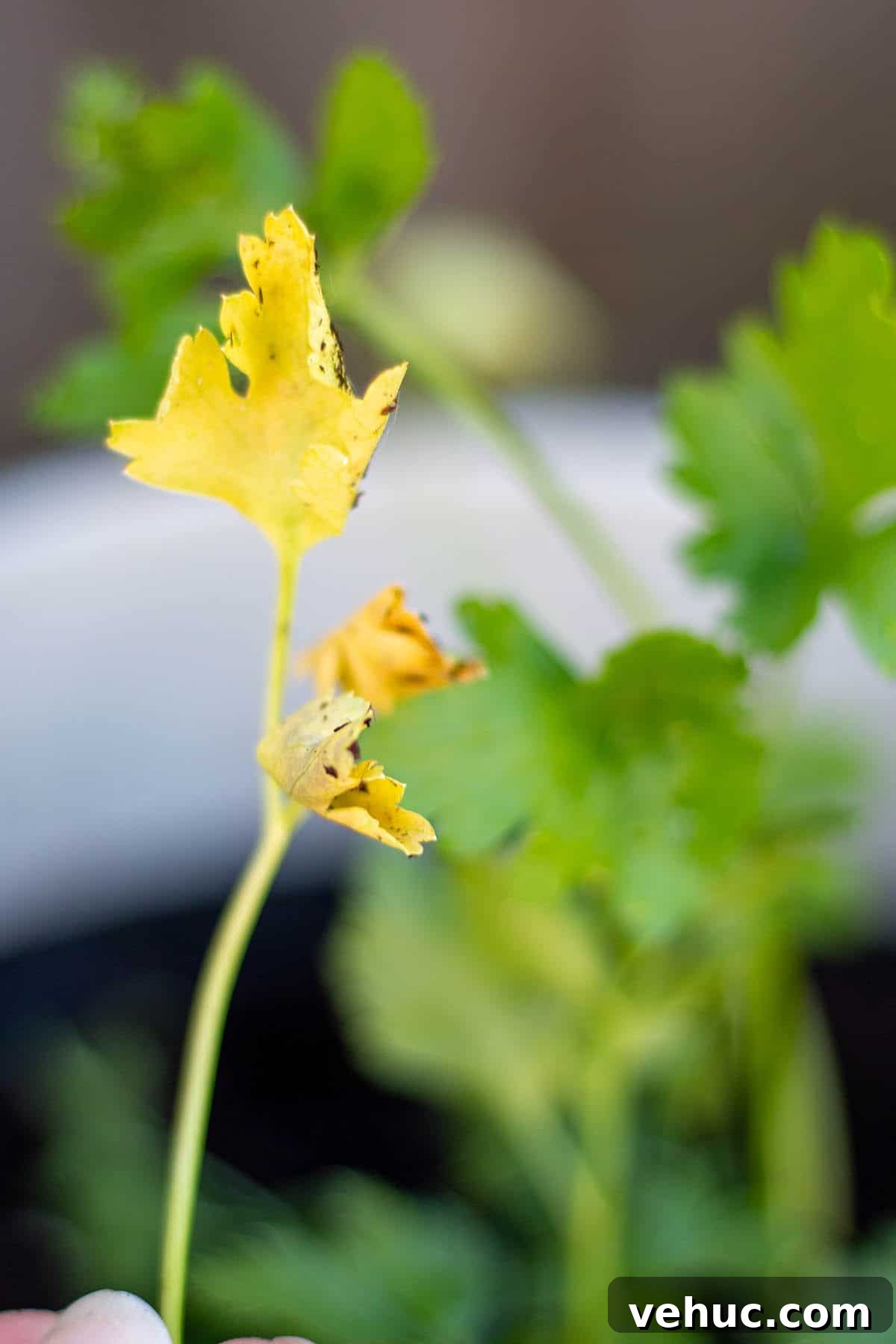
When choosing what to cut, pick bright green, healthy leaves and avoid yellowing or browned foliage. Those damaged leaves should be trimmed away and discarded.
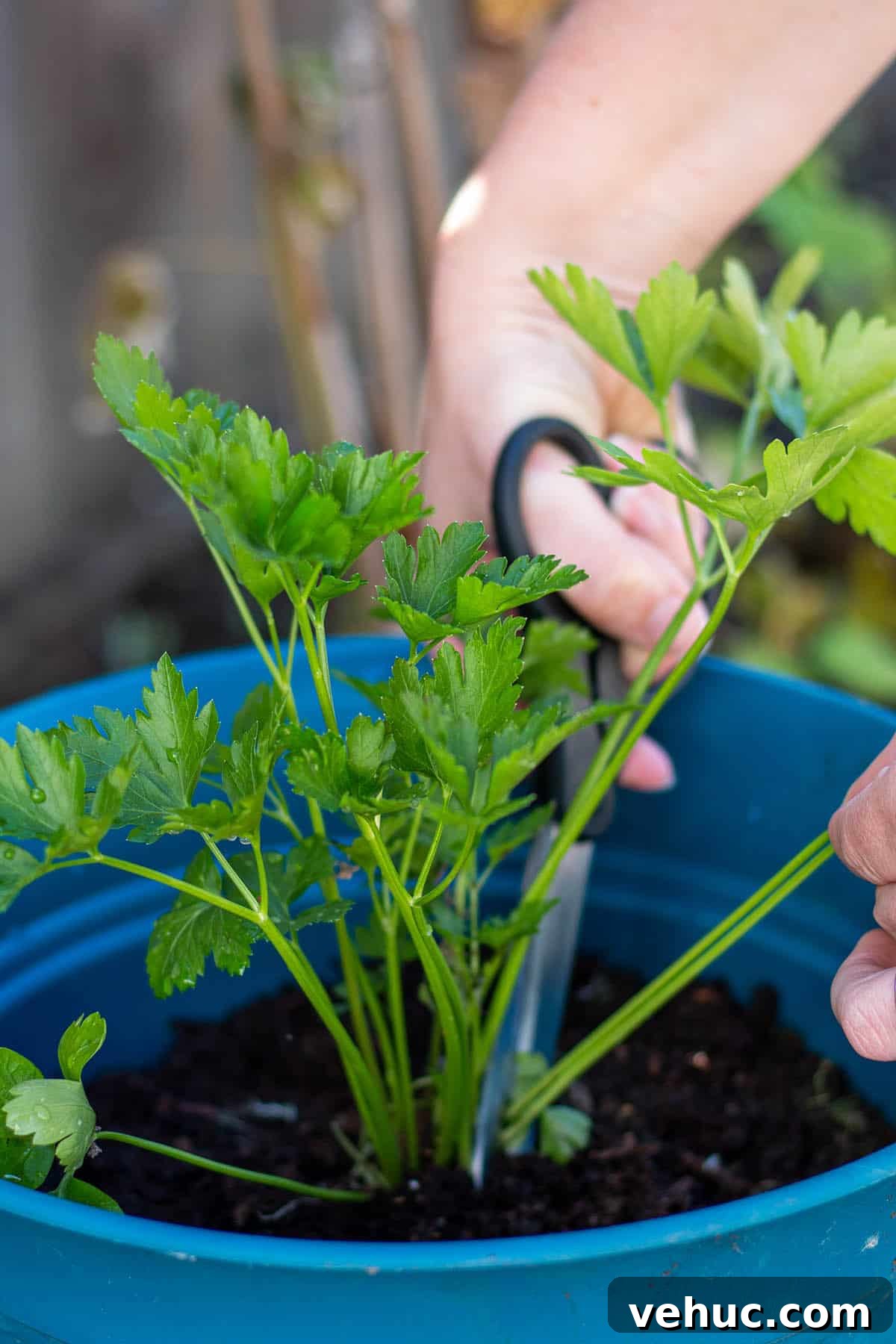
Always begin by removing the oldest growth from the outer edges of the plant. Taking these outer stems creates space and encourages fresh shoots to emerge from the center.
When your plant has multiple stalks and is actively growing, follow these simple steps to cut parsley:
- Work around the plant and harvest the outer, more mature stems first, leaving the center intact so new growth can continue.
- Use sharp kitchen scissors or pruning shears to cut each stem cleanly at soil level, removing the entire stalk in one cut.
- Avoid stripping the whole plant—leave several stems uncut to sustain growth.
- After cutting, store the parsley using a paper-towel method or kept upright in a glass of water to maintain freshness.
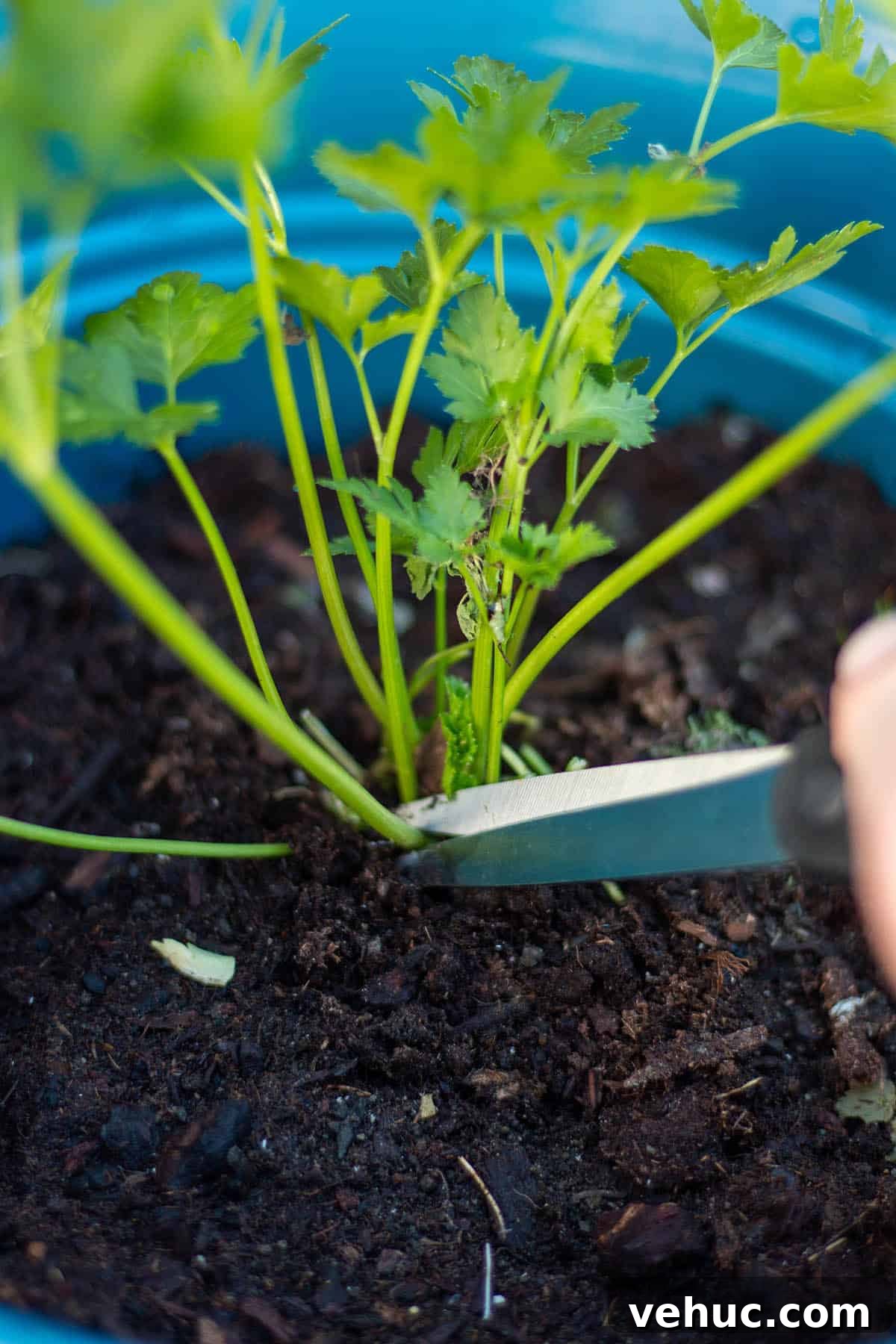
Harvesting signals the plant to produce new stems; within days to weeks you’ll see fresh growth. The best time to harvest is in the morning when leaves are cool and firm—harvesting in the heat of the day can result in slightly wilting foliage.
Both curly and flat-leaf parsley are harvested the same way, and regular clipping will reward you with a steady supply all season.
How to Use Parsley
Parsley’s bright flavor makes it a flexible herb in the kitchen. Sprinkle fresh chopped parsley over pasta, roasted vegetables, fish, or salads, or use it as a garnish to finish soups and sauces.
When preparing parsley, rinse well, pat dry, strip leaves from the stems, and chop to the desired texture. Add fresh parsley near the end of cooking to preserve its bright flavor; dried parsley is best added earlier in the cooking process so its flavor has time to develop.
Fresh parsley pairs well with hearty dishes like roasted potatoes, steamed fish with herbs, and vegetable hashes, and it can be swapped into many recipes that call for a fresh, herbaceous note.
Browse recipes by category:
-
Breakfast
-
Dinner
-
Sauces and Spreads
-
Sourdough Recipes



Other Gardening Resources: